Get Full Government Meeting Transcripts, Videos, & Alerts Forever!
Get email alerts on the Homelessness Programs topic
No spam. Unsubscribe anytime.
Catholic Charities’ Working Hands crew says it has housed eight participants, seeks funding to expand
Summary
Catholic Charities presented the Working Hands program update to the El Centro City Council, reporting employment and housing outcomes for participants, program costs through Sept. 30, 2025, and barriers to scaling up.
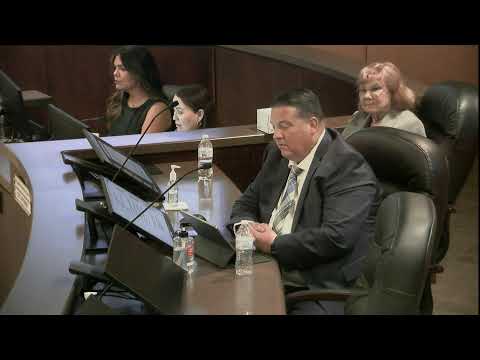
Catholic Charities told the El Centro City Council on Oct. 21 that its Working Hands program, which hires people who are experiencing homelessness to perform cleanup and maintenance work, has helped participants obtain work and housing but needs sustained funding to expand.
The program “is basically a program for people who are unhoused to get them experience in an employment setting,” Antoinette, director of homeless services for Catholic Charities, told the council. She said the city funded the program with state PLHA money and that participants do cleanup in downtown and at parks while receiving case management and connections to housing services.
Working Hands lead Albert Houdegi described daily operations and employer and community interactions. “We decide where the team is going to work based on the feedback that we get from the City of El Centro,” Houdegi said. He said crews clean railroad areas, parks and the downtown commercial district and that the work produces both public-facing improvements and opportunities for participants to practice customer-facing skills.
Catholic Charities said 13 people enrolled in the program’s first year, of whom two voluntarily left and eight were placed into housing. The presenter said six program participants found employment, four full-time and two part‑time; several went into construction, food processing, shipping/receiving and in‑home care.
On program finances, Catholic Charities reported year‑to‑date spending from Sept. 2024 through Sept. 30, 2025, of $186,737. The group identified the largest categories as salaries and benefits (largest single line item), stipends paid to participants (reported as $77,164) and operating expenses (reported as $22,001.98). Presenters said participants are paid at California minimum wage and that participants’ time is tracked weekly and paid by check the following Friday.
Program staff described housing pathways used for participants, including rapid rehousing subsidies administered through the countywide coordinated entry system, one participant who used program stipends toward housing directly, and one reunification arranged with family in Las Vegas. Presenters said coordinated entry assigns placement priority based on a vulnerability score and that a lack of affordable rentals in Imperial County remains a constraint.
Catholic Charities staff said the program currently runs with two vehicles and two field supervisors (equivalent to roughly one full‑time manager and another full‑time staffer split across roles) and that expanding the program would likely require hiring another employee and securing continuing operational funding. Staff noted they have some federal Emergency Solutions Grant funding and other streams that could support a scale‑up but said the timing and certainty of that funding remain unclear.
Mayor and council members praised the program’s outcomes and urged Catholic Charities to pursue further funding to expand capacity. Antoinette said the organization and the city will continue to work on program sustainability and that staff will follow up on questions about specific housing placements.
The council did not take formal action on the presentation.
The city clerk’s meeting packet includes a program budget and a written update from Catholic Charities; presenters asked that staff and the public contact the charity for further details on individual placements and next steps.