Get Full Government Meeting Transcripts, Videos, & Alerts Forever!
Get email alerts on the Street Parking topic
No spam. Unsubscribe anytime.
Council hears strong resident opposition to proposed no-parking ordinance on Coolis Road; council discussion unresolved
Summary
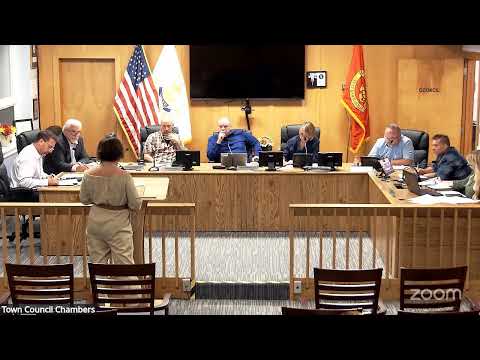
The West Warwick Town Council took public comment and debated a proposed no-parking ordinance for Coolis Road on Oct. 7, with residents describing repeated safety incidents, narrow travel lanes and concerns that parked vehicles can block emergency access.
The West Warwick Town Council took public comment and debated a proposed no-parking ordinance for Coolis Road on Oct. 7, with residents describing repeated safety incidents, narrow travel lanes and concerns that parked vehicles can block emergency access.
The ordinance under second reading would prohibit parking on the westbound side of Coolis Road between Cedar Drive and Robin Lane, the portion of the street identified in notices delivered to residents on Sept. 30 by Major Ketchum of the police department. Major Ketchum confirmed he placed notices in mailboxes to notify affected residents, the town said.
Many residents who live on Coolis Road told the council the street is roughly 24 feet wide in places and that vehicles parked on both sides reduce the travel lane to under 10 feet, impeding larger emergency vehicles at times. “So now an emergency vehicle, which on approximately every 2 weeks we have, the fire trucks and an ambulance going up that road, wouldn’t be able to get by if they’re parked side by side,” resident Steve Knott said during public comment. Several other residents described near-misses, instances of backing into yards and frequent blocking of driveways. Several speakers asked the council to prohibit parking on both sides rather than only the west side; other residents asked instead for time-limited or permit parking that would discourage long-term overnight storage of vehicles.
Council members debated practical enforcement and whether the proposed change would shift the burden to the opposite side of the street. A councilor noted that passing no-parking on one side would not displace the single persistent car residents had been concerned about and asked whether a permitting approach similar to East Greenwich’s overnight permit model could be used. Major Ketchum and council members said the police would respond to calls where parked vehicles prevent passage; in those emergencies police can and have directed vehicles to be moved and can arrange towing if vehicles obstruct emergency access.
Speakers representing both sides stressed that the issue is not only speed but the frequency and placement of parked vehicles that create blind spots on the crest of a hill. Some residents urged immediate restrictions; others cautioned that a one-sided prohibition would simply redistribute parking and asked the council to consider permit parking, temporary event permits for block parties, or a no-parking-on-both-sides approach.
The council took a vote on the ordinance after public comment and council debate. The recorded discussion shows multiple councilors saying they opposed the ordinance “as written” because it would not solve the problem for residents who said the real issue is parking on both sides; the transcript does not supply a clear, unambiguous final tally on the record excerpt provided. Council members and staff said the issue could be revisited with alternate language, permitting options, or a broader traffic study. No change in street geometry or immediate physical installation was enacted on Oct. 7.
Ending: Councilors asked staff and the police to explore alternatives — including permit parking, targeted enforcement, signage placement, and a traffic study — and to return the item with revised options. No final ordinance implementation or physical restriction was applied at the meeting.