Get Full Government Meeting Transcripts, Videos, & Alerts Forever!
Get email alerts on the Roads Minor Subdivisions topic
No spam. Unsubscribe anytime.
Livingston Parish committee directs staff to draft ordinance tightening road-width rules for minor subdivisions
Summary
Ordinance committee members discussed gaps in how road-width requirements apply to minor resubdivisions, asked staff to draft an amendment referencing Section 1-25-177 and 1-25-179, and agreed to explore an inspection step before approval.
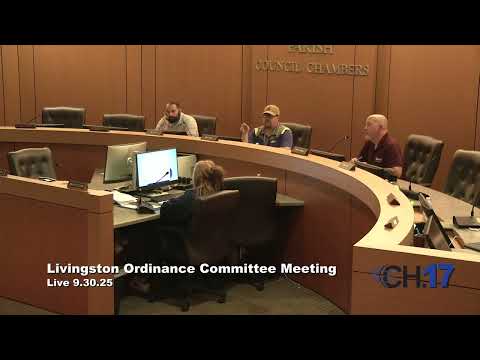
A committee member at the Livingston Parish Ordinance Committee meeting on Sept. 30 said two recent minor resubdivisions in the member’s district were approved without adequate road width, creating safety concerns and prompting the committee to direct staff to draft an ordinance to close the gap.
The committee agreed to have staff refine existing code references and prepare an ordinance for a future committee meeting that would ensure minor resubdivisions follow the road standards in Section 1-25-177 and make inspection by planning and public works part of the approval process. The committee did not take a formal vote during the discussion.
Why it matters: Committee members said parcels approved as minor resubdivisions under the previous administration have led to new development on narrow roads (committee members cited examples of roadways 12–13 feet wide). Members said that without clearer references and an inspection requirement, property owners can subdivide in small increments and create multiple lots served by substandard access, increasing the risk to motorists and emergency responders.
The discussion centered on two code provisions the committee referenced repeatedly. The committee member who raised the item read the numeric standard tied to Section 1-25-179: “99 lots or less” must be built on an 18-foot road or greater and “anything 100 and above” must be built on a 20-foot road or greater. Planning department staff also read language that had been added in the recently adopted minor-resubdivision ordinance requiring a minimum 60-foot servitude for certain private nonpublic access serving more than four lots: “More than 4 lots on a private, nonpublic road or servitude, the servitude must be minimum 60 foot in width.”
Planning and public works staff told the committee there is not currently a routine field inspection tied to minor resubdivision approvals. One planning staffer said, “We don’t go and check them,” and the committee discussed creating a simple form and inspection step so either the homeowner or the developer’s engineer must document existing road conditions and permit preapproval inspection visits.
Committee members discussed two possible drafting approaches: 1) explicitly add minor resubdivisions to the road-width requirements in Section 1-25-179, or 2) amend Section 1-25-177 (the code section that defines roads and is referenced broadly throughout the development code) and then reference Section 1-25-177 from the minor-resubdivision rules. A planning staff speaker recommended referencing 1-25-177 from the minor-resubdivision language so future updates would only require changing the single defining section.
Several members noted that code language over time contains contradictory provisions in different sections, and that re-centralizing road standards in 1-25-177 would reduce future contradictions. The committee chair (unnamed in the transcript) said they would draft an ordinance based on the discussion and present it at the next ordinance committee meeting for review.
What the committee directed: committee members asked staff to (1) review Section 1-25-177 and Section 1-25-179 for cross-references, (2) draft language that explicitly subjects minor resubdivisions to the road-width standard or updates 1-25-177 to include minor resubs, and (3) draft an inspection procedure so planning and public works inspect road widths prior to final approval or prior to acceptance into parish maintenance.
No formal motion or vote was recorded in the transcript. The committee did not adopt an ordinance at this meeting; members agreed to return the proposal to a future meeting after staff prepares draft language and related procedures.
Quotes used in this article are verbatim from the committee meeting transcript and are attributed to speakers identified in the meeting record.