Get Full Government Meeting Transcripts, Videos, & Alerts Forever!
Get email alerts on the District Attorney Staffing And Priorities topic
No spam. Unsubscribe anytime.
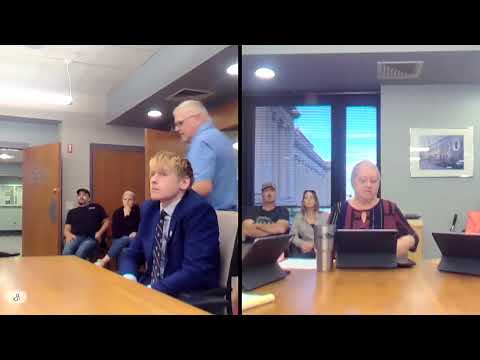
Kenosha County district attorney details backlog, staffing and diversion plans as residents defend office
Summary
District Attorney Solis told the Kenosha County Judiciary & Law Committee the office is prioritizing violent crime and crimes against children while working through a backlog of cases dating to 2019; several residents spoke in support of the DA and criticized a judge's public remarks.
District Attorney Solis told the Kenosha County Judiciary & Law Committee on a meeting held October 15, 2025 (date provided by committee) that his office is prioritizing violent crime — especially gun crime and crimes against children — while working to clear a backlog of cases dating to 2019 and earlier.
The committee heard multiple public comments supporting the DA and criticizing a judge who spoke at a prior meeting. Resident Kevin Mathewson told the committee that a judge who spoke at the prior meeting “lied to you,” and said he had public records showing the number of assistant district attorneys was larger than the judge had stated. Bridal Gonzales, a retired law enforcement officer, said she believes “Mr. Solis is doing a good job” and urged the committee to support the DA. Attorney Douglas Haney also spoke in support, calling the DA’s priorities appropriate and saying he had “not seen a better district attorney in the sense of priorities.”
Why it matters: The DA’s staffing levels, case backlog and charging priorities affect prosecution timelines, victim services and how public safety resources are deployed across Kenosha County. The committee will review budget requests tied to staffing and victim-witness services at an upcoming budget hearing.
Solis described the case backlog as including matters from 2019 through 2023 and said “majority of the serious cases… the homicides are from 2021, 2022, 2023.” He said the office currently has trial-ready homicide cases that were largely delayed before he took office and that “currently I have about maybe 3 or 4 cases that are scheduled for jury trial, which are homicide cases that happened probably 2 or 3 years ago.” Solis emphasized violent crime and crimes against children as the office’s top priorities.
On staffing, Solis said his office currently has approximately 12 assistant district attorneys working (counting the deputy), and that additional hires are expected: “we have 3 individuals who are starting in October... we'll probably have 15 by October.” He said state funding added 2.5 authorized prosecutor positions (producing 21.5 total authorized slots in the future) and that some further hires are pending. The DA told the committee he has personally taken heavy caseloads since assuming office and listed recent trial outcomes his office secured as examples of progress.
Solis addressed diversion and deferred-prosecution agreements as tools for appropriate cases. “When I look at diversion programs, [they are for] more offenders who are first time offenders… veterans, some [discipline] cases,” he said, adding that deferred prosecution agreements may be preferable to probation in some misdemeanor drug cases to secure treatment services.
On transparency and public trust, Solis said “transparency is 1 of the biggest ones that I tried to … focus on,” and described efforts to respond to open-records requests and to provide press releases when feasible. He said media organizations such as WGTD and Kenosha News request comments and that the office attempts to respond in ways that do not mislead the public.
Victim-witness services: Solis told the committee the office could “use another victim witness individual” to help address workload created by the backlog and ongoing serious cases; committee leadership confirmed the request will be part of the October 15 budget review. The DA described efforts to coordinate with law enforcement on complex investigations, including recent multi‑agency operations that produced arrests tied to transnational gang activity.
On state policy, Solis recommended stronger statutes for organized crime and stiffer penalties for repeat offenders and some crimes against children. He described current uncertainties in the statutory language governing “grooming” conduct in schools and argued for clearer and tougher state law. He also expressed the office’s intention to cooperate with federal authorities on immigration holds where appropriate.
Committee follow-up: Committee chair Laura Belsky asked that budget items related to victim-witness staffing be reviewed at the October 15 budget meeting. Several supervisors probed staffing counts and recruiting challenges; questions about state-funded prosecutor pay and pay progression were discussed and Solis said prosecutors start at the same state-determined base and that recruiting experienced attorneys to government service remains difficult.
The meeting included public comment from multiple residents and former law-enforcement personnel who urged support for the DA’s office and criticized judicial comments made at a prior meeting; those remarks were presented as citizen statements rather than formal committee action.
Looking ahead: The committee plans to review the DA’s proposed budget during the scheduled October 15 budget review meeting, where requested additions for victim-witness staffing and county-funded support positions will be considered.