Get Full Government Meeting Transcripts, Videos, & Alerts Forever!
Get email alerts on the Vehicle Registration Fee topic
No spam. Unsubscribe anytime.
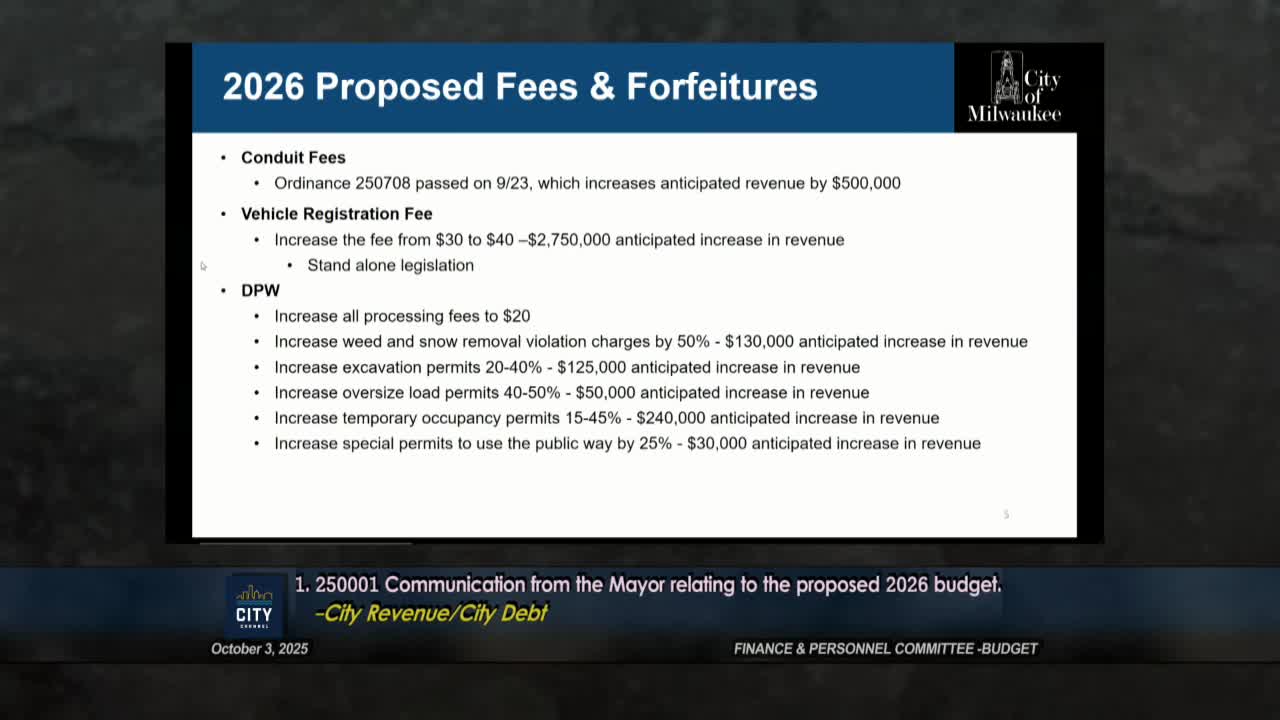
Council told $10 vehicle-registration increase would raise $2.75 million in 2026; Nov. 3 deadline affects timing
Summary
Budget analysts said a proposed $10 vehicle-registration fee increase would raise about $2.75 million in 2026 if the council and mayor approve the ordinance and state implementation timelines are met.
Budget analysts told the Common Council committee the mayor's proposal to raise the city vehicle registration fee from $30 to $40 would generate roughly $2,750,000 for 2026 if the ordinance and implementation timelines allow.
Nathaniel Hack said the administration estimates the $10 increase would yield $2,750,000 in 2026 with a full-year effect of about $3,000,000 thereafter. Hack cautioned that the DOT requires a minimum implementation notice (roughly 90 days) after the ordinance is filed and signed, which affects the effective date and near‑term revenue. Budget and legislative staff said that without meeting the implementation timing the earliest practicable effective date would shift, costing the city about $250,000 per month of delay.
Committee members raised several governance and timing questions: the committee chair and aldermen asked what council action would be required and whether the mayor’s signature and the state’s notice window could be met in time to make the February 1 effective date cited by administration materials. Budget staff said the council could approve the ordinance and send it to the mayor and that, to reach a February 1 effective date, the signed ordinance would need to be in the DOT's hands by Monday, Nov. 3, at 3 p.m.; if approval slipped past that date and the ordinance could not be filed in time, the city would lose one month of revenue (about $250,000).
Use of proceeds and equity concerns: Hack and other staff described the revenue as general fund revenue (not automatically dedicated to roads) and said the mayor proposed using the money in the general city purposes budget. Several aldermen questioned the equity of fee increases relative to property tax increases, noting that per‑capita or income‑sensitivity concerns make user-fee increases more regressive in some cases.
Ending: Staff committed to provide a written legal timeline and an implementation memo from the city attorney and DOT contacts so the council can weigh how the ordinance’s timing and any potential amendments would affect the 2026 budget.