Get Full Government Meeting Transcripts, Videos, & Alerts Forever!
Get email alerts on the 2026 Budget Overview topic
No spam. Unsubscribe anytime.
City presents proposed $2.07 billion 2026 budget; pension costs and fee increases drive gap
Summary
Budget director Nick Kovac and staff presented Mayor Cavalier Johnson’s proposed 2026 executive budget to the Common Council committee, outlining a $2.07 billion plan, a 3% levy increase and fee hikes to cover a gap largely driven by rising pension costs and recent contractual timing differences for public safety.
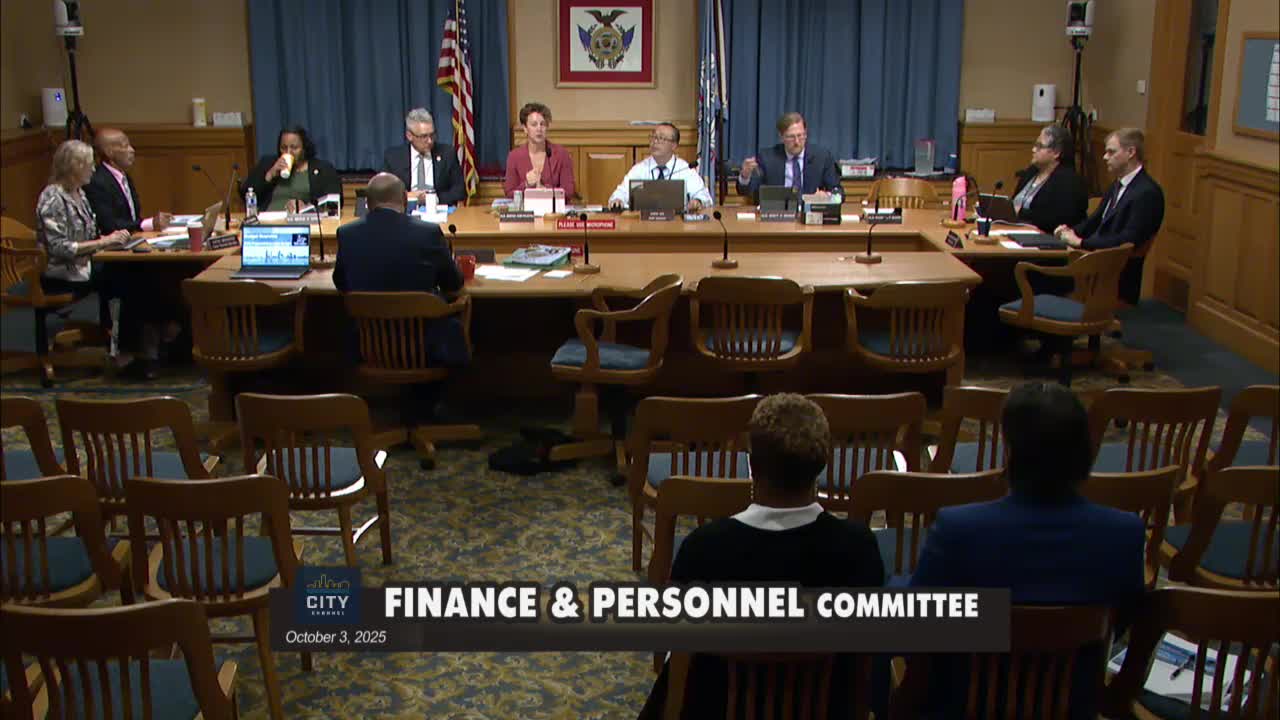
Alderman Marina Dimitrijevich, chairwoman of the Common Council committee, opened the hearing Friday and turned the presentation over to Nick Kovac, director of the Budget Management Division, to present Mayor Cavalier Johnson’s proposed 2026 executive budget for the city of Milwaukee.
Kovac said the total proposed 2026 budget is $2,070,000,000. About $1,580,000,000 of that is tax-levy supported; the proposed tax levy is $333,900,000, a 3% increase from 2025. Non-levy funds, including enterprise funds for water and sewer, grant-and-aid and settlement accounts, total about $484,900,000.
Why it matters: Kovac and council members emphasized that the budget gap this year was driven primarily by unexpectedly higher pension costs and the timing of contract settlements for city public safety employees. Kovac said the starting planning gap in May was about $88,000,000 and grew to roughly $101,000,000 after the actuary’s finalized pension charge arrived in June.
Kovac put the mayor’s proposed responses on the table: modest revenue increases including a 3% levy increase, a $10 rise in the vehicle registration fee proposed to take effect if approved, and fee adjustments for major user charges (solid waste, sanitation, sewer, stormwater, snow and street lighting). He said the mayor proposes a $32,300,000 withdrawal from the Tax Stabilization Fund (TSF) for 2026 and a $6,000,000 withdrawal from the Public Debt Amortization Fund, the same amounts used in 2025.
Kovac presented household impacts the administration computed: the typical household municipal impact from taxes and user fees in the proposal is presented as roughly $90 annually; the speaker stressed this is an estimate based on median residential value and assessments.
Public safety and bargaining timing: Kovac explained that comparisons among years are shaped by the timing of contract settlements. He said the fire department’s 2026 budget includes 2026-level wage costs because its contract settled recently; police bargaining remains unsettled and their wages are not fully accounted at 2026 levels. Kovac told the committee that if police settlement amounts increase in arbitration, the police share of the general city purposes budget would rise.
Service, equity and staffing items: The budget would fund a 2% across-the-board wage increase for general city employees; Kovac indicated that cost sits in a separate wage supplement account and totals roughly $4,600,000. He also noted some program-level changes the mayor proposed after examining usage data — for example, continuing year‑round Sunday hours at Central Library while discontinuing Sunday hours at two smaller branches after a year of usage data.
Next steps and availability of materials: Kovac said department-by-department details and the full budget book were provided to committee members, and analysts from the Budget Management Division and the Legislative Reference Bureau were available to answer follow-up questions as the committee moves into hearings and potential amendments in October and November.
Ending: Kovac and the committee agreed to proceed into subject-specific presentations (capital, revenue and debt, grant and aid, contingent funds and TSF) and to schedule follow-up requests for additional detail on fees, the pension numbers and household impacts.