Get Full Government Meeting Transcripts, Videos, & Alerts Forever!
Get email alerts on the Development Agreements topic
No spam. Unsubscribe anytime.
State ombudsman briefs Pleasant View planning commission on development agreements and public-review rules
Summary
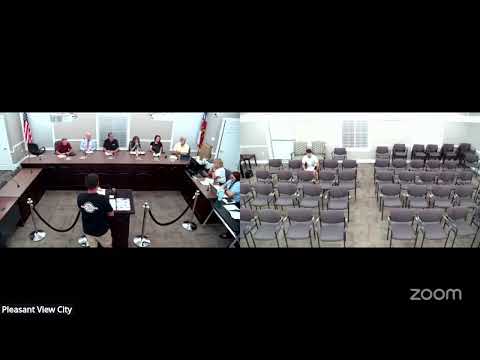
Jordan Cullimore, lead attorney in the Office of the Property Rights Ombudsman, told the Pleasant View Planning Commission on Oct. 2 that development agreements are contracts between a city and a developer and in many cases must follow the state land‑use process that applies to new land‑use regulations.
Jordan Cullimore, lead attorney in the Office of the Property Rights Ombudsman, told the Pleasant View Planning Commission on Oct. 2 that development agreements are contracts between a city and a developer and in many cases must follow the state land‑use process that applies to new land‑use regulations.
Curbing confusion about who reviews an agreement, Cullimore said development agreements that change land‑use rules must go through the Land Use Development and Management Act process: planning‑commission review with public hearing and a recommendation to the city council, followed by council consideration. “At some point in that process, the planning commission does need to look at it, and the planning commission needs to make a recommendation on it,” Cullimore said.
That legal framework matters because development agreements can create long‑term vested rights and tailored zoning for a particular property. Cullimore said the agreements provide predictability for developers and flexibility for municipalities, and they can be used for phased projects, annexations, or to secure public benefits such as infrastructure improvements or affordable‑housing commitments. “A development agreement is a contract,” he said. “There’s a presumption that there’s been good‑faith negotiations and consideration that both parties are giving up something.”
Commissioners said recent local cases had left the commission unsure how and when agreements would come back for review. Commissioner Julie (Planning Commissioner) described a situation where the planning commission recommended a rezoning, then a development agreement negotiated outside the public session changed project terms before council action. Commissioners asked whether that made earlier recommendations “null and void.” Cullimore said courts and the legislature have clarified the process in recent years and that, while staff and council may negotiate iteratively, planning‑commission consideration (including a public hearing) is required when an agreement would change the rules applicable to the land.
He distinguished administrative agreements — those that implement existing regulations, formalize phasing or timing, or clarify responsibilities — from legislative agreements that effectively create a new zoning regime. Administrative agreements, Cullimore said, may be handled without the full legislative procedure; legislative agreements require notice and a public hearing like other land‑use regulations.
Cullimore also warned that cities assume contractual risk when they enter development agreements. “If you don’t do those things,” he said of city commitments in a contract, “then you have a breach of a contract,” which can expose a municipality to damages.
Commissioners asked practical questions about how detailed agreements should be, when the planning commission should insist on seeing drafts, and how changes or amendments to signed agreements are handled. Cullimore suggested best practice is to run rezones and development agreements together where possible so the parties and the public see the full package, and to have clear modification clauses in any agreement. He offered the office’s training materials and contact information for follow‑up.
The presentation prompted the commission to ask staff to consult the city attorney about past cases where agreements were signed without apparent planning‑commission public hearings. Several commissioners said they would like staff to bring a formal summary of steps the commission should expect when development agreements are proposed going forward.
The ombudsman’s slides and follow‑up contact information were requested by commissioners; Cullimore said his office provides advisory opinions, mediation and dispute‑resolution services, and statewide training programs for local governments and property owners.
The session was organized as a training item on the planning‑commission agenda and did not include formal action.