Get Full Government Meeting Transcripts, Videos, & Alerts Forever!
Get email alerts on the Waste Management Recycling topic
No spam. Unsubscribe anytime.
Flat Rock council delays decision on recycling as Priority Waste proposes contract extension
Summary
Priority Waste presented a proposed extension for curbside service that would keep current service at an 8–9% first-year increase and raised recycling-cost tradeoffs; council voted to table a final decision until the next meeting.
The Flat Rock City Council voted to table a decision on the city’s garbage and recycling contract after hearing a presentation from Priority Waste representatives and staff about costs, service models and contamination rates.
Brian Marciniak, the city administrator, summarized recent vendor outreach and said Priority Waste proposed an extension because competitive bidders are limited. He told council that Priority’s offer included roughly an 8–9% increase in the first year and 3% annual increases thereafter and that the company had proposed two- or three-year extension options rather than a 10-year term.
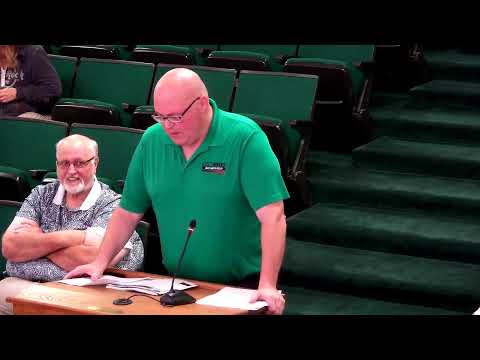
Sam Carabagna, representing Priority Waste, addressed questions about recycling contamination and end markets. Carabagna said contamination rates increased after the city switched from small bins to larger carts: "When the carts came ... the contamination went up ... So the result of contamination right now, 16%." He also described average material capture from curbside collection: "Everything above that 15%—85%." Carabagna said recyclables collected by Priority go to local material recovery facilities and are sold to end markets.
Carabagna said Priority offered a roughly $4 per household monthly reduction if the city suspended curbside recycling; Marciniak told council that suspending recycling under the proposal would save about $125,000 a year but would require ordinance changes because recycling is currently mandated in city code.
Council discussion focused on trade-offs: some members expressed concern that suspending recycling would cause residents to stop the practice and make reinstatement more difficult later; others emphasized the immediate budgetary savings. After discussion, a motion to table consideration of the contract and the recycling question until the next meeting passed by voice vote.
Why it matters: recycling and garbage collection contact terms affect municipal operating costs and household charges. The proposal’s financial difference—an approximately $125,000 annual savings by suspending recycling—was a central point in the council’s decision to seek more time for public and council input.
Next steps: Council directed staff to gather additional information, including possible community feedback, and to return the matter at the next council meeting for a final vote.
Ending: Priority Waste left pricing and program materials with the city and offered to provide recycling-education resources to reduce contamination if the city continues the curbside program.