Get Full Government Meeting Transcripts, Videos, & Alerts Forever!
Get email alerts on the Marine Stadium Procurement topic
No spam. Unsubscribe anytime.
City staff: operating partner chosen for Miami Marine Stadium; Commission action delayed
Summary
City real-estate staff told the Historic and Environmental Preservation Board that an evaluation committee recommended Oak View as the top-ranked operating partner for the Miami Marine Stadium, but that negotiations, commission action and voter approval remain outstanding.
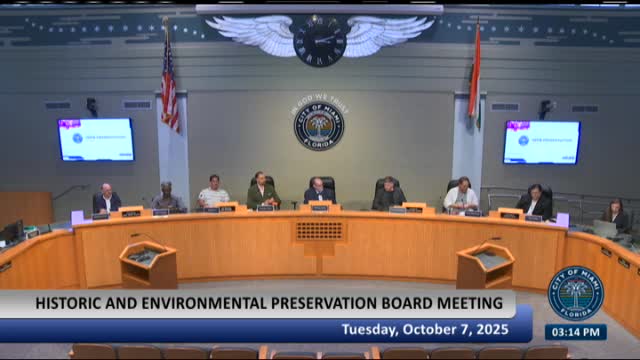
City real-estate chief Andrew Frey updated the Historic and Environmental Preservation Board on the ongoing procurement for an operating partner to manage the Miami Marine Stadium, saying an evaluation committee recommended Oak View but that subsequent steps — negotiation of a term sheet, manager recommendation and City Commission vote on ballot language — remain pending.
Frey described the process: the city issued a request for proposals in January, procurement screened submissions, and an independent evaluation committee recommended a first-ranked proposer's bid. Under procurement rules the manager then negotiates a term sheet with the top-ranked proposer; if the manager is satisfied the item goes to the City Commission with ballot language because any long-term lease or sale of waterfront property requires voter approval.
Frey told the HEP board the Commission did not take up the recommendation as scheduled in August because of a lack of quorum. “That meeting did not happen because of a lack of quorum,” he said, and the item is now pending while the city addresses budget season and schedules Commission consideration.
Board members asked whether the timeline means no substantive work will occur until the next general election; Frey said unless a special election is called for another matter, substantive movement likely awaits the next November ballot. He added the city sought a market-savvy operating partner to advise on final plans and revenue elements — capacity, premium food-and-beverage, back-of-house needs and other changes that could affect the historic-preservation review and building-permit process.
Commissioner Robert Powers asked about a previously reported $40 million the city had earmarked for renovations; Frey explained that the city had passed an intent resolution to set aside funds tied to future bond financing and that those resolutions can include expiration dates. “I believe a notice or an intent resolution was passed by the City Commission for a certain amount of money,” Frey told the board, and he said he did not know whether bonds had been issued or the funds remained earmarked in the same form.
Frey also described the city’s reasoning for seeking a private operating partner: “we're not experts in world class venue management,” he said, and the partner would help refine plans so the restored venue could repay debt service and meet market requirements. He said any final designs would still go through the normal historic-preservation review and permitting process.
The briefing was informational; the HEP board did not take formal action.