Get Full Government Meeting Transcripts, Videos, & Alerts Forever!
Get email alerts on the Public Safety Ems topic
No spam. Unsubscribe anytime.
Commissioners hear resident concerns about ambulance billing and write-offs; staff outline steps to curb high utilizers
Summary
Residents and commissioners discussed ambulance billing, reported write-offs and ongoing work to reduce nonemergency ambulance use at the Oct. 2 Escambia County commission meeting.
Residents and commissioners discussed ambulance billing, reported write-offs and ongoing work to reduce nonemergency ambulance use at the Oct. 2 Escambia County commission meeting.
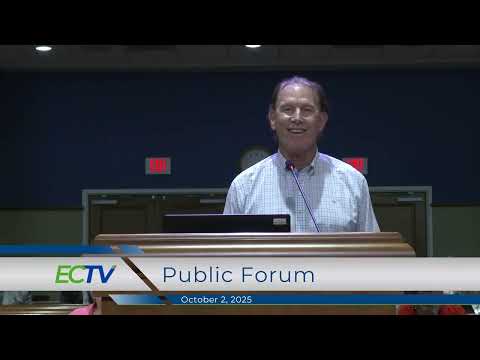
Public concern: Several members of the public cited news reports that the county or its contractor was planning large write-offs for ambulance billing. "If we pay for EMS, we're paying the people. We're training the people. We pay for the gas. It's our money," said Mary Konopka, a resident who asked for clearer information about the accounting and timing of write-offs.
County and board response: Commissioners and staff said some headline figures reflect multi-year accounting and timing differences rather than a single-year loss. County staff and the EMS chief said the department operates with enterprise-style revenues but that collection and write-off timing can distort public-facing totals. Commissioner discussion focused on two related goals: ensuring timely, transparent reporting of revenue/collections and reducing nonemergency ambulance calls that can divert resources from true emergencies.
Planned measures: County staff, including the EMS chief, said they are formalizing a plan to identify "high utilizers" and to work with hospitals on mobile-integrated-health programs that provide alternatives to ambulance transport when appropriate. The chief said three hospitals have indicated buy-in; staff are working on costs and an implementation plan to present to the administrator and board.
Education and telemedicine: Commissioners and staff discussed public education campaigns to clarify when to call 911 and to encourage use of primary-care options over ambulance transport for nonemergency conditions. Staff noted a prior telemedicine approach yielded a large bill for some patients, which prompted the county to pause that specific program and seek alternatives.
What was not decided: Commissioners did not approve a large write-off at the meeting. No rate or policy change was adopted. Staff committed to return with a more detailed plan, clearer accounting on write-offs and outreach to frequent users.
Ending: Officials said they will pursue public education, hospital partnerships and program design changes and will return to the board with a formal plan and clearer financial reporting.