Get Full Government Meeting Transcripts, Videos, & Alerts Forever!
Get email alerts on the Supportive Housing Coordination topic
No spam. Unsubscribe anytime.
Douglas County staff and providers outline supportive-housing roles, training and remaining gaps
Summary
County staff and local providers described how supportive housing in Douglas County is organized, the training and coordination they use, a revised budget request title for a rental-management specialist, and service gaps—particularly for women and high-acuity clients. The presentation was informational; no formal action was taken.
Good afternoon, and welcome to the October 1 Board of Douglas County Commissioner study session. Like all of our study sessions, these are for informational purposes only. We don't take any action, after these study sessions.
County staff and partner agencies spent the meeting describing how supportive housing services and property management functions are distinct, how they coordinate around a single housing-stabilization plan for each client, and what gaps remain in services and funding. Presenters called attention to a revised budget request title for a proposed position described as a “supportive housing rental management specialist,” and to shortages of beds and wraparound care for women and clients with high clinical needs.
Jill Jolliker (staff member) opened the session by framing it as a follow-up to budget deliberations and a broader effort to implement the county’s A Place for Everyone supportive-housing goals. She said the county used a 2022 needs assessment by the KU Center for Public Partnerships and Research when developing its approach and reiterated that the session was informational.
Kristen Egan, the housing and human services program manager for Douglas County, summarized the county’s priorities and the need for coordination. “Housing folks that have been chronically homeless and unsheltered homeless is just a really big task, and it takes more support than we want it to maybe,” she said, adding that coordinated teams reduce duplication and improve outcomes.
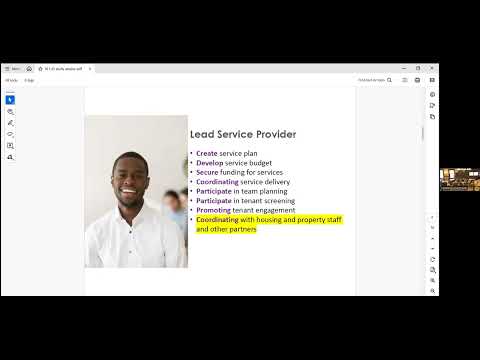
Speakers described the two core functions in supportive housing: property management (maintenance, tenant selection, lease enforcement, fiscal management) and supportive services (service plans, service budgets, transportation, medical and behavioral-health linkages, and team planning). The group emphasized use of a written housing-stabilization plan that lists goals, responsibilities and crisis plans and is intended to be shared among the tenant, the lead supportive-service provider and the property manager.
Angie Bauer, the supportive housing rental manager for Tenants to Homeowners, said her organization manages a mix of unit types and handles daily coordination with other service providers. “Tenants, the homeowner supports about 73 units of supportive housing,” Bauer said, describing transitional and communal models and the frequent need to address basic daily-living skills, crisis response and after-hours calls that fall to property staff.
Hannah Bolton, founder and program director at Cardinal Housing Network, described Cardinal’s sober-living model and intake materials and said the organization concentrates on women. “Women seeking sober living homes in Douglas County have access to less than half of the beds available to men, and Douglas County has roughly a fourth of the beds available to women and single female headed households compared to Shawnee, Sedgwick, and Johnson Counties. There are only 15 beds available to women and children,” Bolton said, citing program materials she provided to the board.
Shelby Osborne, a reentry case manager with the Douglas County Sheriff’s Office, described reentry’s hands-on role with recently incarcerated people and said reentry often remains engaged longer than originally intended to support stabilization. Osborne noted the sheriff’s office holds several housing vouchers and works with private and corporate landlords to place clients; she said long-term contact helps address paperwork, medical appointments and other barriers that arise after release.
Presenters and commissioners discussed training and best practices. Jill Jolliker and others said the county partnered with the Corporation for Supportive Housing on a multi-day training and that local partners have run additional trainings on motivational interviewing, person-centered case management and trauma-informed practices. Speakers agreed that high-acuity clients generally need consistent contact—ideally a provider available five days a week and weekend coverage as needed.
Panelists outlined several ongoing gaps: insufficient beds for women and families, transportation to appointments, and funding models for programs that do not receive rent because residents lack financial autonomy. Kristen Egan and others noted Tenants to Homeowners and Cardinal sometimes operate with mission-driven rental-management functions that blur the line with supportive services and that the county is refining how it describes and funds those roles.
No motions or votes were made; the session was a work session for information and discussion. County staff indicated the budget request language has been clarified in materials provided to commissioners, renaming a requested position to “supportive housing rental management specialist.” Staff said further follow-up and coordination with providers would continue.
Speakers provided intake forms, house manuals and program guidelines for commissioners to review and suggested continued work on shared lease or occupancy templates, common language for supportive-housing agreements and formalized accountability practices among case managers, property managers and tenants.