Get Full Government Meeting Transcripts, Videos, & Alerts Forever!
Get email alerts on the Tourism Survey topic
No spam. Unsubscribe anytime.
Walton County survey finds broad support for tourism while surfacing traffic, parking and environmental concerns
Summary
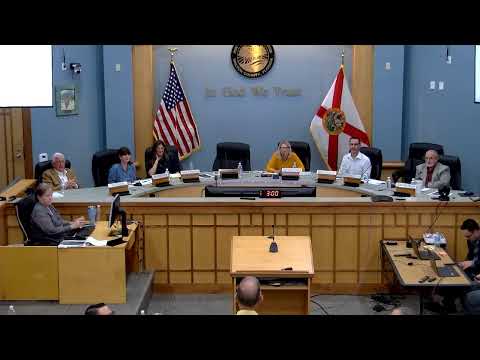
Scott Beck, senior consultant with JLL, told the Walton County Tourist Development Council steering committee that a public sentiment survey of 974 respondents (data as of Oct. 1; survey closed Oct. 3) shows broad support for tourism but also clear areas of concern.
Scott Beck, senior consultant with JLL, told the Walton County Tourist Development Council steering committee that a public sentiment survey of 974 respondents (data as of Oct. 1; survey closed Oct. 3) shows broad support for tourism but also clear areas of concern.
The survey found roughly half of respondents identified as residents and half as nonresidents, with about 16.8% reporting employment in the tourism industry. "We have far exceeded our goal in terms of participation," Beck said, adding the team’s internal target had been 475 responses. He summarized the headline findings: strong positive views of tourism’s economic impact, and the largest negative responses around traffic and parking, housing affordability and environmental impacts to beaches, parks and waterways.
Why it matters: steering-committee members and consultants said the results will shape messaging and strategy for Walton County Tourism and the Tourist Development Council (TDC). Dan Fenton, also with JLL, said the survey will inform whether the organization should move beyond traditional marketing to play a more active role in destination or experience development. "What we're not doing is saying to Matt, just sort of go do this," Fenton said. "We're saying that we want to allocate both time and resource to really trying to drive some of the outcomes here."
Key findings and context
- Responses and sampling: As of Oct. 1 the survey recorded 974 total responses (the team noted additional responses before the Oct. 3 close). About half of respondents were residents; the share of respondents employed in tourism declined between the early and later waves of responses from roughly 29% to about 16.8% in the later dataset.
- Overall sentiment: Consultants reported that roughly 85%–90% of respondents rated tourism’s impact on the local economy and household well‑being as somewhat or very positive. Beck said roughly 850 people answered the impact question, with 90% falling in the somewhat‑to‑very positive range when aggregated.
- Top concerns: Traffic and parking topped the list of negative impacts, followed by worries about environmental impacts to beaches and coastal dune lakes, overcrowding of public spaces and housing affordability.
- Development preferences: Respondents prioritized outdoor recreation and family‑friendly offerings; cultural amenities ranked lower among locals than consultants expected. Multiple steering‑committee members flagged the need to consider teen programming and off‑beach amenities as part of the family‑friendly package.
Steering committee discussion — strategy, development and sustainability
Consultants and committee members used the survey as a springboard for three major strategic questions: 1) whether the TDC should allocate time and resources to destination or experience development (beyond marketing), 2) whether sustainability should be an explicit priority for the organization, and 3) whether marketing should shift to more focused, data‑driven audience segmentation.
- Destination development: Several members urged caution about reallocating TDC funds because state law limits how bed‑tax/TDC revenues may be spent. "We're limited by state statute in how we spend money," a steering member said during discussion, urging careful vetting of any development funding. JLL suggested the TDC could take variable roles: from providing data and advocacy to actively pursuing public‑private partnerships and feasibility studies for specific projects. Committee members raised ideas including improved bay access, a regional sports complex, and expanded event programming; consultants urged that any recommended role be tied to clear resource, staffing or partnership commitments.
- Sustainability and natural resources: Committee members identified beach renourishment and protection of coastal dune lakes among sustainability priorities. Several speakers emphasized that the beach and Gulf health are core to Walton County’s tourism economy and should be prioritized. Consultants recommended the organization define a narrow, actionable sustainability role — for example visitor behavior initiatives or advocacy for restoration projects — rather than attempting to own every environmental issue.
- Marketing and segmentation: Kelly (Walton County tourism staff) told the panel the destination already has sophisticated marketing capabilities and recommended refining audience segmentation (leisure, groups, events, weddings; multi‑generational families; market geographies such as Atlanta, Nashville, Dallas and Houston) and using programmatic data to target messages more precisely.
Public comment and local perspective
Public commenters urged clearer internal communication about how tourism revenues are reinvested. A frequent speaker noted that historically a large share of sales tax revenue in the county came from visitors and urged weekly outreach and local media engagement to explain reinvestment. Several residents and industry representatives also urged targeted, practical investments — such as parking and beach access — and stressed that destination refresh and maintenance will be ongoing costs.
Next steps and public outreach
JLL said it will continue to analyze survey subsets (resident vs. nonresident; tourism‑industry employees vs. others) and present deeper dives. The steering committee scheduled three public sessions (one afternoon, two sessions the following day) to gather in‑person feedback that consultants said often differs from survey responses. Consultants asked the committee for direction on whether to propose specific allocations of time or money in their final recommendations.
Ending
The steering committee did not adopt any formal funding decisions at the meeting. The group closed the discussion by asking staff and consultants to return with more detailed recommendations, data segmentations and potential resource implications for any proposed shift in the county's tourism strategy.