Get Full Government Meeting Transcripts, Videos, & Alerts Forever!
Get email alerts on the Automated Speed Enforcement topic
No spam. Unsubscribe anytime.
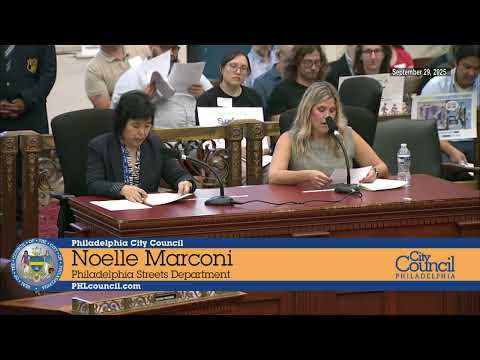
Committee hears plan to add automated speed cameras on three state routes and committee members press for data
Summary
The committee considered bill 250,770 to expand automated speed enforcement to three state corridors; Otis officials cited crash reductions from prior camera deployments, while some council members pressed for access to the traffic engineering speed studies used to set camera locations and limits.
Philadelphia City Council's Streets and Services Committee heard testimony on bill 250,770, a proposal to add automated speed enforcement cameras along three state‑route corridors: Erie/Torresdale Avenue (Route 1004), Allegheny Avenue (Route 2016) and Columbus/Delaware Avenue segments (Route 2001). The Office of Transportation and Infrastructure Systems (Otis) and safety advocates told the committee the cameras aim to reduce speeding and serious crashes; several council members pressed for greater access to the traffic engineering and speed study data used to select corridors and set speed limits.
Cole Appleman, transportation policy analyst for Otis, said the expansion follows studies and outreach and cited results from Roosevelt Boulevard: a stated 95% reduction in speeding violations at camera locations, a 50% reduction in pedestrian‑involved crashes, and a 21% reduction in fatal and serious injury crashes after camera installation. Appleman said the activation would include a 60‑day warning period and that the Philadelphia Parking Authority would continue as the program administrator.
Committee members questioned the metrics and asked to see the underlying speed studies. Marco Guarini, Vision Zero program manager at Otis, explained that each corridor requires a traffic engineering study, including collection of prevailing speed data, and that the engineering speed studies used to set statutory speed limits are privileged under state practice and not published as part of the public record. Guarini said that while Otis can share the raw speed data with committee members, the formal engineering study that determines posted speed limits is treated differently in the state's process.
Several public witnesses and safety advocates testified in favor of the expansion, saying automated enforcement saves lives and shifts enforcement burden from officers. Some council members pressed that without access to the speed studies they lacked the technical record to justify authorizing new corridors; Otis said the corridor selection was chiefly based on crash data and that crash reports and other publicly available sources informed the prioritization.
No formal committee vote on bill 250,770 was recorded in the hearing.