Get Full Government Meeting Transcripts, Videos, & Alerts Forever!
Get email alerts on the Police Internal Affairs topic
No spam. Unsubscribe anytime.
Baltimore County ACC receives internal‑affairs briefing; committee votes to enter closed session
Summary
Major Rick Hart, the new commander of Internal Affairs for the Baltimore County Police Department, told the Baltimore County Administrative Charging Committee on an Aug. 1 agenda that his office treats "inaccuracy of report" as a typically human error and treats "misrepresentation of fact" as an intentional falsification that can warrant termination.
Major Rick Hart, the new commander of Internal Affairs for the Baltimore County Police Department, told the Baltimore County Administrative Charging Committee on an Aug. 1 agenda that his office treats "inaccuracy of report" as a typically human error and treats "misrepresentation of fact" as an intentional falsification that can warrant termination. "An inaccuracy of report is like a simple mistake. It's an error," Hart said. "Misrepresentation of fact is...a bold faced lie."
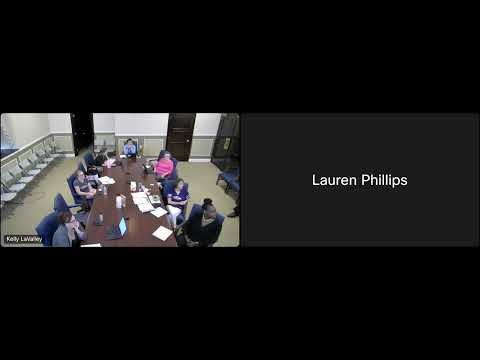
The committee, meeting in the Historic Courthouse in Room 118 and by Webex, heard examples Hart and Captain Jeffrey Shanks provided about common report template mistakes, witness confusion and cases the department treats as intentional misrepresentation. Hart said the department relies on a state supplementary disciplinary matrix to classify misconduct and that misrepresentation findings must be thoroughly documented before the department recommends termination. "When we send our officers into court, their integrity is everything," Shanks said during the presentation.
Hart described examples the Internal Affairs office uses to distinguish mistakes from intentional falsification: leaving template language in a report when no evidence exists; mismatching witness descriptions because of confusion or transcription error; and deliberately stating "no evidence" when physical evidence (for example, an object shown on body‑worn camera) is present. He said the former is generally handled as a Category B inaccuracy with corrective discipline while the latter may trigger the more serious misrepresentation charge under the disciplinary matrix.
Committee members were told that officers may see Reports of Investigation with permission from the department legal review, that misconduct findings can be appealed to a trial board, and that some internal‑affairs findings are discoverable in court. Dan Singer, identified in the presentation as an administrative sergeant who assembled examples for the slides, was credited by the presenters for preparing the materials.
After the briefing, the committee voted to move into a closed session to review investigatory files. The motion, read into the record, cited "Maryland code public safety section 3 dash 1 0 4 h" as the legal basis for the closed session: "Motion to enter closed session, that the Baltimore County ACC meeting closed session to review investigatory files and compliance with Maryland code public safety section 3 dash 1 0 4 h and to discuss investigations pertaining to actual or possible misconduct." The vote was recorded as unanimous.
Earlier in the meeting the committee approved the minutes from its Aug. 1, 2025 meeting. The committee noted for the record that Tamisha Peterson had joined the session. Committee members set the next meeting for Oct. 3, 2025 at 12 p.m. in Room 118 and by Webex.
The presentation materials were offered to committee members for follow up; Hart said he would provide a copy of the PowerPoint to the committee. No formal discipline or personnel decisions were announced in open session.