Get Full Government Meeting Transcripts, Videos, & Alerts Forever!
Get email alerts on the Community Reinvestment topic
No spam. Unsubscribe anytime.
Carroll County schedules public hearing to set priorities for cannabis reinvestment fund
Summary
The Board of County Commissioners voted to hold a public hearing Oct. 16 on how to distribute about $1.9 million in Maryland Cannabis Administration Community Reinvestment and Repair Fund money; county staff outlined proposed priorities and an RFP timeline and invited community input.
The Carroll County Board of Commissioners voted Thursday to hold a public hearing Oct. 16 on proposed uses of the Maryland Cannabis Administration Community Reinvestment and Repair Fund, a pool of state-directed revenue set aside to support communities the state identified as disproportionately harmed by prior cannabis laws.
County grants staff said the county has about $1.9 million in the fund and asked the board to authorize a public hearing so the county can seek public input before issuing a request for proposals.
The funding may only be used for community-based initiatives that benefit low-income communities and the state-identified disproportionately impacted area in Carroll County — ZIP code 21157 — and may not be used for law enforcement activities or to supplant existing local government funding. County staff outlined potential purpose areas the community stakeholder group has prioritized, including homelessness prevention, behavioral health crisis services, education and after-school programs, workforce development and transportation.
"The act allocates a portion of tax revenue from the sale to this fund, to assist low income communities or areas that have been disproportionately impacted by prior cannabis law," Corey Hartinger of the grants office told the board during a presentation. He said the county began receiving distributions in 2024 and that quarterly revenue has trended downward since the initial distributions. "These are one-time conversion fees and quarterly revenue; conversion fees are not expected to continue and made up a bulk of the early balance."
Hartinger said the grants office and county partners have convened a stakeholder work group, consulted the local management board and surveyed local nonprofits to identify gaps and avoid duplicating existing services. Based on that outreach, staff proposed a two-tier grant approach: larger multi‑year awards (staff suggested capping awards around $100,000 per year per vendor and aiming to fund organizations for roughly 30–36 months) and a second tier of smaller, one‑time start‑up grants (proposed maximum about $25,000) for community organizations needing capacity funding. Staff said the proposed commitments would allocate roughly $1.3 million of the existing funds while leaving a reserve as future distributions are monitored.
Several commissioners raised policy and ethical questions at the meeting. Commissioner Krebs said she remains concerned about the broader legal and moral context and expressed a preference for prevention and education uses. Caller Catherine Adelaide objected on federal legality grounds and asked commissioners to decline the funds; she cited the federal Controlled Substances Act and a 2005 Supreme Court decision (Gonzales v. Raich) during public comment. Commissioners and staff responded that the county is required by state law to accept the funds and that the board’s immediate vote was only to schedule a public hearing to gather community comment.
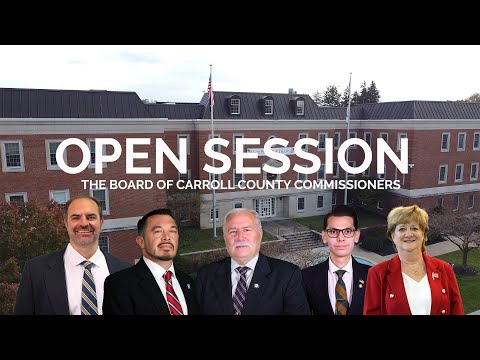
The board approved a motion to direct staff to schedule and advertise the public hearing during an open session; the motion passed. Following the hearing, staff said, the county plans to issue an RFP toward the end of October with the intent to make awards early in 2026 (staff remarked the January timeline might be aggressive and that award decisions could slip to March depending on proposal volume and review time).
County staff said grantees would be expected to be nonprofits or have a fiscal sponsor, to provide financial documentation (IRS Form 990 or audited financials), and to collect demographic and outcome data for performance tracking; the state has not yet set uniform benchmarks. Staff noted the funds are small and likely to decline over time and emphasized the county’s intent to avoid supplanting existing local services.
The board’s vote sets the formal public comment period in motion and requires staff to publish notice and take steps to solicit community input ahead of the RFP, county staff said. The hearing will be held in open session on Oct. 16; staff pledged to publicize the hearing and accept written comment as well as testimony in person.
What’s next: staff will hold additional stakeholder meetings, advertise the Oct. 16 hearing, publish hearing materials and propose an RFP informed by community input and by the health department’s prevention efforts.
Speakers quoted in this article are limited to the board and staff listed below.