Get Full Government Meeting Transcripts, Videos, & Alerts Forever!
Get email alerts on the Cdbg Funding topic
No spam. Unsubscribe anytime.
Shoreline council reviews 2026 CDBG plan and proposed reprogramming of $50,909 carryover
Summary
City staff recommended a 2026 Community Development Block Grant (CDBG) plan that allocates an estimated $320,000 in federal funds and asks council to reprogram $50,909 from 2025; council members debated shifting more money to emergency housing and utility assistance and asked staff to return with options on Oct. 27.
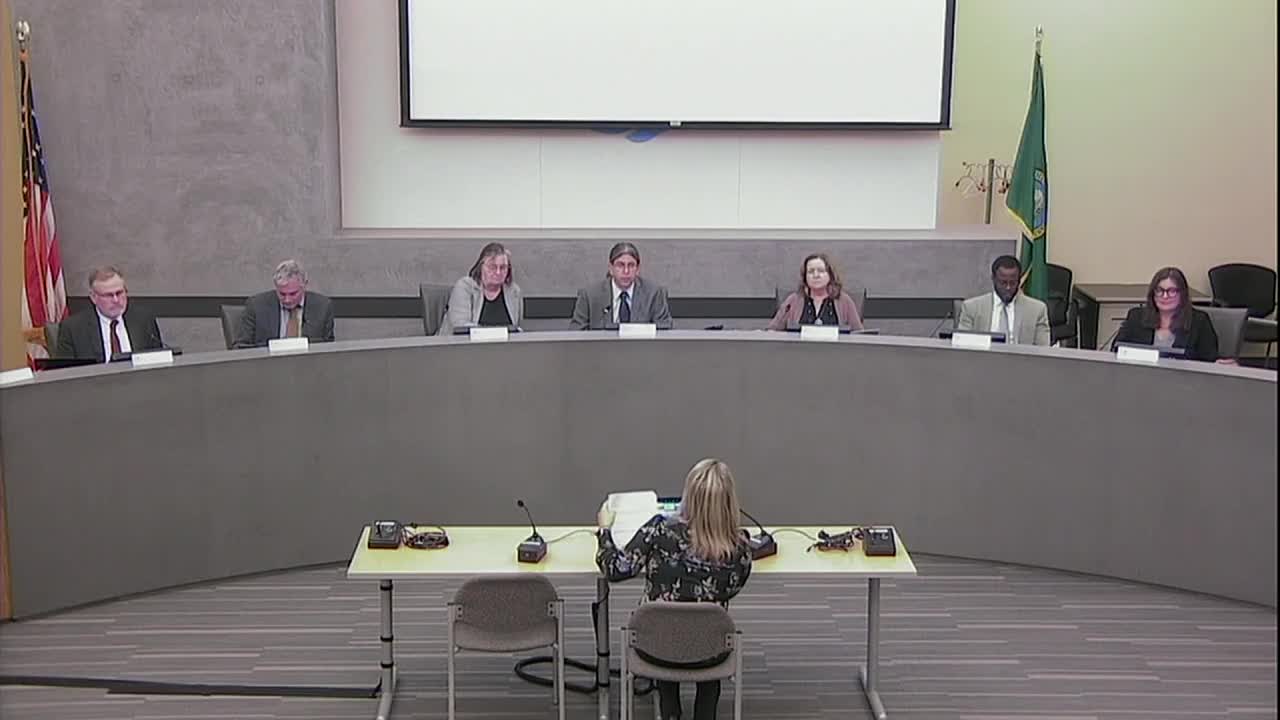
Shoreline City Council members on Monday heard a staff presentation on the city’s recommended 2026 Community Development Block Grant (CDBG) program and a proposal to reprogram $50,909 in unspent 2025 funds.
“We estimate there to be $320,000 available for programming in 2026,” said Bethany Warrick Dunn, Shoreline’s community services manager, during the staff report. Dunn said the city must hold a public hearing and take formal council action before CDBG dollars can be used locally and that use of the funds is governed by U.S. Department of Housing and Urban Development requirements and the city’s interlocal agreement with King County.
Dunn described the staff recommendation for 2026 and the proposed reprogramming. The recommended allocations from the 2026 federal share included a Major Home Repair program at $80,000 and a Housing Stability program representing roughly 5% of the allocation (about $16,000). Local program recommendations included a Minor Home Repair contract with Sound Generations for $130,000 and an affordable-housing acquisition project with Vital Housing for $23,600. Dunn said staff also requested $40,000 in reprogrammed 2025 funds to add to the minor home repair contract for 2025, which would bring that contract to about $152,000; she said the additional money responded to a surge in need this year. She described the affordable-housing acquisition as a purchase of two aging properties totaling roughly 110 units that the nonprofit would deed-restrict to 60% AMI without displacing current residents; the additional local dollars would enable the nonprofit to access a tax exemption cited in the presentation (RCW as recited in the staff report).
Council members pressed staff about shifting more of the small CDBG pool to emergency financial assistance. “I’d like to see more funds going towards more emergent, emergency purposes,” said Councilman Grama, who described cases he’d seen where utility arrears drove eviction. Several council members said the city’s small CDBG allocation cannot meet all need but could be targeted more directly. Council member Ademasu asked whether the Vital Housing project could restrict units below 60% AMI; Dunn replied that 60% was the proposer’s request and that the city could ask the developer to consider lower limits but that doing so could affect financing and project feasibility.
Dunn and council members also discussed the mechanics of routing funds for emergency assistance. Staff explained that under the interlocal agreement some portions of the CDBG share are regional and administered through King County; however, council members noted the countywide housing-stability pot can dilute Shoreline dollars. Several council members suggested routing any additional emergency assistance through Hopelink—a local provider known to serve Shoreline residents—so the dollars would be more likely to help Shoreline households directly. Staff said federal CDBG rules limit how much can be used for certain public services and that, for 2026, up to 10% of the local allocation could be used for public services/human services if the council so chooses.
There was no final vote on the recommended plan. Council asked staff to return on Oct. 27 with an action item that includes options: (a) adopt the staff-recommended program as presented, (b) reprogram the $50,909 carryover (or a portion of it) to housing-stability/emergency assistance and identify whether funds could be targeted through Hopelink, and (c) other scenarios that adjust the minor/major repair and affordable-housing allocations. The public hearing received no public testimony.
The council approved the consent calendar earlier in the meeting by recorded unanimous vote: Deputy Mayor Mark, Council member Ademasu, Council member Ramsdale, Council member Robertson, Council member Pobbe, Council member Scully and Mayor Roberts all voted “Aye.”