Get Full Government Meeting Transcripts, Videos, & Alerts Forever!
Get email alerts on the Surveillance Speed Enforcement topic
No spam. Unsubscribe anytime.
SFMTA reports 72% drop in speeding at camera sites; seeks light‑duty staff to process events
Summary
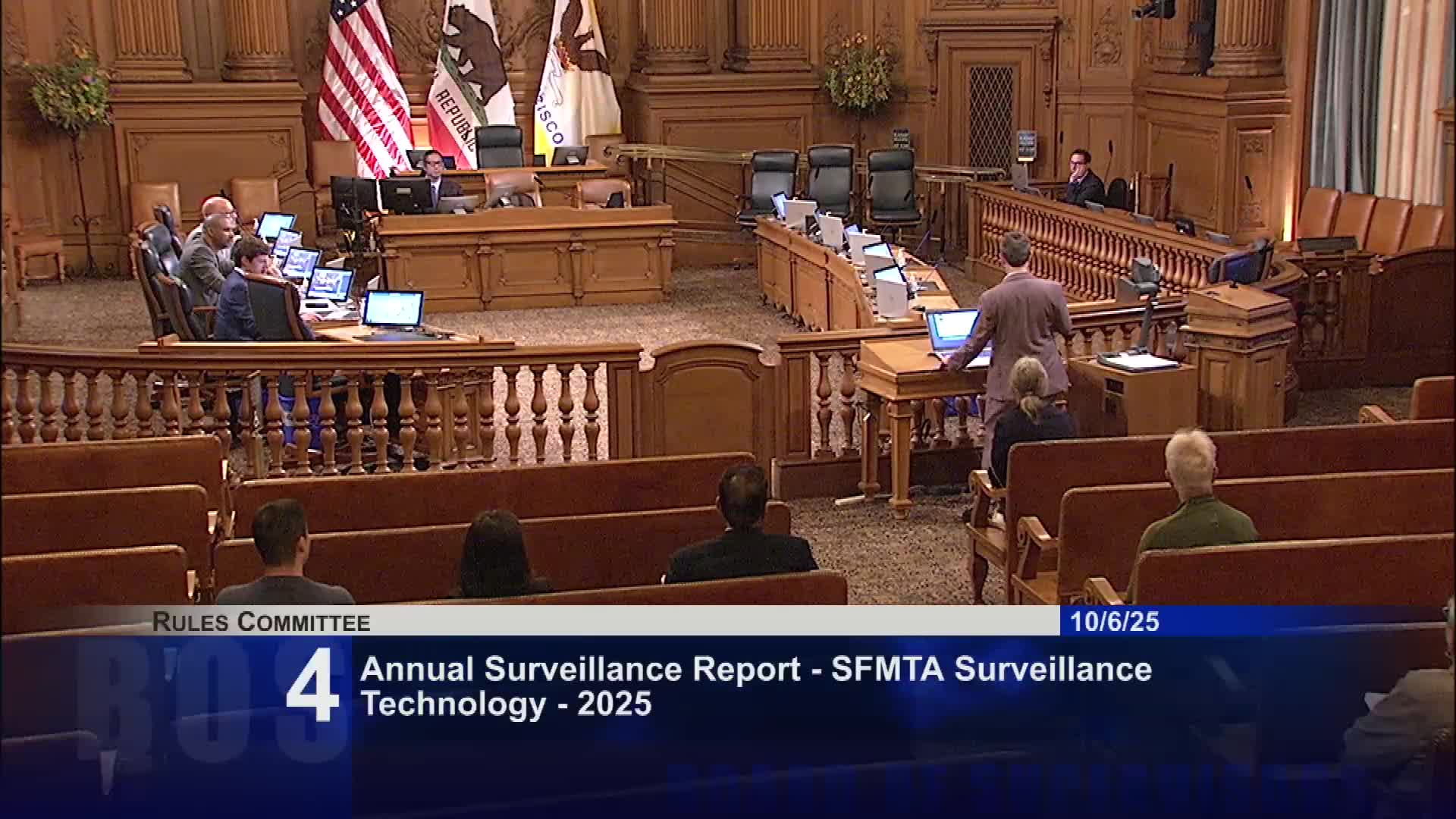
San Francisco Municipal Transportation Agency officials told the Board of Supervisors Rules Committee on Oct. 6 that automated speed enforcement cameras have produced a 72% decline in speeding at monitored intersections and that the agency wants to use light‑duty personnel to process camera events with added safeguards.
San Francisco Municipal Transportation Agency officials told the Board of Supervisors Rules Committee on Oct. 6 that automated speed enforcement cameras have produced a 72% decline in speeding at monitored intersections and that the agency wants to use light‑duty personnel to process camera events with added safeguards.
The presentation was delivered by Nabil Arnaud of the SFMTA and Shannon Hake, who oversees the speed safety camera program. Hake told the committee: “We have seen a 72% decline in speeding vehicles.” Arnaud described the agency’s request to use employees on temporary medical restrictions — so‑called light‑duty staff — to help process events, and said the system already limits those workers so they “see the minimum data they need to process that event” with no search functionality.
The agency said the speed enforcement program covers 33 intersections. It began issuing warning notices in March and began issuing official citations in August. Arnaud said collision analysis is not yet complete because collision data is supplied quarterly by the San Francisco Police Department; the next quarterly data set will be the first full quarter that includes live camera citations.
Arnaud described other updates in SFMTA’s report on surveillance technology required under Administrative Code section 19B0.6: expanded lists of authorized job titles after an internal reorganization and added data protections for light‑duty workers (one event at a time; no search). He also said the agency receives about 15 to 20 public communications per week, mostly questions from people confused about how the program works, and expects that volume to decline as public familiarity increases.
Arnaud corrected a formatting error in the annual report that mistakenly said the city had been sued; he said “we have not been sued” and that the intended phrasing was that the program has been in use since March. Committee members voted to forward the report to the full Board with a recommendation.
Actions and next steps: Committee members voted 3‑0 to recommend the surveillance report for the full Board’s consideration. The agency said it will analyze collision data once it receives the next quarterly data set from the police department and return that analysis to the Board when available.