Get Full Government Meeting Transcripts, Videos, & Alerts Forever!
Get email alerts on the Planning And Zoning topic
No spam. Unsubscribe anytime.
Council adopts revised planning commission ordinance on second reading after debate
Summary
On second reading the council amended the municipal code to change planning‑commission composition and staff attendance language, passing the ordinance 4–1. Supporters said the revisions clarify the commission’s advisory role and make the panel primarily city‑resident based; opponents urged filling vacancies and preserving broader membership.
The Torrington City Council on Oct. 7 passed an ordinance amending Chapter 2.2 of the Torrington Municipal Code to revise planning‑commission composition and staffing language. The ordinance passed on second reading by a 4–1 vote after public comment and discussion.
Mayor and council members framed the ordinance as a clarification of the planning commission’s advisory role under state statute and as a rebalancing of membership. The adopted changes reduce county representation and make the commission mainly city‑resident based (four city residents and one county resident in the new composition, per the ordinance presented), and the council inserted a staff‑attendance clarification to say the administrator or zoning officer or their designee will attend meetings and maintain records.
Dennis Estes (city staff) suggested adding the words “or their designee” to the staff‑attendance provision on second reading; the council included that edit. Mayor and City Attorney Will Eddington and other council members said the planning commission remains advisory under Wyoming statute (the mayor cited Title 15 provisions allowing municipalities to have a planning commission and describing its advisory powers) and that the governing body (mayor and council) retains final authority on permits, plats and variances when it sits as the Board of Adjustment.
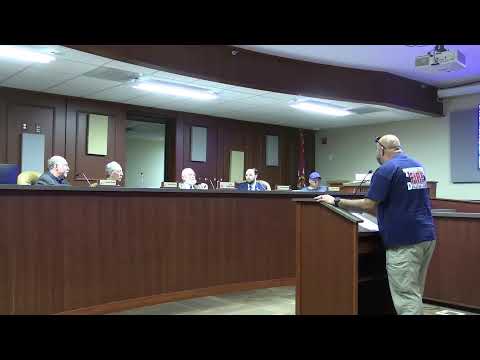
Planning‑commission chairman Dennis Cronk spoke at length opposing the ordinance changes. He urged the council to fill existing vacancies rather than reduce membership; he said a working five‑member commission had operated effectively for decades and warned that changing composition undermines the checks‑and‑balances role of an independent planning body. Cronk also read a letter from realtor Shelly Duncan urging the council to first seek members for open seats and consider virtual attendance rather than shrink the commission. Several council members responded that the council could and should revise ordinances when necessary and that the change was intended to streamline processes and reflect the city‑focused nature of the commission.
Councilman Deal moved to approve the ordinance on second reading with the staff‑designee amendment; Councilman Warren seconded. The council voted 4 in favor, 1 opposed. The mayor said the council had previously discussed the ordinance at a June 17 meeting (when an earlier version failed on a 2–2 vote) and in a Sept. 9 work session; the ordinance had passed first reading on Sept. 16 by a 4–1 vote. The council’s second‑reading approval advances the ordinance toward final adoption after the required readings.