Get Full Government Meeting Transcripts, Videos, & Alerts Forever!
Get email alerts on the Transit Funding topic
No spam. Unsubscribe anytime.
Transit task force urges new state funding tools, endorses fuel‑tax replacement that covers operations and capital
Summary
California's Transit Transformation Task Force, in its final meeting, voted to recommend new statewide funding mechanisms for transit operations and capital and asked the Legislature to ensure any fuel‑tax replacements continue to fund transit at current levels.
The Transit Transformation Task Force voted to recommend new statewide funding mechanisms aimed at stabilizing transit operations and supporting capital projects, and urged the Legislature to ensure any replacement for fuel taxes preserve at least current support for transit.
Why it matters: Task force members and public commentators repeatedly said California’s transit agencies need stable, recurring operations funding to restore service lost during the pandemic and to meet the state’s climate and equity goals. Task force members approved language asking the Legislature to consider multiple revenue options and to ensure that any vehicle fuel‑tax replacement keeps transit funding at least at current diesel‑tax levels.
The task force’s vote followed a series of public comments urging the panel to prioritize operating funding. Adrianna Rizzo, speaking for California Electric Rail, told the panel: “Transit agencies around the state have been lurching from crisis to crisis with their fiscal cliff always on the horizon. … Operations funding is, like, the biggest thing to improve transit in the region.” Adena Levin of Seamless Bay Area echoed the point, saying earlier data “showed that California chronically underfunds transit operations compared to other states.”
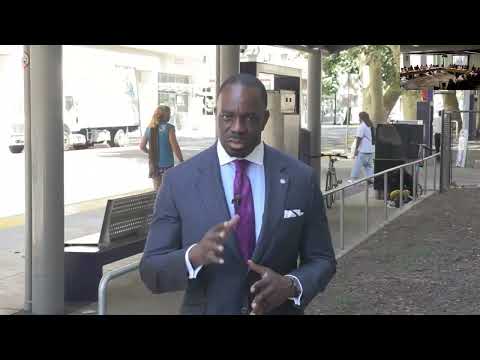
CalSTA leadership framed the issue as part of a broader, multi‑year effort. Toks Omishakin, California’s transportation secretary, opened the meeting with a video urging the task force’s members to continue pushing recommendations into action and identified recent state funding wins: “$1,000,000,000 for high speed rail per year through the year 2045 … $400,000,000 for the transit and intercity rail capital program, also known as TRCP, and $200,000,000 for the low carbon transit operations program, also known as LCTOP.” Undersecretary James Hacker described the report as a “launching pad” for turning recommendations into policy and funding.
What the task force approved - A recommendation that the Legislature “implement new state funding mechanisms to stabilize transit agencies in the near term, increase and enhance transit service in the midterm, and deliver transit services that align with the goals of the report over the long term.” (Motion passed: 18 yes.) - A companion recommendation that any legislation creating fuel‑tax replacement mechanisms should “include allowing transit operations and capital as eligible expenses” and should “maintain funding for transit at levels equal to at least the funding levels for transit provided by the existing sales tax on diesel fuel.” (Motion passed: 17 yes.) - A separate recommendation urging new state funding options for capital projects that “increase, enhance, and maintain transit service,” and asking the Legislature to consider revenue sources identified in the task force materials for capital needs. (Motion passed: 16 yes.)
The task force also approved a recommendation to give local transit agencies and regional entities a clearer path to place local ballot measures for transit funding (for portions or an entire service area), modeled after the authority cities have to place measures on ballots without enabling legislation. That motion passed 18–0 among members voting.
A related set of proposals to raise money through local value capture and to let agencies retain unspent state discretionary grant funds drew mixed reactions. A package that would have allowed agencies to keep underspent state grants for other eligible projects and to borrow against future state transit revenues failed to pass (12 yes; motion failed). The task force did approve other fiscal options presented in the staff materials, including targeted use of toll and managed‑lane revenue in congested areas to support transit.
Public comment and deliberations emphasized tradeoffs. Several speakers, including Mark Vucovich of Streets for All and organizers from Strategic Actions for a Just Economy, urged the task force to prioritize operations funding—arguing that without reliable operating support, capital investments will not deliver expected benefits. Other members raised concerns about changing the rules for local sales taxes that voters already approve and about designing allocation rules that would not disadvantage large regional providers.
What the motion language requires of lawmakers: The recommendations do not prescribe a single new tax or fee; rather, the task force urged the Legislature to study and enact one or more revenue sources sufficient to provide stable, recurring operations support while protecting any funds currently dedicated to transit. The task force specifically said that if a replacement to fuel taxes is enacted, it should preserve transit funding at least at the level currently provided by the diesel fuel sales tax.
Where this goes next: The task force delivered its recommendations to CalSTA. The report and the recommendations will be available to legislative staff drafting next steps. Task force members who opposed or abstained on particular motions recorded their reservations on the record, and several members asked staff and CalSTA to present the material as a menu of options rather than a single package.
Ending note: Public commenters and some members said the panel’s single most urgent need is recurring state operations revenue; the vote to call for new statewide funding mechanisms was the clearest expression of that priority.