Get Full Government Meeting Transcripts, Videos, & Alerts Forever!
Get email alerts on the School Renovation Moreland topic
No spam. Unsubscribe anytime.
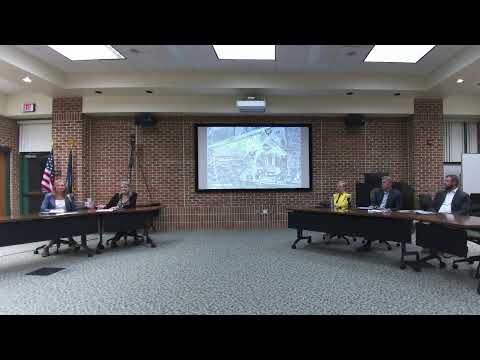
District outlines Moreland Elementary renovation and new circulation to move buses off Wilson Street
Summary
Architects presented a renovation and addition plan for Moreland Elementary that reconfigures bus and parent drop-off, adds a cafeteria and classrooms, and includes a pedestrian-heavy design; estimated all-in cost was $14.3M.
Architects presented a renovation and addition plan for Moreland Elementary that would add a cafeteria, new classrooms, a library and a secure parent drop-off, and reconfigure bus circulation to remove buses from Wilson Street.
Why this matters: Moreland is heavily pedestrianized with many walkers; the redesign aims to separate buses, parent traffic and walking routes, reduce curbside congestion on Wilson Street and preserve community recreational space such as Little League fields and tennis courts.
What the plan includes
The proposal adds a cafeteria and kitchen wing, a new library and third-grade classrooms, relocates or formalizes parent drop-off onto Moreland Avenue and repurposes the existing north parking area as a bus and delivery zone. The architects said the new circulation would create three student access points (bus, parent drop-off and walk-in) and that the space between bus and parent areas would be gated for emergency-only access.
Grace Hyland of Crabtree Robon said the Moreland renovation estimate is about $14,300,000 inclusive of construction, soft costs and equipment.
Traffic, parking and neighborhood impacts
Presenters said the new bus chevron (angled bus bays) is intended to keep buses off Wilson Street and improve safety; the team said it expects some learning curve as drivers and families adjust to the new pattern but that the plan should not worsen queueing on Wilson compared with current conditions.
Residents and board members pressed for details on parking, noise mitigation for homes abutting new circulation, and how many buses the new bus area would accommodate. The architects said the proposed bus space could hold several buses and that the team has discussed traffic calming with borough officials, including curb bump-outs and a possible raised crosswalk at a key pedestrian crossing.
Program and building layout
The renovated Moreland would retain kindergarten and first-grade classrooms near existing toilet rooms and put third-grade classrooms in the new wing. The Head Start classroom would use a separate entrance to facilitate separate management of arrival and departure. The architects said some existing HVAC upgrades are in place and that a new chiller will be provided to serve additions.
Timing and approvals
The team said it intends to present an Act 34 hearing for Moreland in January, with bidding and construction timelines dependent on board approvals and coordination with the middle-school schedule. The presentation indicated the Moreland project has a shorter construction duration than the new middle school and could be completed ahead of the 2028 campus reconfiguration.
Public questions and board comments
Speakers from the neighborhood and several board members asked about retaining athletic fields and cross-country routes; the architects said they plan to retain a Little League field and the tennis courts and are working to route cross-country without encroaching on fields. Residents raised safety concerns about Moreland Avenue speeds; the presenters said the borough is involved and that options such as raised crosswalks, narrowing and signage are being considered.
Cost and scope
Grace Hyland presented the $14.3 million all-in figure, which includes construction soft costs and loose equipment. The architects said the design team will aim to reuse furniture and equipment from closed schools when possible to reduce district purchases.