Get Full Government Meeting Transcripts, Videos, & Alerts Forever!
Get email alerts on the Welfare Nutrition Programs topic
No spam. Unsubscribe anytime.
Riley County health officials warn WIC services could pause after federal shutdown
Summary
County health staff told commissioners the USDA-funded WIC program has enough state-held funds for roughly 10–11 calendar days; Riley County serves about 2,743 WIC clients and county staff will meet to weigh legal and financial options if federal payments stop.
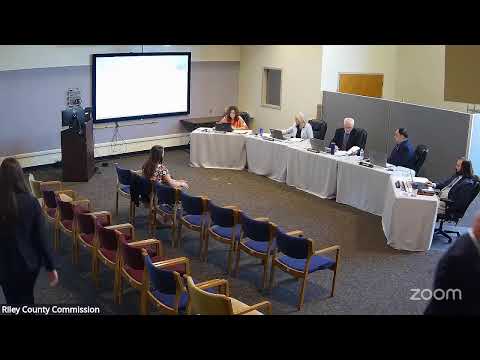
Caitlin Speth, WIC supervisor for Riley County, told the Board of County Commissioners — convened as the County Board of Health — that a federal government shutdown could interrupt local WIC services because the Women, Infants and Children (WIC) program is funded quarterly by the U.S. Department of Agriculture and is discretionary during a shutdown.
KDHE informed local agencies that it would continue state and local WIC operations “as is until funds are depleted,” Speth said, and that the Kansas Department of Health and Environment (KDHE) was monitoring daily. "KDHE estimates that based off of current available funding, local WIC operations will maintain for approximately 10 to 11 calendar days," Speth said.
The nut graf: Riley County’s WIC program provides food benefits, nutrition education and breastfeeding support to pregnant and postpartum women, infants and children up to age 5. Disruption to WIC would affect household food security in a county that federal data show has persistent pockets of high poverty, county staff said.
Speth gave enrollment counts for local operations: 1,377 clients at Fort Riley, 1,255 in Manhattan/Riley County and 111 in Pottawatomie County (total 2,743). She said the program has seen steady caseload growth in recent months. "Any disruption to WIC services, it will be huge for Riley County and surrounding areas," Speth told commissioners.
Britney Phillips, Riley County budget and finance officer, outlined fiscal considerations and said local staff are meeting to review staffing and options. "Right now we're just really trying to figure out what we need to do for WIC," Phillips said. She noted the county and health department are examining whether they could temporarily continue operations using county funds, and whether legal constraints or reimbursement rules would permit that.
Jacob Hanson, Riley County counselor, was identified as the county’s legal point of contact and was expected to join the staff discussion to advise on whether the county could legally continue WIC operations with local funds pending federal reimbursement.
County staff stressed that some assistance programs tied to WIC (for example SNAP) are administered separately and are not controlled locally; county staff said they would continue to relay updates from KDHE and USDA to commissioners. Phillips said state guidance and the timing of federal appropriations will determine next steps and whether the county can or should use local cash to bridge a shortfall.
Commissioners did not take formal action at the meeting but directed staff to continue planning and to consult legal counsel. County officials planned a follow-up meeting the same afternoon among health department leadership, budget staff and the county counselor to develop recommended options.
Ending: County health staff said they would update the board as KDHE and USDA messages arrive and advised the public that any material change to WIC operations would be communicated through the health department and county channels.