Get Full Government Meeting Transcripts, Videos, & Alerts Forever!
Get email alerts on the Gdoe Facilities Leasing topic
No spam. Unsubscribe anytime.
Guam Legislature advances bill letting GDOE lease school property; floor set, reporting rules debated
Summary
Senators amended and advanced Bill 70-38 COR to allow the Guam Department of Education (GDOE) to enter commercial leases of underused school property, adding requirements for fees and regulations under the Administrative Adjudication Act and other guardrails; several proposed amendments on community hiring and annual utilization plans failed and a
The Guam Legislature advanced Bill 70-38 COR, which would authorize the Guam Department of Education (GDOE) to enter commercial leases for unused or underused school property, after senators adopted a series of amendments and moved the measure to third reading.
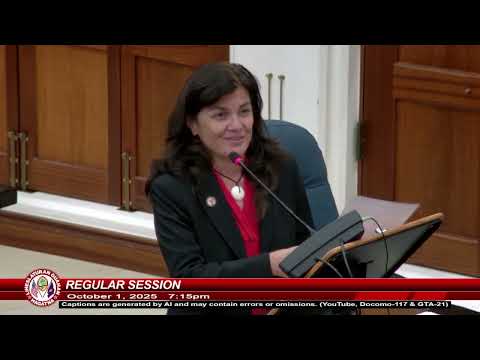
Sponsor and floor debate: Senator Perez, speaking as the bill’s floor sponsor, proffered multiple amendments intended to require GDOE to establish a fee schedule and rules under the Administrative Adjudication Act (AAA). Perez said, “what it states is that, GDOE shall establish fees and regulations pursuant to the administrative adjudication law found in chapter 9, title 5, Guam Code Annotated for the implementation of this section,” and asked colleagues for support.
Why it matters: Supporters said the bill aims to generate revenue for school maintenance, renovation and capital improvements, reduce the number of idle, deteriorating buildings, and create opportunities for workforce development through internships and apprenticeships tied to leases. Opponents warned the Legislature should not inadvertently undercut GDOE revenue by allowing steep discounts for other government entities or charter schools.
Key amendments adopted: Senators approved several amendments that change how lease revenues and processes would be handled: - Fees and rulemaking: An amendment requiring GDOE to establish fees and regulations pursuant to the Administrative Adjudication Act (chapter 9, title 5, Guam Code Annotated) was adopted with no recorded objections; sponsors said the change would compel a transparent rulemaking process. - Revenue uses and separate account: Lawmakers amended subsection b to clarify that revenue “shall be used for the maintenance, renovation, and capital improvement projects,” and restored language requiring lease payments be deposited in an account separate and apart from the general fund, expended only upon approval by resolution of the Guam Board of Education; that amendment was adopted without objection. - Appraisals: An amendment requiring all property appraisals be made by an appraiser licensed under chapter 30, title 22, Guam Code Annotated passed with no objection. - Prohibited uses: The bill’s language as amended bars adult-oriented gambling and cannabis businesses from leasing DOE facilities.
Amendments that failed: A series of proposals intended to add community-benefit criteria or reporting requirements did not pass: - Community participation/local hiring/in-kind credit: A proposal to add a local economic participation factor (awarding points for Guam-based small business participation, local-hiring plans and student internship/apprenticeship commitments) and to allow up to 20% of annual rent as in-kind credit failed after an objection and a recorded vote (“Motion fails”). Supporters framed this as workforce-development policy; opponents argued it risked micromanaging fee structure better set by the AAA rulemaking. - Annual lease utilization plan: A proposal that would have required the Guam Board of Education to provide an annual lease utilization plan (candidate sites, anticipated timelines and planned uses for funds) failed after objection. Sponsors said the report would increase transparency for parents and the public; opponents argued it risked overburdening the board and duplicating existing public oversight. - Removal of government/charter-school discount: An amendment to delete a provision permitting leases to other government instrumentalities or certain education institutions at a lower floor (60% of appraised value) failed on objection; the 60% exception remained in the bill as amended.
Debate highlights and context: Supporters including Senator Long and Senator Terafova argued the measure is a pragmatic response to declining enrollment, idle campuses and rising costs to lease off-island office space; Senator Long said the bill "solves two problems at once" by generating revenue and repurposing facilities. Senator Massey and others emphasized workforce development ties to leases; Massey urged colleagues to consider internships and apprenticeships as part of lease solicitations. Opponents raised concerns about preserving GDOE revenue, ensuring appraisals and avoiding giveaways to favored charter schools or agencies.
Formal outcome and next step: After floor amendments were adopted and several proposals rejected, senators voted to move Bill 70-38 COR, as amended on the floor, to the third-reading file. The motion to advance the bill was made and carried with no recorded objections.
What remains unresolved: The bill as advanced retains a statutory floor that allows certain government or educational instrumentalities to lease GDOE properties at a lower percentage (down to 60% of appraised value) and leaves implementation details to the AAA rulemaking. Multiple senators said they expect further clarification from GDOE about title, current use and appraised values of particular campuses (several speakers noted Chief Bridal Elementary and LBJ Elementary as examples discussed on the floor). The bill will now proceed to third reading for final consideration.
Ending: With the bill placed on the third-reading file, senators said they expect additional review and possible amendments at the next stage; supporters framed the measure as one tool among many to stabilize school facilities funding and expand opportunities for students.