Get Full Government Meeting Transcripts, Videos, & Alerts Forever!
Get email alerts on the State Legislation topic
No spam. Unsubscribe anytime.
Council receives League of Oregon Cities recap: housing infrastructure, shelter funding and transient lodging tax flexibility highlighted
Summary
City staff summarized outcomes from the 2025 Oregon legislative session at the Oct. 6 work session, highlighting HB 3031 (housing infrastructure), SB 179 (recreational immunity) and HB 3644 (statewide shelter funding).
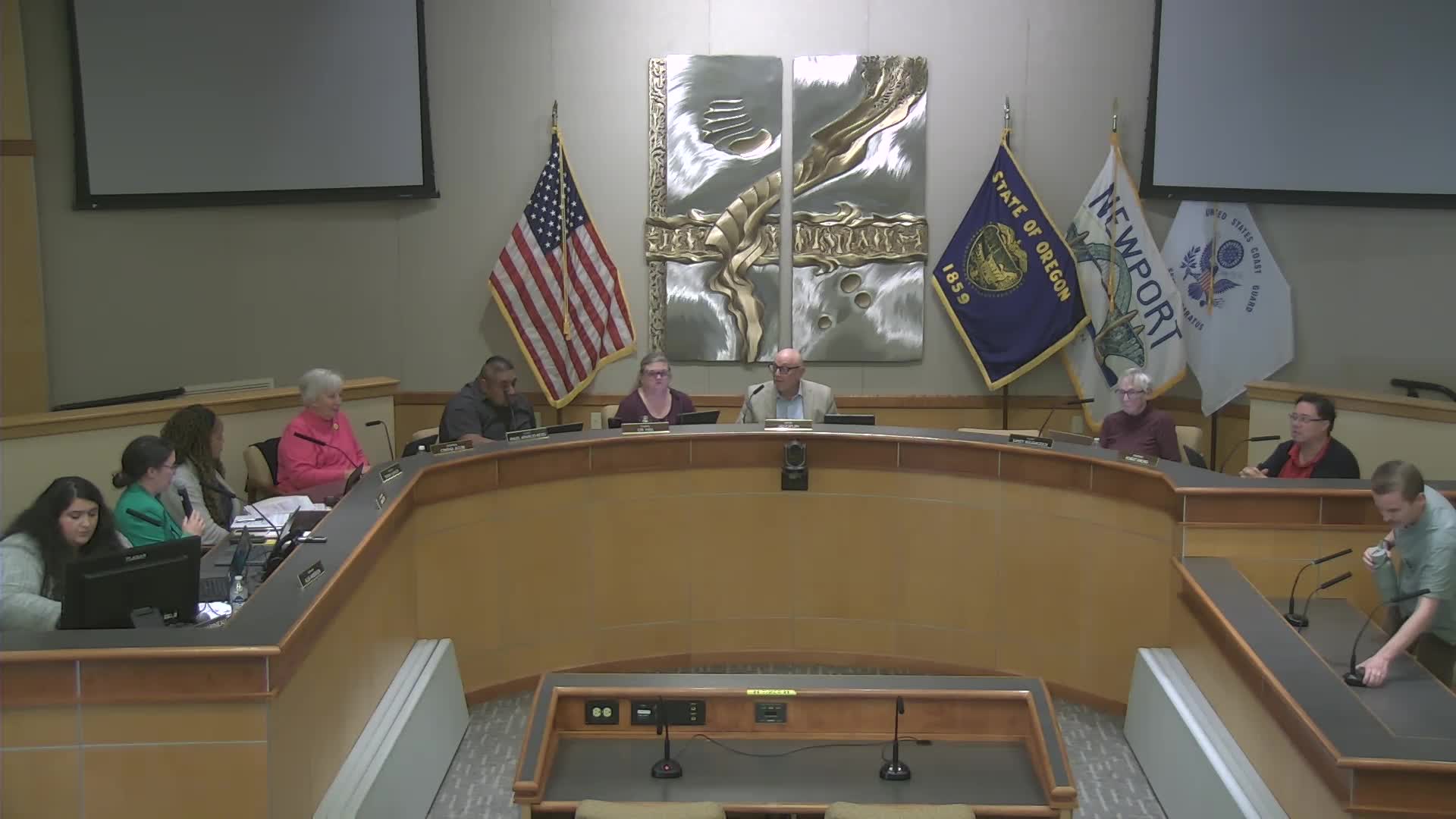
City staff summarized key outcomes from the 2025 Oregon legislative session at the Newport City Council work session on Oct. 6, highlighting several statewide measures and how they may affect Newport and Lincoln County.
The summary drew from a League of Oregon Cities 32-page report and emphasized measures that matter to cities: the creation of a housing infrastructure financing program (House Bill 3031) with $10,000,000 statewide; permanent recreational immunity for landowners (Senate Bill 179); and a statewide shelter funding framework (House Bill 3644) that directs about $204,000,000 for the biennium to support shelter programs (typically administered through county consortiums rather than directly to cities).
Why it matters: The session included several bills with local implications for housing, homelessness and transportation funding. City staff cautioned that statewide funding levels were lower than requested and that the state’s economic forecast will constrain available resources in the short term.
Key points identified by staff
- Housing infrastructure financing (HB 3031): The bill established a housing infrastructure financing program; staff noted the program was created with $10,000,000 statewide.
- Recreational immunity (SB 179): The Legislature made permanent the temporary 2024 changes that offer landowners immunity when they allow free public recreational use of land.
- Statewide shelter funding (HB 3644): The bill directed the Oregon Housing and Community Services Department to establish a statewide shelter program; the biennial allocation cited in the summary was $204,000,000, which staff said is less than advocacy groups requested. Staff noted funds often flow to county consortia rather than directly to cities.
- Transportation package: Staff described the package as substantially reduced from initial proposals; it provided additional funds for counties and cities but was not a comprehensive long-term solution.
- Transient lodging tax flexibility: Staff said bills to increase flexibility on TLT spending (House Bill 3556 and later House Bill 3962) showed negotiation progress but did not pass in this session; the League believes further progress may be possible in a future session.
- Workforce training for water/wastewater operators (HB 3634): A proposed program to fund operator training did not advance out of committee.
Council discussion and next steps
Councilors discussed possible follow-up actions. One councilor suggested inviting housing consortium representatives (for example, the local housing consortium or an agency representative) to a future work session to summarize opportunities and funding tracks that could affect local projects. Another councilor raised two bills for local consideration: Senate Bill 243 (allowing local governments to prohibit firearms, including concealed permitted firearms, in public buildings during official meetings) and Senate Bill 983 (clarifying ethics/conflict rules for elected officials voting on compensation/stipend matters). The staff presenter advised that the League of Oregon Cities will continue updates and that the state’s short session is unlikely to produce major new legislation.
Ending
Council members were encouraged to review the League summary in the meeting packet and consider engagement with the League’s policy committees. Staff flagged the state’s weaker fiscal forecast and said it may constrain grants and state funding in coming years.