Get Full Government Meeting Transcripts, Videos, & Alerts Forever!
Get email alerts on the Special Education Briefing topic
No spam. Unsubscribe anytime.
PGCPS briefs council committee on special education capacity, autism programs and transition services
Summary
Prince George’s County Public Schools officials told the Education, Workforce and Development Committee that special education enrollment and vacancies are driving capacity strains; the district outlined early intervention services, autism programming expansion and state-dependent transition resources for adults with disabilities.
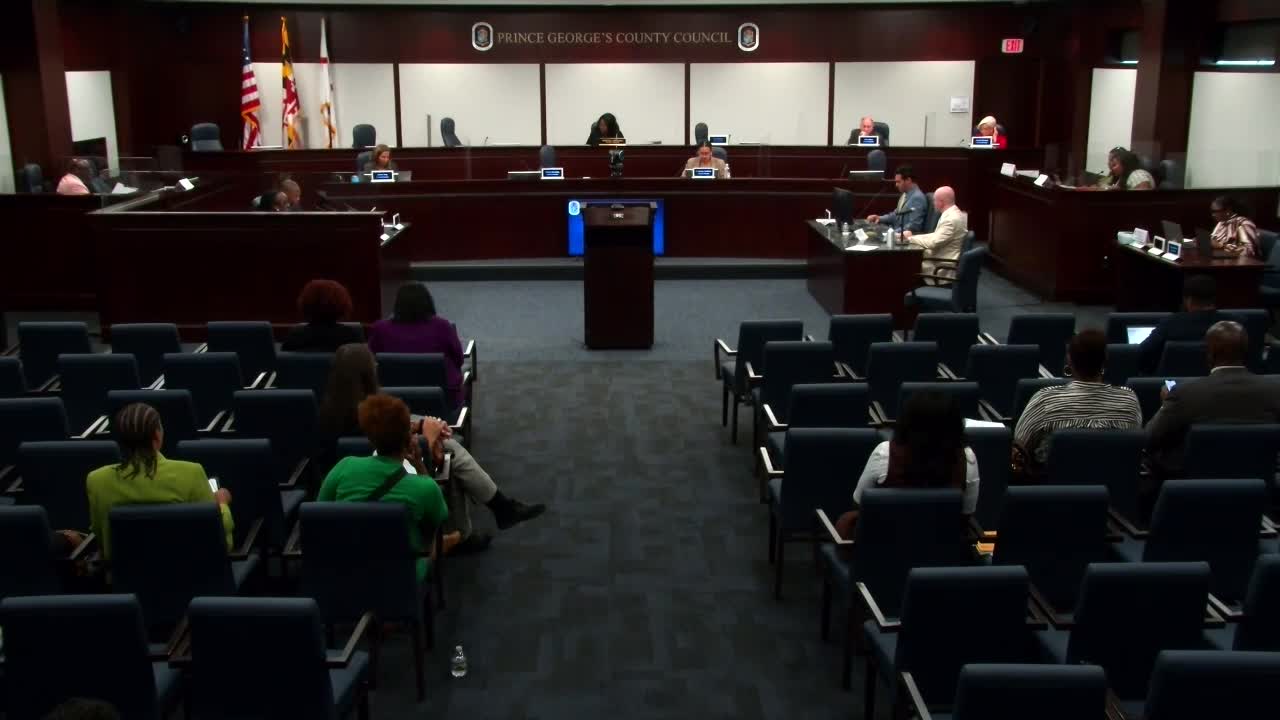
Prince George’s County Public Schools officials on Sept. 9 briefed the County Council Education, Workforce and Development Committee on early intervention, special education eligibility, autism programming and post‑high‑school transition planning.
Tranel Bowman, associate superintendent for special education at Prince George’s County Public Schools, told the committee the district serves more than 17,000 students with disabilities (data as of Oct. 1, 2024) and detailed programs from birth through post‑secondary transition, including infants and toddlers supports, preschool services, in‑school IEP processes, autism programs and the district’s transition planning for students leaving school.
Early intervention and eligibility: Bowman said early intervention covers birth to age 5 and uses a family‑coaching model for infants and toddlers (birth–3). Referrals can come from hospitals, doctors, parents or community members. Once referred, the district follows a standard evaluation and timeline: an initial evaluation and a 60‑day assessment window (after parental consent) and up to 30 days to develop an IEP after eligibility is determined. Bowman said roughly 84% of students who come to an initial eligibility meeting are found eligible.
Capacity pressures and vacancies: Bowman told the committee that the district has seen a significant increase in early childhood special‑education enrollment; staff reported 158 new special‑education students since the start of the school year, a nearly 50% increase over the same time last year. The district has staffing vacancies that affect service delivery: officials said about 65 students were impacted by vacancies in early‑childhood services for ages 4–5, and the district has reduced a larger vacancy total from 242 to 135 through recruitment and hiring efforts.
Autism programs: Bowman said autism is the district’s second‑largest special‑education population and reported an increase from roughly 19% to about 23% of the special‑education population between the 2023–24 and 2024–25 school years. The district runs autism programs for students working toward a diploma and an autism extension program for students with greater needs. Bowman described curriculum and supports including social‑emotional instruction, task analysis, behavior intervention plans, transition supports and sensory calming rooms. The district reported expanding autism program sites from about 11 to 23 and adding two new sites the following school year. The district has added eight full‑time registered behavior technician positions and said the role has helped some students reduce the need for more restrictive placements.
State‑run waivers and adult services: Committee members asked about gaps families experience when students age out of school‑based services. Bowman said Maryland is an autism‑waiver state and historically families faced an eight‑year wait list for autism waiver services; the state has increased funding to reduce wait times but families may still experience delays between a child’s school exit and the start date for state services (for example July or August start dates). Bowman explained the Developmental Disabilities Administration (DDA) handles many post‑school adult services funded at the state level, while local providers deliver services paid by the state.
Transition planning and compliance: Bowman said Maryland requires transition planning to begin at age 14 (federal IDEA requires transition planning no later than 16), and the district reported 100% compliance in monitoring students’ secondary transition plans for the past five years. The transition plans include agency linkages with state partners such as the Division of Rehabilitation Services, Developmental Disabilities Administration, the Maryland Department of Labor and other agencies.
Family access and scheduling: Committee members raised concerns about evening and weekend access to parent coaching and family‑training sessions, particularly because many caregivers work daytime hours. Bowman said most infants and toddlers educators are 10‑ or 11‑month employees whose workdays align with the school day; expanding evenings/weekends could require negotiating with the teachers’ union or using contracted outside providers. She said family‑support center staff have more scheduling flexibility and the district already offers some evening and weekend trainings and could survey families for interest.
Recruitment and next steps: Bowman described an October recruitment campaign that includes a hiring event, outreach to federal workers interested in education roles, and planned billboards to reduce vacancies. Committee members discussed potential partnerships with libraries and park and planning facilities to host evening programming and suggested piloting community‑based speech therapy or play‑therapy supports.
Why it matters: Committee members said the briefing highlighted operational gaps that affect children’s access to early supports and the county’s ability to keep gains made in early intervention. Several council members offered to pursue legislative or programmatic pilots to expand access to speech therapy and other early interventions.