Get Full Government Meeting Transcripts, Videos, & Alerts Forever!
Get email alerts on the School Phones topic
No spam. Unsubscribe anytime.
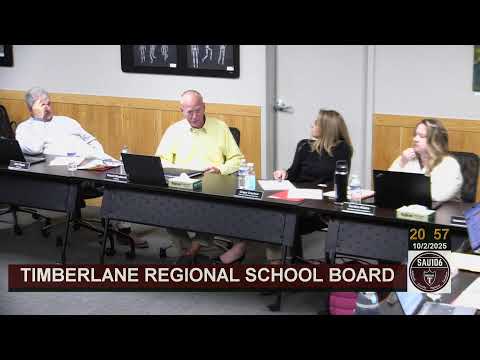
Timberlane students, teachers report more engagement but new phone ban raises logistics and safety concerns
Summary
Students and teachers at Timberlane Regional High School told the school board they have seen higher in-person engagement since a bell‑to‑bell cellphone ban took effect, but described communication, privacy and emergency‑access challenges.
Students and several high school staff members told the Timberlane Regional School District board that a districtwide, bell‑to‑bell cellphone ban introduced this school year has produced both clear benefits and practical problems.
Students said they are talking with one another more during free time and in class and that many teachers have observed improved attention. Several students and teachers also described drawbacks: parents’ messages routed to email are not reliably seen during the school day; school email access can flag or expose messages; some instructional uses of phones (tuners, graphing‑calculator apps, photos for lab work) are now restricted; and students with organizational or memory challenges have lost a familiar reminder tool.
The students who spoke described how staff have allowed limited email‑checking windows in certain blocks but said enforcement is inconsistent. One student said she still keeps a personal device on her person because she does not feel safe being completely without instant contact for emergencies. Another student said a teammate missed a bus time change because the update went to email rather than to students’ phones, and had to make their own arrangements.
Assistant principals and teachers who appeared with students characterized classroom effects similarly. Several staff members said they have seen higher engagement — including improved test results in some advanced classes — and greater face‑to‑face interaction among students after the ban. They also said staff are striving to find workarounds for instructional uses previously handled with phones, including buying additional tuners or installing document cameras for scanning student work.
Teachers and administrators emphasized that the district has identified limited exceptions, such as for students with documented medical needs (for example, diabetic students) and communicated those exceptions in the student information system. Teachers said those exceptions can now be checked at attendance to avoid singling students out. Staff also described challenges enforcing uniform practice among employees and students who sometimes forget the new rules.
Board members thanked the presenters and discussed tradeoffs between classroom focus and practical needs such as timely parental contact and instructional tools. No formal policy change was proposed at the meeting.
Board members said the district will monitor how the changes affect instruction, student safety and extracurricular communications and urged staff and families to bring forward specific incidents for follow‑up.
The student‑staff presentations at the meeting included students identified in the record as Luke and Eileen and teachers identified as Matt and Lisa, and the principal of the high school was introduced by the board as Principal Vakarez.