Get Full Government Meeting Transcripts, Videos, & Alerts Forever!
Get email alerts on the Ag Pests topic
No spam. Unsubscribe anytime.
Skagit pest control board reports spike in spotted wing drosophila; county traps catch more than 16,000 in 2025 season
Summary
The Skagit County Horticultural Pest Board said Oct. 6 that trapping this year captured 16,214 spotted wing drosophila (SWD) in 37 traps, substantially higher than last year, and reported monitoring results for several regulated and emerging pests; staff urged continued integrated pest management and grower reporting.
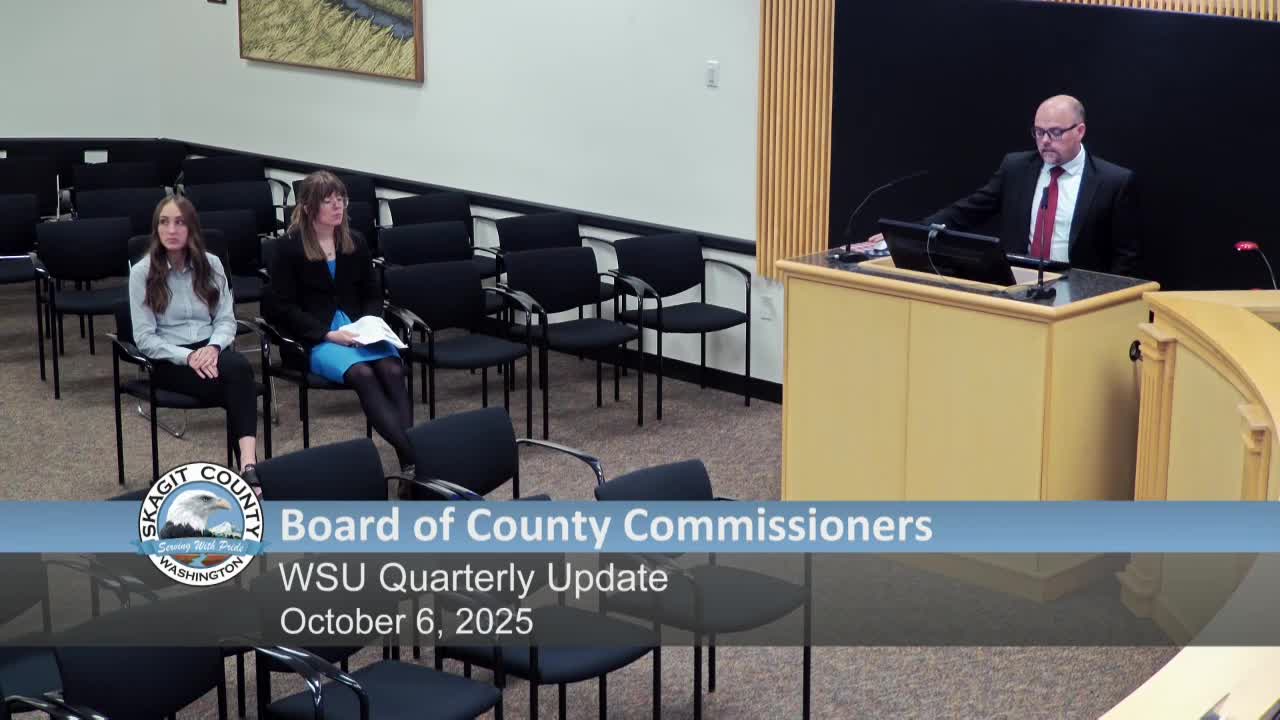
Katie Hayes, entomology coordinator with WSU Skagit County Extension and the county's horticultural pest board, told commissioners Oct. 6 that regional trap monitoring detected markedly higher spotted wing drosophila (Drosophila suzukii) numbers in 2025 than in prior seasons.
"This year I saw a total of 16,214 spotted winged Drosophila caught in 37 traps in Skagit County," Hayes said, summarizing the 2025 trap set. She said the year‑over‑year increase likely reflects weather conditions that favored SWD reproduction; "mean daily temperatures between 50 degrees Fahrenheit and 82 degrees Fahrenheit are the perfect conditions for high activity, high reproduction rates, and sustained high population numbers." Hayes noted last year the program used fewer traps (23) and that monitoring intensity affects raw totals.
Hayes walked through the pest board's 2025 monitored species and counts: - Brown marmorated stink bug: 242 individuals (61 adults and 181 nymphs) across four traps, a trend consistent with prior years but one that requires monitoring because stink‑bug feeding can predispose fruit to other pests or diseases. - Apple maggot: 76 adult flies captured in 30 traps; county and state quarantine and monitoring remain important because larvae tunnel fruit and render it unmarketable. - Codling moth: low counts in 2025 (one adult male found in two traps) but continued trapping recommended to time controls. - Potato psyllid: six traps yielded zero detections in 2025; Hayes noted confirmed psyllid specimens in prior years have tested negative for the zebra chip bacterium but surveillance is critical. - Kudzu bug: added to the board's watch list after a 2024 detection in Dayton, Oregon; three traps on Fir Island returned zero detections so far.
Hayes emphasized the board's role in making traps available to the public and in informing integrated pest management decisions for commercial and home growers. She said some growers reported good yields in 2025 despite high SWD counts, which reflects targeted management rather than eradication. "The principle behind integrated pest management is management rather than eradication," Hayes said.
Why it matters: Many of the pests monitored by the county cause yield loss or quarantine restrictions for fruit and vegetable crops. Early detection helps growers apply targeted controls and reduces economic risk.
Next steps: The pest board will continue seasonal trapping, expand monitoring for emerging pests on the board's watch list and make public traps available through the Extension office.