Get Full Government Meeting Transcripts, Videos, & Alerts Forever!
Get email alerts on the Local History topic
No spam. Unsubscribe anytime.
Newcastle presenter recounts father’s World War II service in Europe, including Castle Itter rescue
Summary
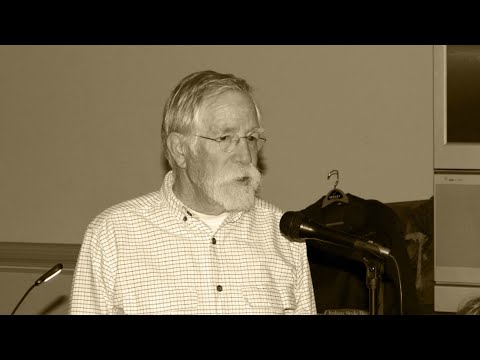
At a Weston County Historical Society event in Newcastle, David Halsey described his father Lieutenant Edward Halsey’s wartime service in France, Germany and Austria using letters and memoirs, and recounted a recent trip to Hall in Tirol to locate sites his father served.
David Halsey, of Wheatland, told attendees at a Weston County Historical Society event in Newcastle about his father’s service as an Army lieutenant in Europe during World War II, drawing on more than 350 letters and his father’s memoirs.
Halsey said Lieutenant Edward Halsey (born May 4, 1922) served roughly a year and a half overseas with the 103rd Infantry Division, fought in the Vosges Mountains and through southern Germany, was wounded by shrapnel after an German 88 exploded nearby, and later performed administrative duties in towns including Landsberg and Hall in Tirol (Hall in Tyrol).
The presentation focused on front‑line experiences, a wartime episode known as the Battle of Castle Itter, and Halsey’s postwar duties. Halsey described marching from a troop transport in New Jersey to combat in late 1944, spending Christmas in the Alsace region of France, crossing rivers under fire, and advancing into southern Germany and Austria as Allied forces pushed toward Innsbruck.
Halsey highlighted the April–May 1945 period. He read from a family letter dated May 6, 1945, in which his father wrote that he had “experienced exciting, weird, beautiful, frightening, unbelievable, and almost impossible events,” and described relief when orders came to cease combat. Halsey said many wartime letters were censored and that his fuller accounts came from memoirs his father later wrote.
About Castle Itter — a 14th‑century castle in Tyrol where French political prisoners were held — Halsey recounted the event of May 2, 1945, when U.S. soldiers, a contingent of troops from Vermont, and armed French prisoners repelled SS troops in several hours of fighting. He described how U.S. tank commander Jack Lee and others volunteered to assist the prisoners and how a French tennis star helped find reinforcements. Halsey emphasized that Castle Itter was an unusual case in which regular U.S. soldiers and some German forces opposed SS troops.
Halsey also described his 2024 visit to Bavaria and Austria to follow his father’s footsteps. In Hall in Tirol he met the mayor, accessed the municipal archives and sat at the desk his father had used when serving as officer of the day. He said a local reporter, identified as Gloria, later published an article about the visit and that his photographs and the mayor’s hospitality helped confirm archival traces of his father’s service.
During audience questions, residents asked about archival material and about two children Halsey said had been killed by a truck driven by an American soldier; Halsey said the town archivist had not been forthcoming in replies to his earlier emails but that the reporter helped secure some documentation. An audience member also made an unrelated comment urging a constitutional Article V convention to rein in federal power; Halsey did not endorse or expand on that comment.
Halsey closed by noting his father returned to the United States in April 1946 after reaching enough points under the Army’s point system to sail home, and by saying many veterans of that generation rarely spoke about their wartime service. Attendees were invited to view slides and photographs after the talk and informed of upcoming local historical presentations and merchandise sales.
Copies of family photographs, the mayor’s archival items and Halsey’s readings from letters formed the basis of the presentation; Halsey said he used more than 350 correspondence items plus memoir notes his father wrote during later decades.
A closing announcement from the society noted a separate program in the same room on Thursday at 1:30 p.m. about the ship Wyoming and the availability of local souvenir items for sale.