Get Full Government Meeting Transcripts, Videos, & Alerts Forever!
Get email alerts on the Public Safety topic
No spam. Unsubscribe anytime.
Unified Fire Authority reports summer call increase, warns on lithium-battery fires and describes wildland capabilities
Summary
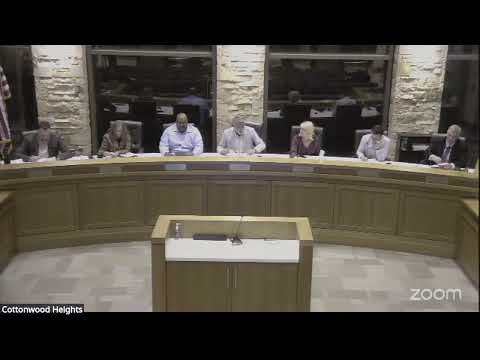
Riley Pilgrim, chief of the Unified Fire Authority, briefed the Cottonwood Heights City Council on second-quarter activity, noting a seasonal rise in calls, growing concerns about fires from lithium batteries and the authority's wildland response capacity.
Riley Pilgrim, chief of the Unified Fire Authority, told the Cottonwood Heights City Council on Oct. 7 that UFA handled 570 total calls in the second quarter (April–June), including 204 emergent calls, and that call volume rose with the start of summer.
Pilgrim said the 570 calls represented roughly a 65-call increase from the previous quarter and that emergent calls made up about 36 percent of the total. “Our fiftieth percentile on emergent calls is just under five minutes, and our ninetieth percentile is just over seven and a half,” Pilgrim said.
Pilgrim highlighted operational details aimed at managing seasonal demand: Cottonwood Heights currently is covered by two stations and one primary ambulance (Station 110), with Midvale and a seasonal ambulance (216) providing additional coverage. He said UFA uses automatic vehicle/location dispatching to pull the closest units, including mutual aid from neighboring jurisdictions such as Sandy and Murray when needed.
A growing theme of the report was an increase in fires related to lithium batteries. “We have seen a significant and concerning increase in fires with improperly charged, used, or manufactured lithium batteries,” Pilgrim said, and he pointed residents and property managers to UFA’s social media and website for prevention guidance. He said many incidents involve e-bikes and scooters stored and charged inside multi-family housing, where a battery failure can rapidly ignite surrounding materials.
Council members asked whether UFA had partnered with cycling or advocacy groups; Pilgrim said he would refer that question to the fire marshal and that UFA is open to partnerships for education. Pilgrim also noted state and local hazardous-waste collection points are highly regulated for proper battery disposal.
On wildland response, Pilgrim described UFA’s sustained capacity: all UFA firefighters are red-carded for wildland operations, and the agency maintains experienced crews. He reported an average seasonal complement of roughly 45 wildland firefighters, a hand crew of about 20–22, a Camp Williams contingent near 16 personnel and a fuels crew of 12–15. He said those local resources are relied on heavily for wildland suppression in Utah, where state resources are limited.
Pilgrim closed by reminding residents that fire prevention week materials are available online and in UFA’s newsletter.