Get Full Government Meeting Transcripts, Videos, & Alerts Forever!
Get email alerts on the Dsi Budget topic
No spam. Unsubscribe anytime.
St. Paul DSI proposes narrow 2026 budget, seeks one-time and special-fund support for ongoing programs
Summary
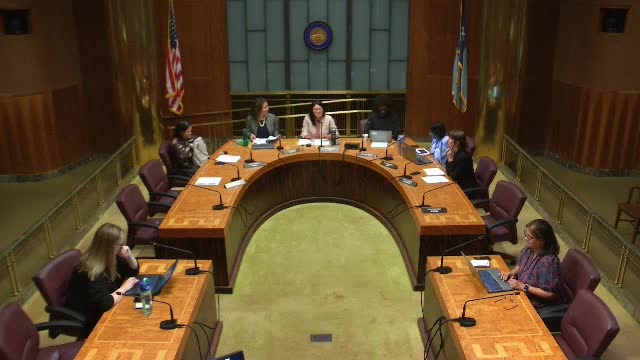
Angie Weasey, director of the St. Paul Department of Safety and Inspections, told the City Council Finance and Budget Committee that DSI’s proposed 2026 budget is constrained and will rely on non‑general‑fund resources, including opioid settlement dollars, the recycling and solid‑waste fund and grants, to maintain core services.
Angie Weasey, director of the St. Paul Department of Safety and Inspections, told the City Council Finance and Budget Committee that DSI’s proposed 2026 budget is constrained and will rely on non‑general‑fund resources, including opioid settlement dollars, the recycling and solid‑waste fund and grants, to maintain core services.
Weasey said, “This is a very, very tight budget year,” and outlined priorities that include promoting life‑safety and property protection, supporting neighborhood vitality and shifting some personnel costs to non‑general‑fund sources.
The budget proposal reallocates five full‑time equivalent positions to opioid settlement dollars to support the HEART unsheltered‑response team rather than the general fund, and proposes one DSI inspector‑3 position funded from cannabis registration revenue. Weasey said some DSI work will also be funded from recycling/solid‑waste and opioid‑settlement accounting units. She described the department’s effort to “creatively utilizing non general fund resources” to preserve capacity.
Council members pressed the department on implementation details and timelines. Chair Johnson (HRA chair) criticized communication about implementing the tenant‑protections ordinance and related funding, saying, “We haven't had any communication on tenant protection since it passed,” and asked for requisitions, staffing plans and timelines. Weasey said the department needs an accounting unit and ongoing funding before hiring and noted a staff‑position audit is under review; she said the $380,000 figure the department previously projected (for personnel, equipment and services) was based on a 2024 estimate and that more work is needed on intake, investigations, website integration and outreach.
Several council members also questioned the plan to use opioid settlement dollars to fund ongoing services. A council president asked why one‑time or limited‑duration sources were being relied on for work the city would otherwise carry in the general fund. Weasey and a deputy director explained the city’s opioid settlement allocations are being structured over multiple years and that staff anticipate a phased return of costs to the general fund; the deputy director said opioid settlement dollars will come over a multi‑year schedule and the administration expects to “ramp up” funding with a plan to phase‑off over time.
Council members asked for a clearer breakdown of 2026 opioid settlement receipts and a schedule of expected spending; staff said they would follow up with those figures and that a fuller briefing on opioid settlement receipts is likely to be scheduled. Council members also requested more regular briefings and clearer coordination between DSI and the Office of Fair Employment/Equity (referred to in the meeting as OFE) and other offices that are part of tenant‑protections implementation.
Weasey reported 2025 staffing activity and operational pressures: DSI hired 19 people to fill vacancies and 17 temporary staff during 2025 to backfill retirements, long leaves and special projects. She said the department is carrying an attrition adjustment into 2026 while it assesses workload in a “post‑Poly” permitting environment.
Other budget details cited include continued reliance on fees for many DSI functions, no proposed across‑the‑board fee increases for 2026, and a shift of some HEART personnel funding from the general fund to special accounting units tied to opioid settlement receipts. Council members asked for follow‑up on detailed FTE breakdowns (inspectors, zoning staff, plan reviewers), requisition timelines for positions, and a clearer, joint city‑county strategy for homeless assistance and opioid‑response funding.
Without a formal vote recorded in the meeting transcript, committee members asked staff to return with further detail on timelines, requisitions and the expected 2026 opioid settlement receipts and to schedule a fuller briefing on opioid settlement planning and tenant‑protections implementation.
The presentation closed after roughly 90 minutes of discussion; council leaders asked department staff to accelerate follow‑up on requisitions, timelines and coordination with other city offices and Ramsey County.