Get Full Government Meeting Transcripts, Videos, & Alerts Forever!
Get email alerts on the Housing And Zoning topic
No spam. Unsubscribe anytime.
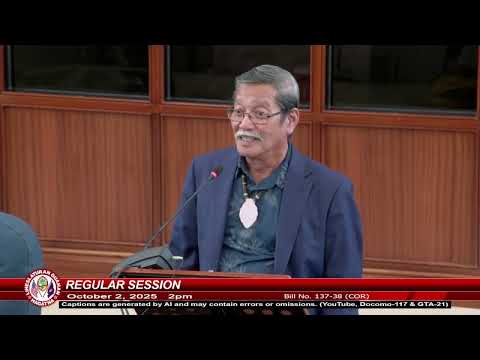
Legislature fast‑tracks rezoning route for affordable housing; members debate income bands and environmental safeguards
Summary
Bill 1‑64(38COR) was moved to the voting file after multiple amendments. Lawmakers agreed to a fast‑track pathway for zoning conversion to R‑2 for projects that commit to land use restriction agreements; they debated and ultimately expanded the area median income band to include lower incomes and adopted several technical and process changes.
Senator Tina Rose Munoz Barnes moved Bill 1‑64(38COR) to the third‑reading voting file after a lengthy floor debate and several amendments. The bill would add a new Article 2A to Chapter 61, Title 21, to create a streamlined zoning conversion process allowing certain properties to convert to R‑2 (multifamily) zoning when the developer commits to affordable housing through a land use restriction agreement (LURA).
The sponsor said the measure was intended to “streamline the zoning process while still protecting our environment and ensuring community input,” creating pathways for zoning conversion, setting affordability protections through LURAs, and protecting sensitive recharge areas.
Key policy changes and debate: the measure initially defined “affordable housing” as units for households earning between 50% and 150% of Guam’s area median income (AMI). Senator Terlahi offered an amendment to change that range to 30%–120% of AMI to prioritize lower income households; the amendment generated extensive floor debate. Advocates for keeping the original 50%–150% range argued it would capture the “missing middle” who do not qualify for low‑income programs; opponents argued HUD classifications consider over 120% to be upper income and that the bill should prioritize lower earners. During floor action the sponsor agreed to broaden the measure’s coverage to explicitly include lower incomes; legal staff were directed to make technical corrections to ensure consistent LURA duration language across the bill.
Other amendments adopted included: requiring multifamily developments to connect to an existing municipal sewer system where available (consistent with EPA/BSP testimony); clarifying statutory terms (replace “accessible” with “available” and use “Groundwater Protection Zone” terminology); authorizing GSA/BSP to provide input within realistic response timelines; and specifying that the streamlined process applies only to projects that will use a LURA for affordable housing.
The measure’s mechanics: the bill creates a rezoning shortcut for landowners who will record a LURA committing specified affordability periods (committee proposals increased the LURA minimum from 15 years to a proposed 30 years in one adopted amendment) and establishes review procedures and thresholds for density, height and parking. The sponsor explained the intent is to protect single‑family neighborhoods while enabling additional multifamily supply where appropriate.
Outcome: After multiple amendments and a protracted floor discussion, senators moved Bill 1‑64 to the voting file. The bill will be taken up at third reading for final votes. Several members asked staff to ensure the bill’s definitions and cross‑references are consistent before passage.
Context and open issues: legislators flagged environmental protections and public‑health concerns for high‑density development in recharge areas. Several senators urged careful use of municipal planning council hearings and coordination with the Bureau of Statistics and Plans and EPA to manage sewer, traffic and environmental impacts. Lawmakers also discussed how the proposed AMI definitions interact with existing HUD programs and tax credit financing.