
Residents tell commission new science links gas stoves to benzene, urge utility to act
Get AI-powered insights, summaries, and transcripts
Sign Up Free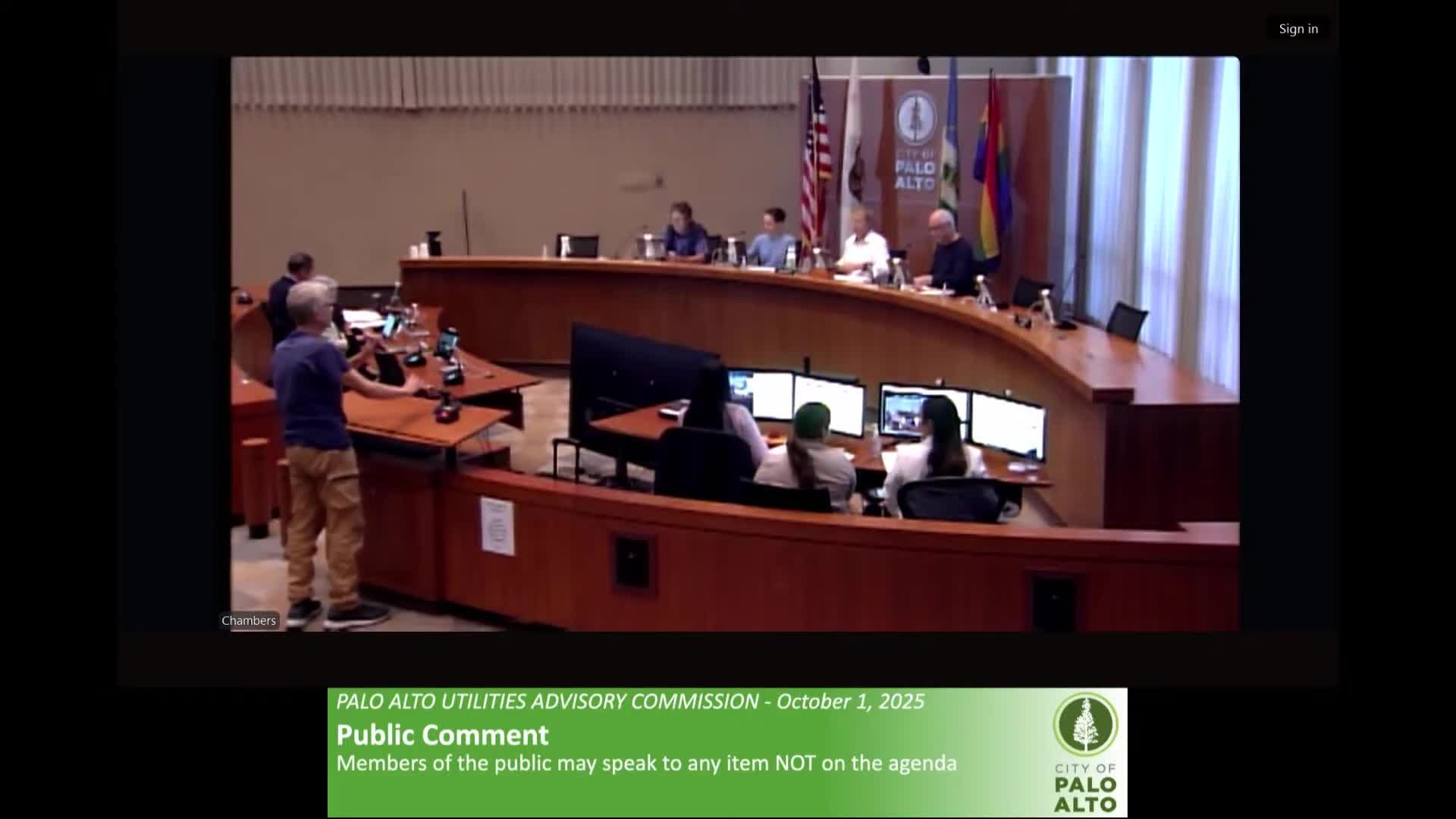
Summary
Two public commenters requested the Utilities Advisory Commission consider the health risks of indoor gas combustion, citing recent academic work and asking the utility to include information in billing materials and place the topic on a future agenda.
Two members of the public urged the Utilities Advisory Commission to confront new research tying natural‑gas cooking to indoor benzene and NOx exposures and to consider what the utility can do to inform or protect residents.
Sven Thiesen, a chemical engineer who said he has lived in Palo Alto for 27 years, told commissioners that recent studies—several from Stanford and other academic sources—have found benzene and nitrogen oxides produced by natural‑gas stoves at concentrations that can pose health risks to children and people with asthma. Thiesen described the presence of benzene in indoor air after stove use and argued the utility should consider messaging or other actions because it provides natural gas to customers.
Agro (Avro) Shah, a junior at Palo Alto High School and an advocacy leader with the Palo Alto Student Climate Coalition and Sierra Club Student Coalition, said he has been working with Thiesen and urged the commission to act ‘‘in cognizance of these findings’’ and to explore options such as including educational inserts with utility bills that describe ventilation and alternatives to reduce exposure.
Both commenters characterized their remarks as seeking public education, not placing blame, and asked staff to consider whether the utility could communicate health information about natural‑gas use and options for customers. Commissioners acknowledged the comments; staff did not commit to a specific policy action during the meeting.
Because these remarks occurred during the public comment period, no formal action or staff directive was recorded on the record at that time.