
Palo Alto utilities report shows rising data‑center load and prompts questions on connection fee increases
Get AI-powered insights, summaries, and transcripts
Sign Up Free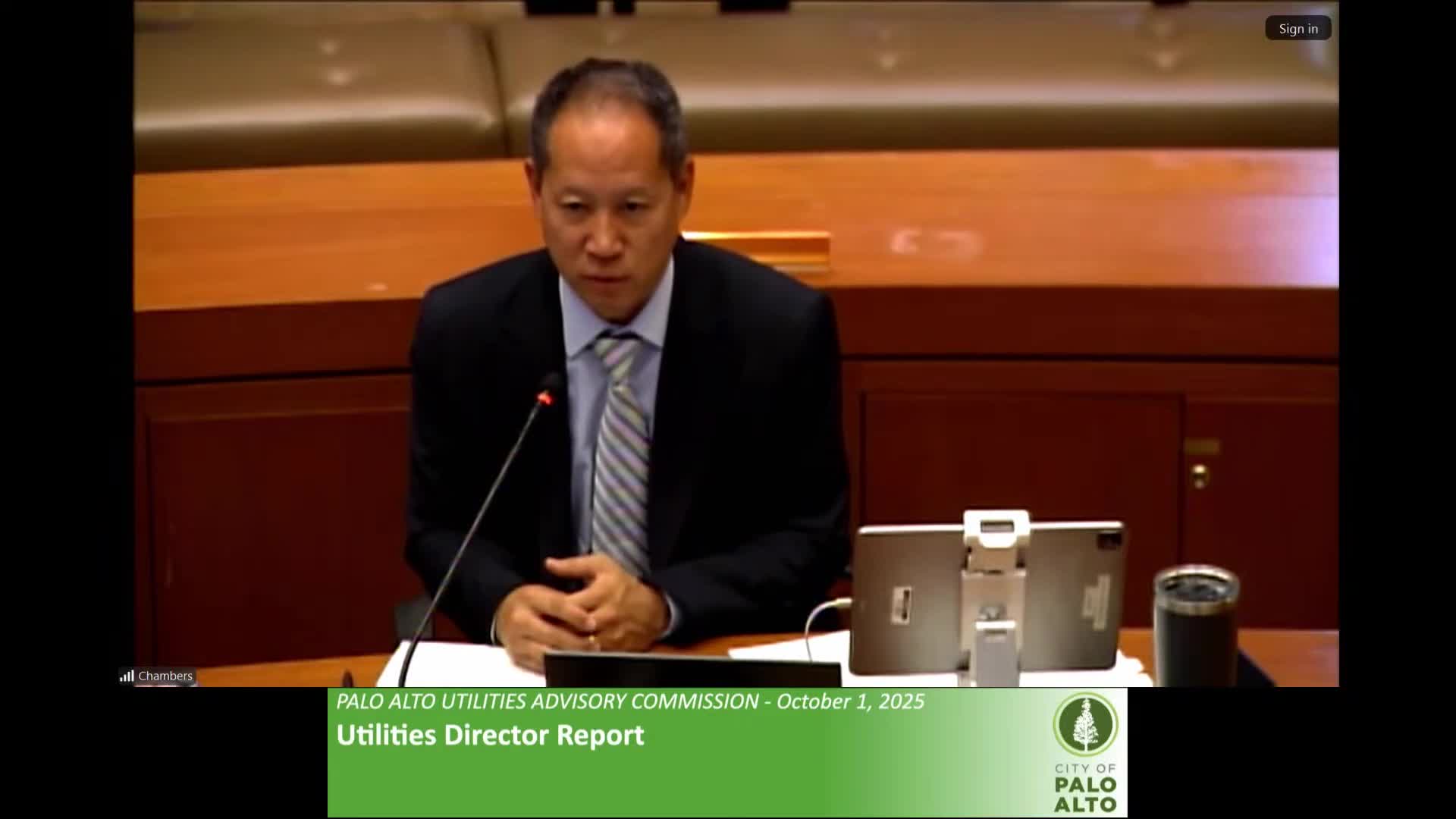
Summary
Staff presented the utilities quarterly report, noting increased load from data centers and resource adequacy sales; commissioners pushed for clearer financial metrics and asked that large connection fee increases be brought to the UAC.
City utilities staff presented the quarterly report and updated the Utilities Advisory Commission on changes in electric demand, resource adequacy activity, reliability and proposed connection fee updates.
Utility Director Alan (given name used in presentation) told commissioners the city has seen load increases mainly driven by data‑center growth and that net supply costs in fiscal 2025 were lower than budget because of higher renewable energy credit and resource adequacy sales. Staff warned, however, that resource adequacy purchase costs and western restoration fund costs are projected to raise supply costs in FY2026.
Jim Stack, senior resource planner, explained why the utility both sells and buys resource adequacy (RA): ‘‘We have more system capacity than we need in some categories and not enough local RA in constrained areas, so we sell system RA and buy local RA,’’ he said. Commissioners asked for clearer explanations of RA purchases and sales; Stack and staff agreed to provide more detail to help the commission understand year‑to‑year swings.
Commissioners also pressed staff for more useful comparators for reliability data. Staff had compared electric reliability to Pacific Gas & Electric’s local system; commissioners asked for similar metrics for nearby municipal utilities such as the City of Santa Clara so the commission can better evaluate local performance.
A significant portion of the discussion focused on proposed updates to city connection fees for utility services, which staff said have not been updated since before the COVID‑19 pandemic. The new fee schedule, which the finance committee reviewed, reflects higher labor, contracting, equipment and disposal costs; staff described the fees as full cost recovery, not new rate revenue. Commissioners said the magnitude of some increases — in some cases hundreds to thousands of dollars — merits an explicit UAC briefing and recommended including connection‑fee detail in a future UAC work plan item.
Other items in the report included a fiber‑to‑the‑premises update: staff said a ‘‘fiber hut’’ to house telecom equipment will be located at the city’s Colorado substation and construction is planned to start in October. Staff also summarized legislative developments affecting utilities, including an extension of cap‑and‑trade to 2045 and a recent veto of legislation related to large hydroelectric treatment that could affect Palo Alto’s carbon‑free portfolio.
Commissioners criticized the quarterly report’s presentation of financial data. Several members said the document lacks easily accessible financial metrics — annual revenues, labor cost trends and reserve explanations — and suggested the commission consider whether and how the report should be revised to better support oversight and public transparency.
Staff said they will provide more detailed financial breakdowns in future reports, add comparators asked for by commissioners and consider proposed presentation changes when developing the next quarterly package.