Get Full Government Meeting Transcripts, Videos, & Alerts Forever!
Get email alerts on the Urban Design topic
No spam. Unsubscribe anytime.
Commission adopts new citywide "small project" design standards for housing
Summary
Commissioners approved amendments to the citywide design standards to add guidance for small residential projects, including modulation, light wells, roof-deck setbacks and fenestration ranges; the motion passed unanimously.
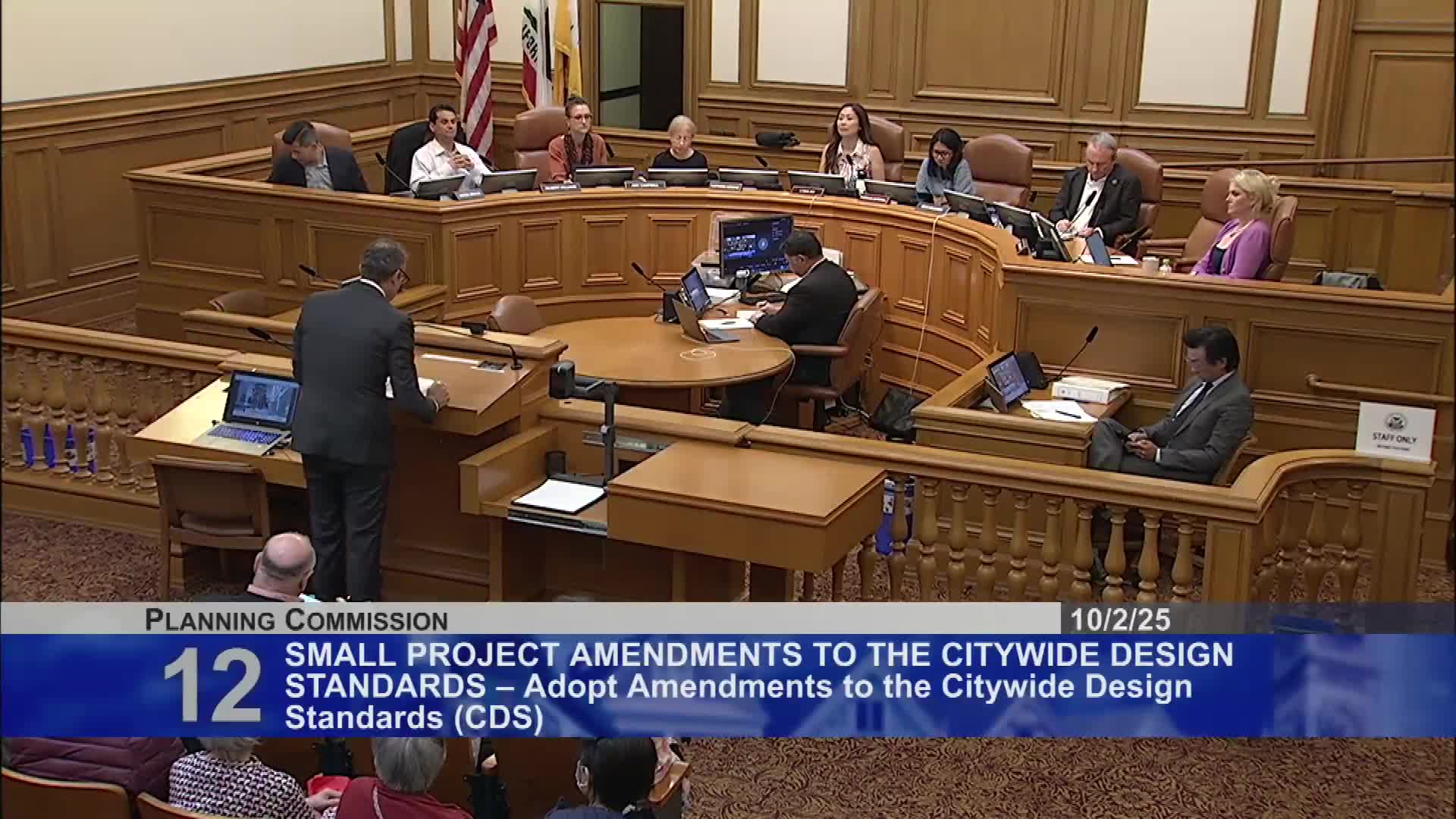
The Planning Commission on Oct. 2 adopted amendments to the citywide design standards aimed at smaller residential projects. Staff architect Trent Greenan presented the revisions, which add objective guidance for single-building and multiple-building massing, parking and new fenestration standards intended for smaller lot contexts.
Key provisions adopted include: modulation standards for long facades (a recommended major modulation move for facades exceeding a defined length), reduced light-well and side-setback depths, revised measurement for roof-deck setback from the property line rather than the face of the building, new small-project massing options (either a rear pop-out or modest full-width rear extension with exemptions in certain adjacency cases), courtyard-size guidance for multiple-building sites (courtyard area equal to 30% of lot depth), parking rules directing garages toward alleys and limiting sidewalk “warping,” and a fenestration standard that suggests glazing between 20%–50% of the front/rear facades with minimum ground-floor openings to enliven the pedestrian realm.
Commissioners asked technical questions about the 200-foot modulation metric, roof-deck setback distances (5 feet generally, 3 feet for taller buildings per the proposal), and how the standards interact with existing articulation rules and the Residential Design Guidelines. Several commissioners and public speakers urged monitoring and future refinements; staff said the standards are intended to be a living document and will be updated based on implementation experience.
The commission voted 7–0 to adopt the proposed amendments on the record, and staff said the standards will be applied to qualifying small-project submittals going forward.