Get Full Government Meeting Transcripts, Videos, & Alerts Forever!
Get email alerts on the Facilities Upgrades topic
No spam. Unsubscribe anytime.
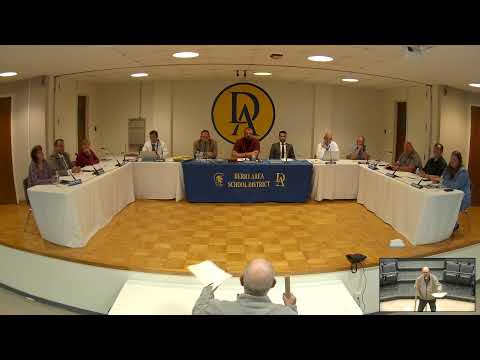
Derry Area SD hears $39.9 million two‑phase modernization plan; board told financing window favors action now
Summary
District consultants from McClure presented a two‑phase energy‑savings and facilities upgrade plan focused on HVAC, electrical and roof work; finance staff and advisors outlined options including a possible $10 million bond or line of credit to fund projects while state budget uncertainty limits revenue timing.
DERRY — Consultants from McClure presented a two‑phase facilities modernization and energy‑savings plan to the Derry Area School District board on Thursday that would replace classroom units, rooftop HVAC, roof sections, electrical switchgear and many building systems across the middle and high schools and Grandview Elementary.
The district heard a high‑level investment grade audit and a cost matrix that the consultants say totals $39,900,000; McClure's materials estimate 20‑year energy and operational savings of about $2,300,000. The board’s finance advisers told members that current municipal market conditions make Borro wing now attractive and that the district could consider a targeted $10 million borrowing by the end of the calendar year.
Why it matters: the project would modernize aging HVAC and electrical systems that district staff and consultants said cause comfort, maintenance and safety challenges; the board was also reminded that the district will be debt free in the 2027–28 school year, which affects timing for any new borrowing and the district’s capacity to take on work without increasing near‑term debt service.
The McClure team laid out a phased approach. Phase 1 centers on the middle school with selected upgrades at Grandview Elementary; phase 2 would focus on the high school with some work at the district’s agriculture/horticulture building. McClure recommended replacing classroom unit ventilators with self‑contained tall vertical heat pump units (each classroom becomes a standalone heating/cooling/ventilation zone), adding rooftop units for large‑group spaces, installing demand‑control ventilation (CO2 monitoring), upgrading automatic temperature controls and modernizing electrical distribution where needed.
“what you have in front of you tonight is really just a high level summary,” said Eric Petrazio, McClure account executive, introducing the team’s findings and the matrix of options and alternates.
Nick Menotti, the lead field engineer on the audit, described the scope as “all‑encompassing” for HVAC and related systems, including replacement of control valves, exhaust fans and classroom ventilation equipment. The McClure team also recommended a new generator at the middle school, replacement of high‑school main switchgear and multiple panel boards (McClure identified Federal Pacific panels as candidates for replacement), partial roof replacement and restoration, restroom reconfigurations to meet ADA turn radii, and targeted general‑construction work such as new secure entry vestibules, bleachers and concrete repairs.
McClure presented options and a cost matrix that allowed the district to choose alternate scopes (for example two lighting alternatives and A/B mechanical options). The consultants said the full package is modular: the district can select items for a narrower contract or adopt the full scope. McClure characterized its $39.9 million figure as an “all‑in” price that would include architecture, engineering, bondable performance guarantees and a contingency, not a preliminary placeholder.
District administrators and board members asked about the occupant experience, classroom appearance and construction timing. McClure’s team said classroom units would improve indoor air quality, reduce noise and eliminate window air conditioners; installation would be coordinated to maximize summer‑period construction windows. “These units are self contained… they have a heat pump in and… they’re very quiet,” Menotti said when describing classroom units and how new systems would reduce boiler runtime.
Finance context and next steps: finance committee members and outside advisors briefed the board on funding options. With no enacted state budget at the time of the meeting, the district is holding liquidity and has not yet received several reimbursements and pass‑through federal funds. The finance committee reported it has discussed establishing a $5 million line of credit with its bank as a contingency; advisers from Raymond James and PFM presented preliminary borrowing scenarios that would preserve the district’s long‑term net debt service profile.
District finance counsel and advisers described a potential timeline to authorize an initial $10 million borrowing this calendar year; the advisors said tax‑exempt borrowing taken now can be structured so spending that amount over the following years remains compliant with tax rules and gives the district negotiating leverage while interest rates are favorable. Committee members flagged that PlanCon (historic state construction reimbursement) has declined in recent years and that any tax increases or debt impacts will ultimately be borne by taxpayers.
Nothing was authorized at the meeting; the McClure presentation was informational. Board members and administrators discussed returning with more detailed investment‑grade audit documents and a formal financing authorization in October or November if the board wishes to proceed.
“If we pull those controls in and we recommission some of that equipment that’s kind of gotten out of commission a little bit, it’ll really extend the life of that equipment as well,” one board member said, noting the tradeoff between upfront expense and longer equipment life. Consultants and district staff said they would provide more detailed scopes and visuals for classrooms and build a firm contract should the board choose to move forward.
A planning note: McClure and district staff said pre‑construction planning and procurement for summer work would begin in late spring; McClure flagged limited equipment and trade availability if procurement is delayed beyond the recommended schedule.
Proposed next steps in public materials: finalize the investment‑grade audit scope, decide which alternates to include, and — if the board directs — instruct district staff and bond advisers to prepare financing documents for board consideration.