Get Full Government Meeting Transcripts, Videos, & Alerts Forever!
Get email alerts on the Public Outreach topic
No spam. Unsubscribe anytime.
Live Green Lexington outlines marketing strategy, compost workshops and limits of behavior-change campaigns
Summary
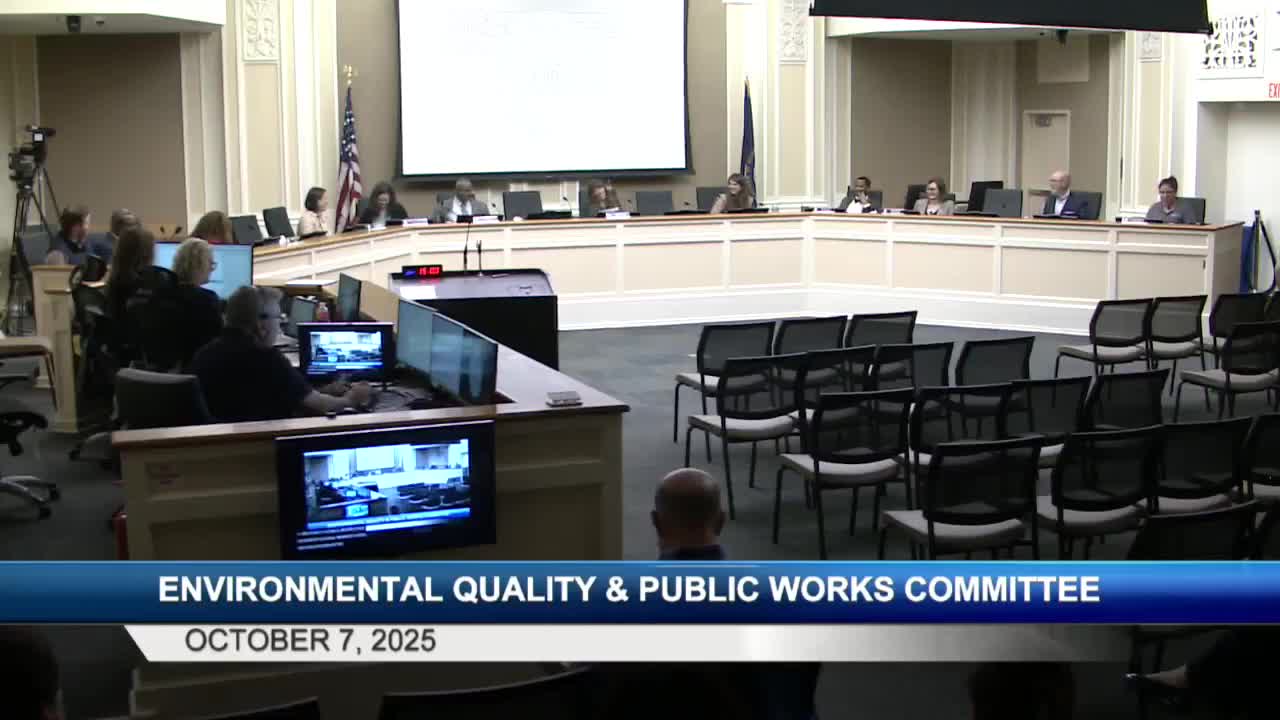
Angela Poe, program outreach manager senior for EQPW, reviewed the Live Green Lexington outreach program, describing channels, budgeting priorities, and measurement limits; she also previewed 2026 compost workshops and partnership updates.
Angela Poe, program outreach manager senior for Lexington’s Department of Environmental Quality and Public Works (EQPW), briefed the committee on the city’s Live Green Lexington public information and engagement program, saying the goal is to inform residents about department services and encourage behaviors that support operations.
Poe told the committee, “It is our job in public information and engagement to inform the public about what EQPW does for them and try to engage folks in behaviors that help further our goals and help make Lexington, a better community.” She described the program’s three complementary teams — marketing, community outreach and education — and said today’s presentation focused on marketing activities.
Why it matters: Poe warned that mass marketing alone rarely changes behavior. She said the city uses advertising, social media and in-person events together to try to close knowledge gaps, increase familiarity and prompt action where residents are already inclined to act.
Poe outlined paid and earned outlets the city uses, including streaming and traditional television, print, radio, billboards, bus ads, targeted digital placements and social channels (Facebook, Instagram and Nextdoor). She said the city plans to add YouTube features to “draw back the curtain” on operations — for example, wastewater plant tours and interviews with drivers — to humanize the work of the department.
Budget priorities and limits
Poe said budget availability shapes what the team can promote. “We have a pretty generous budget for storm water. Because of our storm water permit, we are required to do outreach,” she said, noting waste management also receives substantial funding because the city runs its own recycling operation. She added some topics, such as urban forestry, have no dedicated outreach budget and receive only limited stormwater-framed messaging when feasible.
Poe described the planning that goes into paid ads — audience demographics, current attitudes and desired behavioral outcomes — and said a single 30-second ad or print placement is rarely decisive. “Repeated exposure is necessary,” she said, and cautioned that paid marketing is resource intensive and largely one-way communication, with social media the main two-way channel.
Programs, evaluation and partnerships
Poe gave a status update on the compost outreach program: over the past four years 482 households have been trained, and workshops will run again in 2026 with registration expected to open in February. The workshops are led by Seedleaf and the University of Kentucky Extension; the Lexington Arboretum joined as a partner in 2025, though Poe said the Arboretum currently lacks a hosting space because of construction.
Participants receive a two- to three-hour workshop and a $50 voucher toward a composter at the online store. Poe described Reforest the Bluegrass and other community events as opportunities to combine in-person engagement with marketing, and said focus groups and surveys (notably for stormwater outreach) help target messages.
Committee members asked whether the city had considered additional platforms and tools. Councilmember Sheehan asked whether stormwater money can be used for urban forestry outreach; Poe said the department uses stormwater framing where appropriate but that trees provide benefits beyond stormwater impacts and budgets restrict messaging. Members also raised Reddit as an outreach channel; Poe and staff said they have discussed Reddit with GovCom and are weighing whether to use a Live Green account or post through the city account.
On artificial intelligence, Poe said the communications group does not use AI image creation for marketing materials: “My team has very strong feelings about that.”
Ending: Poe said Live Green Lexington aims for impact rather than impressions and acknowledged measurement remains difficult. She asked colleagues to encourage residents to sign up for 311 alerts and other city distribution lists so the department can target messages more effectively. The committee voiced appreciation for the outreach work and the planned YouTube and workshop efforts.