Get Full Government Meeting Transcripts, Videos, & Alerts Forever!
Get email alerts on the Labor Public Safety topic
No spam. Unsubscribe anytime.
Prince William supervisors ratify amended firefighters’ contract after 4–2 vote; county finance office flags multi‑year costs
Summary
The Prince William Board of County Supervisors voted 4–2 on Oct. 7 to ratify an amended collective bargaining agreement with the International Association of Fire Fighters, approving stepped pay increases, new specialty pay and several stipends that county staff said will add millions to the county’s multi‑year budget.
The Prince William Board of County Supervisors voted 4–2 on Oct. 7 to ratify an amended collective bargaining agreement (CBA) with the International Association of Fire Fighters (IAFF), advancing salary structure changes and new specialty pay for county firefighters and paramedics.
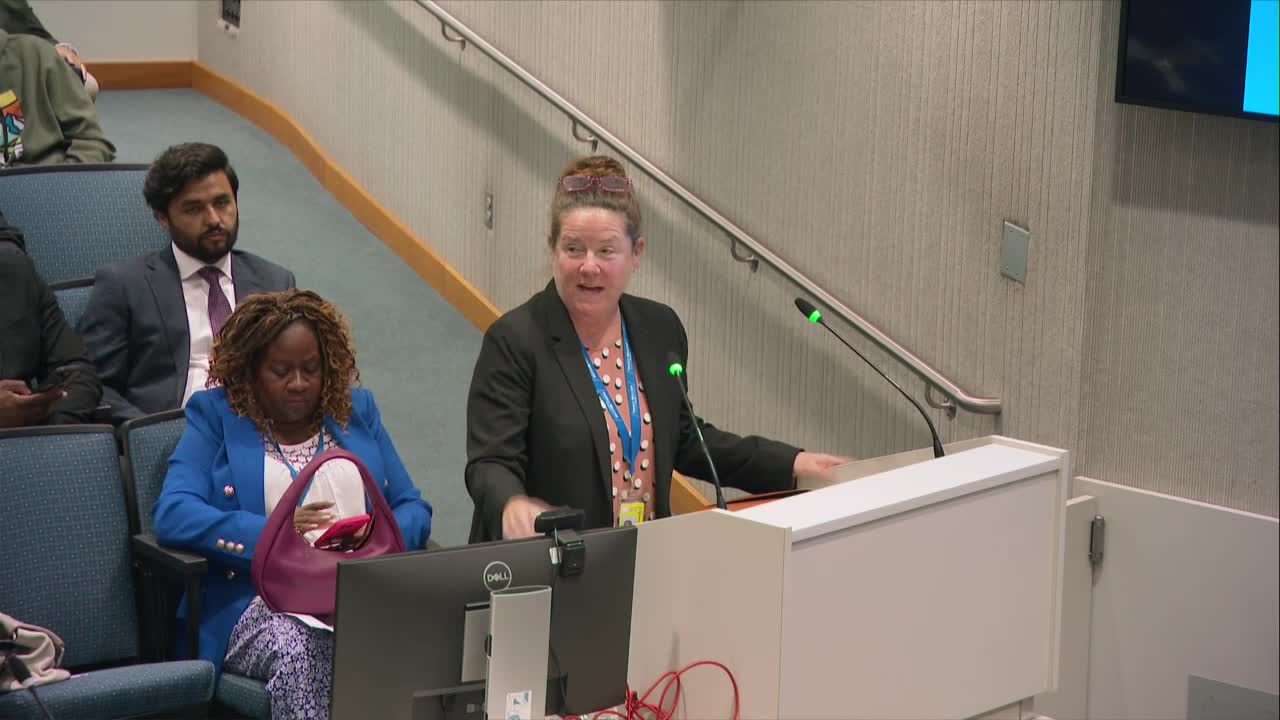
The agreement, which the union membership ratified Aug. 14, updates step increases, creates several stipends and adds new pay differentials for specific duties. "We're here today to request that the board ratify the amended collective bargaining agreement between the International Association of Fire Fighters and the county," Senior Deputy County Attorney Meghan Kelly said as she opened staff's presentation.
County budget officials said the package is not currently in the adopted five‑year plan and will require appropriation by the board during budget development. "In fiscal year 2027 the estimated cost of all these amendments is estimated to be just over $3,000,000," Dave Sinclair, director of the Office of Management and Budget, told supervisors. Sinclair said the total programmatic cost rises to about $5.8 million by FY 2028 and—when combined with previously approved staffing to support a 50‑hour average work week—would require about $9.7 million in new budget authority in FY 2027 and roughly $11.4 million in FY 2028. His office calculated a cumulative four‑year cost (FY25–FY28, including previously approved items) of roughly $80.9 million.
The contract’s monetary changes include: - Fiscal 2027: a 4% annual step increase for steps 1–4; a one‑time lump sum payment equal to 3% of base salary for employees at the top step. - Fiscal 2028: a 2% market adjustment; an increase in the step‑0→1 progression to 5% and step‑4→5 progression to 4%; topped‑out employees again receive a one‑time 3% lump sum on their merit date. - New or increased specialty pay: an on‑call compensation formula (compensating half an hour at 1.5× the base hourly rate for each 12‑hour on‑call period), an increase to field training officer pay, technical rescue and hazardous‑materials stipends rising from $1,500 to $2,000 annually, a new $2,000 fire marshal stipend, and a one‑time $500 referral bonus for recruitment after a candidate completes probation.
Fire Chief Tom LaBelle told the board his department remains on track to meet the contract’s operational assumptions, namely the plan for a 50‑hour average work schedule. "We're in line to achieve the July date for heading to the 50‑hour work week," LaBelle said, adding that a planning committee will recommend the new schedule structure early next year so employees have about a year’s notice.
Board debate split largely along fiscal and stewardship lines. Supervisor Andre Angry said the package was unaffordable and questioned operational efficiency in the fire system, adding, "This is insane," and voting against ratification. Supervisor Margaret Franklin and others said the package was necessary to recruit and retain public safety personnel—arguing the county competes with other Northern Virginia and regional employers for trained firefighters and paramedics.
County attorneys and staff emphasized the ratification is subject to the board’s later budget appropriations. "It is contingent upon appropriation by the Board of County Supervisors as part of the budget," Sinclair said when asked how the county would fund the agreement.
The board recorded the vote as 4 in favor and 2 opposed; two supervisors voted no and one supervisor was absent. The board’s approval makes the tentative agreement effective only after the required fiscal‑impact review and formal ratification action taken at this meeting; implementation depends on future budget appropriations.
What’s next County staff said the financial impact will be incorporated into the FY 2027 proposed budget and five‑year plan. Staff also said negotiations with other bargaining units continue and that the county is conducting broader compensation and classification reviews for general government positions.
Ending The amended CBA modifies pay progression and specialty pay for IAFF‑represented employees and carries multi‑year budget implications county staff said will be addressed during FY 2027 budget development. The board’s ratification advances the contract but leaves funding decisions to the upcoming budget process.