Get Full Government Meeting Transcripts, Videos, & Alerts Forever!
Get email alerts on the Animal Services Fido Program topic
No spam. Unsubscribe anytime.
Marion County lauds 10 years of prison dog training program as adopters and partners mark milestone
Summary
Marion County Animal Services and the Florida Department of Corrections marked roughly a decade of the Fido (star paws) training program, highlighting hundreds of adoptions, dozens of graduating inmate classes, and sustained community partnerships that support training, care and adoption follow-up.
Marion County Animal Services and the Florida Department of Corrections marked roughly 10 years of the county’s prison-based Fido training program, praising steady adoptions and broad community support.
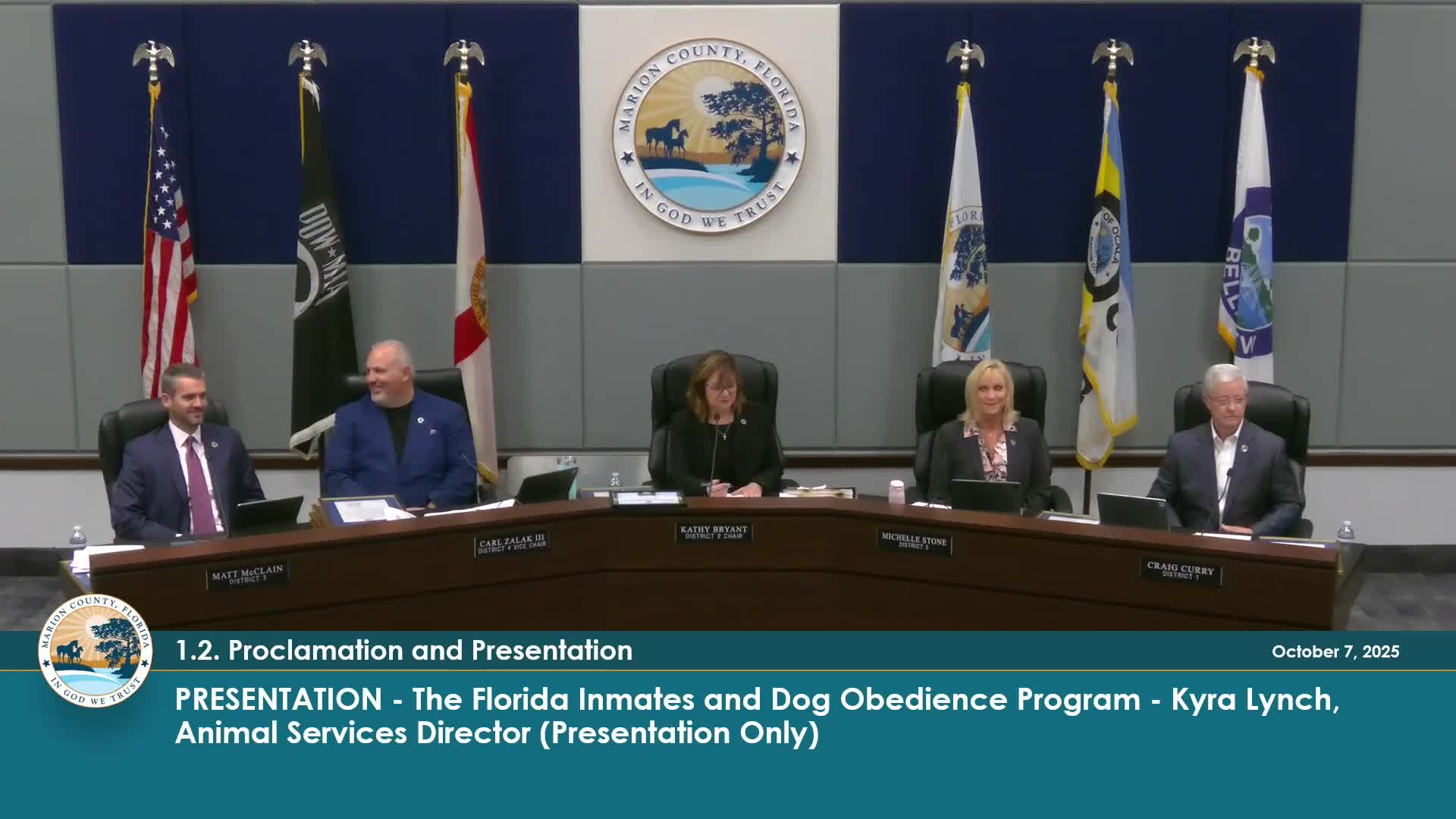
Animal Services Director Kira Lynch told the Marion County Board of County Commissioners on Oct. 7 that the program launched by memorandum of agreement in March 2015 has graduated multiple classes since its first session in October 2015. “Since that time, 36 more classes have graduated,” Lynch said, and adopters from early classes shared written tributes at the meeting.
The program pairs incarcerated men at the Marion County Correctional Institution work camp with shelter dogs to teach obedience, socialization and basic skills over roughly eight-week courses. Lynch credited Wendy Hilliard, a longtime program specialist with Marion County Animal Services, for selecting dogs, supporting adopters and maintaining long-term contact with families after adoption. Lynch said community partners provide essentials and volunteer training: “To ProScion Training… Mocha’s Pet Supplies… PALS… Ocala Dog Ranch — your support has been vital.”
Adopters who spoke through prepared submissions told commissioners that dogs from the program went on to be family companions, therapy or support animals and retained training learned in the program. Lynch also thanked the Florida Department of Corrections for enabling the corrections-based training and noted that the program’s classroom and volunteer time helps participating men gain patience, responsibility and vocational skills.
Commissioners recognized the program publicly at the dais and allowed a brief appearance by a graduate dog, Josie, during the presentation.
Why it matters: The program combines animal welfare and corrections programming with community partners to reduce shelter stays, increase adoption rates and provide vocational training opportunities for incarcerated participants. Lynch and other presenters emphasized that program partners and donors have kept the operation running without drawing significantly on county tax funds.
What’s next: Lynch and staff did not request new county funding during the presentation; she asked for continued board support. The commissioners offered public thanks and encouraged residents to consider adoptions and volunteer roles.