Get Full Government Meeting Transcripts, Videos, & Alerts Forever!
Get email alerts on the Ballot Proposals Land Use topic
No spam. Unsubscribe anytime.
City Council leaders, unions urge No vote on ballot proposals 2, 3 and 4, say measures would strip local land‑use power
Summary
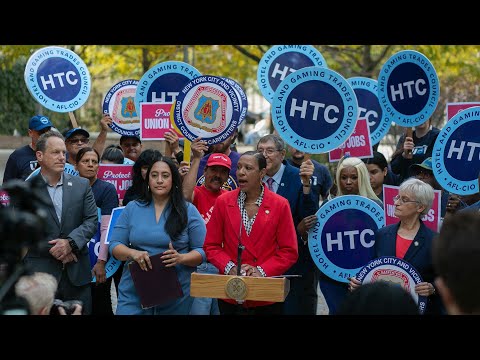
City Council leaders and labor unions held a press event urging New Yorkers to vote no on ballot proposals 2, 3 and 4 on the Nov. 4 ballot, saying the charter changes would remove the council’s required vote on land‑use approvals and weaken community benefits negotiated through the land‑use process.
At a news conference, Speaker Adams and a coalition of City Council members and union leaders urged New Yorkers to vote no on ballot proposals 2, 3 and 4 on the Nov. 4 ballot, saying the measures would remove the City Council’s required vote on development decisions and weaken communities’ ability to secure affordable housing, neighborhood investments and union jobs.
“Those of us who are here today are pro housing,” Speaker Adams said. “But this is what is at risk from Mayor Adams' misleading ballot proposals 2, 3, and 4 because they eliminate communities power from their elected representatives required votes.”
Speakers said the council’s land‑use review and negotiation process — which they described as a tool for securing community benefits such as parks, schools, transit improvements and deeper affordability — would be undermined if the charter changes pass. “When a when the city or a private developer wants to gain approval to develop in our neighborhoods, we still have the ability to work and negotiate with them,” Speaker Adams said, citing examples of projects where the council secured neighborhood investments.
Amanda Farias, the council’s majority leader, said the measures are “a blatant power grab that would strip communities of their power and voice in decisions about development in their neighborhoods.” Farias and other members invoked historical harms from top‑down planning and said local review is needed to ensure equitable outcomes. “Ballot proposals 2, 3, and 4 are a threat to our communities getting what they deserve,” Farias said.
Kevin Riley, chair of the council’s subcommittee on zoning and franchises, said the proposals would erode trust the council has built with neighborhoods and create “chaos” in local planning. “We have worked so hard within our council to build trust within our community and to let them know that we have to produce more housing,” Riley said. “But if we rip away their power, that trust dissolves.”
Union leaders joined the council members at the event. Manny Pasterich of 32BJ SEIU described members’ housing insecurity and framed the unions’ opposition as consistent with support for housing that includes community benefits and good jobs. “We support more affordable housing, and we support the community benefits that come along with the EULAR process,” Pasterich said, and urged a No vote on the measures.
Speakers from the District Council of Carpenters, the Hotel and Gaming Trades Council and the Central Labor Council reiterated the message, saying the current process compels developers to negotiate higher levels of affordability, union jobs and other local benefits. “If you wanna make sure that workers aren't being exploited on a construction project, then you better make sure there's a way to force them to the negotiating table,” a Carpentry union speaker said.
Several council members gave specific examples they said demonstrate how local negotiation has produced tangible community benefits. Council member Gail Brewer described securing hundreds of affordable units and a $40 million museum contribution through prior land‑use negotiations; Chris Banks noted the council has approved 93% of land‑use applications that come before it, which speakers used to argue the process already advances housing production while preserving local oversight.
Speakers frequently criticized the ballot language as vague and said voter guide language could mislead voters by emphasizing speed or housing production without stating the loss of local negotiating power. “The language on the ballot proposals is a broad brush,” one speaker said. “It merely talks about housing that we wanna fast track... The people that are represented by the city council, they will no longer have a voice in what is said, and that language does not say that.”
No formal votes were taken at the press event. The gathering was a public advocacy event ahead of the Nov. 4 ballot; speakers directed listeners to educate neighbors and vote No on proposals 2, 3 and 4.
Looking ahead, council members and labor allies said they will continue public education efforts in the coming weeks and underscore examples they say would be harder to secure if the charter changes pass. “We will continue to inform voters about the true impacts of these misleading ballot proposals,” Speaker Adams said.