Get Full Government Meeting Transcripts, Videos, & Alerts Forever!
Get email alerts on the Municipal Budget topic
No spam. Unsubscribe anytime.
Wheat Ridge staff present $101 million 2026 proposed budget, stressing services and a $40 million infrastructure push
Summary
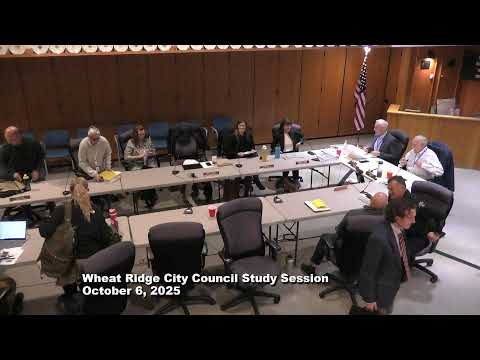
City staff told the Wheat Ridge City Council on Oct. 5 the proposed 2026 all‑funds budget totals about $101 million, with a general fund under pressure from flat revenues and rising costs even as voter‑approved bond and capital spending nearly $40 million on corridors and multimodal projects.
City staff presented the city of Wheat Ridge’s proposed 2026 budget to the City Council on Oct. 5, 2025, outlining a $101,000,000 all‑funds plan that keeps core services funded while directing nearly $40,000,000 to capital and voter‑approved bond projects.
The budget matters, staff told council, because it balances day‑to‑day operations against long‑term investments at a moment when general fund revenues are essentially flat and several one‑time federal supports are ending.
City staff said the general fund represents the largest share of spending — about 53% — while the voter‑approved 2J bond fund comprises roughly 27% of the proposed outlays. Staff projected 2026 general fund revenues at a little over $51 million and general fund expenditures at just over $53 million, producing a projected 17% unrestricted fund balance that staff said meets Government Finance Officers Association guidance.
Presenters identified three main drivers of an approximate 7% rise in general fund spending: $430,000 in fees tied to the city’s enterprise resource planning (ERP) systems transformation; $690,000 related to expanded photo‑radar and traffic enforcement programs; and rising employee health insurance premiums projected to increase by about 10% in 2026. ‘‘The proposed budget balances financial stability with progress,’’ Patrick Goff, the city manager, told council during the presentation.
Staff warned that the city’s flexibility is constrained because American Rescue Plan Act (ARPA) funds — roughly $7.98 million received earlier — will be fully expended by 2026. Staff said the final ARPA allocations for 2026 are focused on social‑service needs, including homeless navigation, food‑bank support and mental‑health services.
At the same time, the budget includes large capital investments intended to spur future private development and improve mobility and safety. The proposal directs nearly $40 million across capital improvement programs, renewal funds and the 2J bond program. Key projects cited in the presentation include final close‑out of the Wadsworth corridor work, planning and early work on the West 30th/8th Avenue corridor, and a $7,000,000 allocation for the Wadsworth Boulevard multi‑use path between 32nd and 35th streets.
Parks and recreation received more than $10,000,000 in combined funding drawn from the Conservation Trust Fund and other sources, with specific 2026 line items including $560,000 for playground replacements at Prospect, Louis Turner and Fruitdale parks, $220,000 for maintenance at the Wheat Ridge Recreation Center and design work for the Anderson Pool replacement (budgeted at $800,000 in the Open Space Fund request). The Conservation Trust Fund budget showed smaller available balances and proposed spending that would leave a modest projected ending fund balance.
On housing, staff highlighted the Wheat Ridge Housing Fund, financed largely from short‑term rental revenues. The fund is budgeted at $360,000 in 2026, including funding for a full‑time senior planner focused on housing and $60,000 for a study of a possible affordable‑housing impact fee.
Staff described several operational and technology priorities: finishing the ERP implementation to replace disparate permitting and finance systems; continuing police‑department investments in automated enforcement, e‑ticketing, drones and other technology; and implementation of a new court management workflow to handle anticipated automated ticket appeals.
Staff emphasized conservative revenue assumptions. They noted that building‑permit and development‑related receipts are volatile — a small number of high‑value permits account for a large share of development revenue — and that the city’s forecast treats 2026 revenues as essentially flat compared with 2025 estimates while planning for a 3% TABOR emergency reserve and an additional restricted reserve for one‑time needs.
Councilors asked detailed questions about the municipal court transition for photo‑radar appeals, the neighborhood traffic management program, and whether more community partner grants could be funded; staff responded that the city had budgeted $200,000 for community partner grants while organizations requested about $491,221.
The council did not adopt the budget on Oct. 5. Staff said they will return Oct. 27 for a public hearing and formal adoption, and that staff will continue to monitor mid‑year revenue trends and report back if adjustments are warranted.
"We are positioning for the future while keeping the core services funded," Goff said in closing, urging council to consider the long‑term implications of ending one‑time federal funding and concurrent changes in drainage and wildfire‑interface development standards.
The presentation included detailed department breakouts (police 31% of general fund expenditures, parks and rec 14%, public works 12%) and a proposed transfer of $3,000,000 from the general fund to the capital improvement program to support street maintenance projects.