Get Full Government Meeting Transcripts, Videos, & Alerts Forever!
Get email alerts on the Homelessness Services topic
No spam. Unsubscribe anytime.
Local faith group pitches low-barrier stabilization center for Grants Pass; commissioners agree to discuss next week
Summary
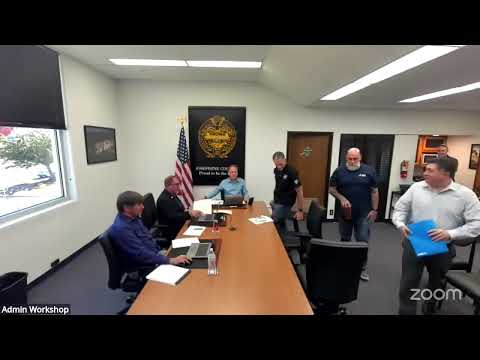
Representatives of Return for Christ told Josephine County commissioners on Oct. 7 they have a coalition and an operational plan to run a 24/7 low-barrier stabilization center for people experiencing homelessness and requested a county property in Grants Pass for the project.
Representatives of Return for Christ presented a plan to Josephine County commissioners on Oct. 7 seeking a county-owned property in Grants Pass to develop a 24/7 managed low-barrier stabilization center aimed at moving people out of encampments into coordinated services.
Presenters said the concept follows the Built for Zero model used by Community Solutions in other jurisdictions and emphasized a coalition of local service providers — OnTrack, Adapt, Options, Asante Medical and Hearts with the Mission — already committed to operating support and case management. Pastor Kevin, one of the presenters, described the center as a low-barrier entry site that would provide case management, mental-health and addiction services, and pathways into higher-barrier programs when appropriate. "We believe we can actually do solve homelessness here in Grants Pass," he said.
Why it matters: presenters argued that a managed site could reduce unsanctioned encampments, centralize services for service providers and increase the community’s capacity to connect people to housing and treatment. They said the property they identified checks zoning and access requirements (bus stops, not in flood plain, within city urban growth boundary) and that city planning staff had indicated the site meets grant RFP criteria.
Board response and procedural limits: commissioners thanked the group but said they could not make a commitment at the workshop because the topic had not been noticed on the agenda for formal action. Staff explained that a decision could not be made in time to meet a grant deadline that required identification of a property. Commissioners asked staff to place the item on the next regular meeting (a week from the workshop) for discussion; the group was asked to return with more detailed materials and answers to questions about neighborhood impact, funding and community outreach.
Key issues raised during discussion: nearby residents and the area’s largest apartment complex (Riverwoods) may oppose a managed site; presenters said they would pursue door-to-door outreach and community engagement and suggested moving the site's entrance to reduce perceived proximity. Funding for the proposed center would be a mix of grant funds, potential federal dollars, and private donations; presenters said operating documents, MOUs and partnership commitments were largely in place, but that site infrastructure and permitting could be expensive and would require additional capital.
Next steps: commissioners directed staff to place the item on the agenda for the next Tuesday meeting for a formal discussion, and requested the group prepare documentation (lease or purchase terms under consideration, draft operational plan, preliminary budget, and community engagement plan) ahead of that meeting.