Get Full Government Meeting Transcripts, Videos, & Alerts Forever!
Get email alerts on the Public Works Facilities topic
No spam. Unsubscribe anytime.
Council weighs options for new corporation yard; directs staff to pursue lower‑cost upgrades and prioritize fuel and wash‑rack planning
Summary
After receiving a contractor's design‑build guaranteed maximum price that exceeded the city budget, council members asked staff to pursue lower‑cost alternatives, consult yard employees and prioritize a fuel station and vehicle wash rack while aiming to stay within the city's original $1.75 million budget.
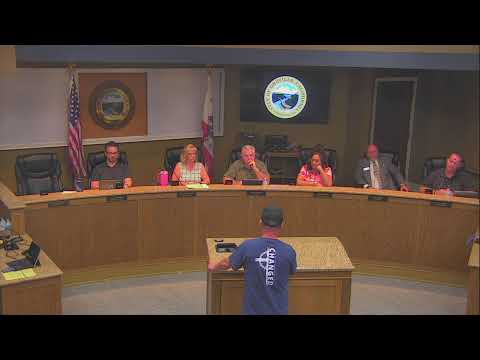
City staff told the Oroville City Council on Oct. 7 that a design‑build guaranteed maximum price (GMP) proposal for a relocated corporation yard exceeded the city’s $1.75 million budget. The GMP proposal, which the contractor presented as a near‑complete package, totaled just over $4 million. Staff outlined three options: proceed with the full design‑build (the 20‑year plan), scale the project back to meet current needs, or stay at the existing yard and pursue a ground‑up rebuild later.
Tim (city staff) described the cost drivers: unplanned electrical upgrades, insulation and HVAC for the mechanics shop, site improvements and a new fuel island and wash rack. He told the council the proposal bundled some items as additive alternates that essentially became required to meet operational needs.
Nut graf: Council members reacted strongly to the cost delta and generally directed staff to find a lower‑cost path that addresses the corporation‑yard immediate operational needs while preserving the long‑range design as an aspirational plan. Multiple council members urged focusing on moving essential services forward and using the new site only for the items the city can afford now.
Vice Mayor Smith said the $4 million presentation was a "no fly" for him and urged staff to seek more economical solutions for heating and cooling — for example, evaporative cooling instead of a large 40‑ton HVAC system in a building with roll‑up doors. He said the city should look for solutions that get staff moved in without creating excessive ongoing energy costs.
Council members generally supported option two: reduce requirements to immediate needs, get the mechanics shop upgraded and prepare designs for future expansion but not construct the full 20‑year plan now. Several council members asked staff to consult with the yard employees and trade staff for practical, low‑cost approaches and to evaluate reusing existing fuel‑island components and the feasibility of a card‑lock alternative while estimating life‑cycle costs.
No binding contract award was made at the meeting. Instead, the council provided direction to staff: pursue the lower‑cost path, prioritize the fuel station and wash rack in analyses, consult yard employees for practical improvements, and evaluate HVAC alternatives. Staff said they would return with a recommended scope and cost options keyed to the city's $1.75 million budget.
Ending: Council members emphasized the need to keep city operations functioning while the city explores affordable construction options; staff will report back with refined cost estimates and options in a future meeting.