Get Full Government Meeting Transcripts, Videos, & Alerts Forever!
Get email alerts on the Land Use Rezoning topic
No spam. Unsubscribe anytime.
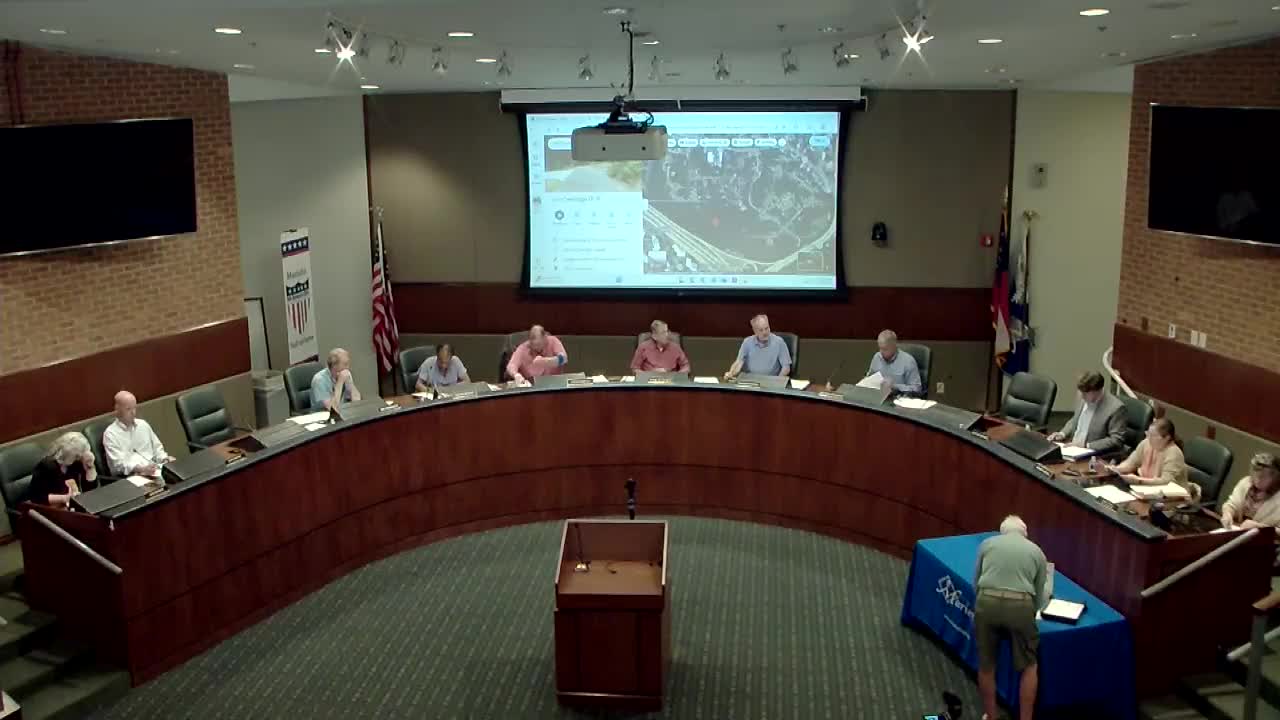
Planning commission tables Cloverdale Heights rezoning for 79-home PRD pending traffic study
Summary
The Marietta Planning Commission voted to recommend tabling a rezoning request for nearly 19.5 acres in Cloverdale Heights until an independent traffic study is provided to the city.
The Marietta Planning Commission voted to recommend tabling a rezoning request for nearly 19.5 acres in the Cloverdale Heights area until an independent traffic study is provided to the city.
The proposal, presented by attorney Kevin Moore on behalf of applicant Traton Homes and property owners Drayton RGM Properties Partnership and McMullen Partners, would rezone land near South Meredith Parkway and I‑75 — including portions of Blanche Drive, Crestridge Drive and nearby local streets — from R2, R4 and RRC (regional retail commercial) to PRD single-family to allow up to 79 detached homes.
Commissioners were asked to delay a recommendation to city council after residents raised traffic and infrastructure concerns and asked the commission to require the study before forwarding the rezoning. The commission’s motion to table the application until the traffic study is made available was moved, seconded and approved at the hearing.
Why it matters: The parcel is currently zoned largely RRC, a high-intensity commercial designation. The applicant and staff say single-family PRD zoning better fits the site than regional retail, while neighbors say added residential traffic on narrow local streets and existing infrastructure constraints would harm the adjacent neighborhoods and schools.
Proposal and applicant presentation Kevin Moore, attorney for the applicant, described the current submission as a revised plan reducing earlier proposals. “This plan…contains a maximum total of 79 single-family detached homes,” Moore said, noting the latest plan removes townhomes and increases protected open space and interior pocket parks. The submission also includes an amenity area with a pool and cabana and interior walking trails, Moore said.
Moore told commissioners the property has streams and topography that constrained where streets and connections could be placed and argued the PRD designation brings design benefits. He also noted the City of Marietta’s PRD single-family ordinance includes a 5% rental limitation, which the application’s conditions would reflect.
Resident concerns and public testimony Multiple residents opposed the rezoning or urged stricter conditions. Lily Reid, a Cloverdale Heights resident, told the commission the proposal “still features too much density” and urged a cap at 51 units so the development would meet a city code preference that larger developments connect to arterials or collectors rather than only local neighborhood streets.
Other residents raised narrower-street safety concerns, flooding and drainage problems on Crestridge Drive and Matthews Circle, and the lack of sidewalks. Ron Remillard, who said he lives on Matthews Circle, described the street as “a very narrow street” used daily by children and pedestrians and said the neighborhood needs protections for safety. George Balbona and Donald Barth also warned of emergency access and road-condition problems and urged remediation of existing infrastructure if the development proceeds.
Traffic access, environmental constraints and applicant responses Residents asked whether a connection to Herbert Drive could be added to provide better arterial access. Moore answered that topography, stream buffers and impervious setback requirements made a road connection to Herbert “impractical” and “environmentally insensitive” and that engineering constraints prevented a practical connection there.
Moore disputed recommendations that the developer simply reduce to 51 homes, saying the difference between 51 and 79 homes is “inconsequential from a traffic perspective” and that 79 homes are needed to fund amenities such as pocket parks, sidewalks on both sides of streets, and an amenity center. “What you lose is those items,” he said of a smaller build-out.
Staff and code references Staff commentary in the record noted the site includes streams and buffers that remain undisturbed in the proposed plan. Residents referenced city code language that suggests developments over 51 units should connect to arterial or collector streets; that requirement was cited as a rationale for capping the unit count by some speakers. The applicant filed a stipulation letter dated Sept. 30 updating conditions and addressing staff review comments.
Action and next steps Commissioners voted to recommend tabling the application until the requested traffic study is provided to the city and Planning Commission. The applicant agreed to table the case while the traffic study is completed. The hearing record indicates the traffic study is expected within roughly a month; the commission will reconsider the rezoning once the study is available and after further review by city public works and traffic staff.
Community context and history The applicant noted prior, larger proposals for the site, including earlier plans for about 140 units (primarily townhomes with attached units) and a later 119-unit plan that was tabled; the current 79-home plan is the most recent revision. Neighbors said other projects nearby — including apartments and townhomes within one mile — add to cumulative traffic and infrastructure pressure. Residents asked that city repair and upgrade local roads and drainage before new construction begins.
Votes at the meeting The Planning Commission moved, seconded and approved a recommendation to table Z2025-17 (the Traton/Drayton PRD rezoning) until the traffic study is provided to the city and commission.
The item will return to the commission for further consideration after staff and the independent traffic engineer complete their analysis and the study is filed with the city.