Get Full Government Meeting Transcripts, Videos, & Alerts Forever!
Get email alerts on the Municipal Bond Package topic
No spam. Unsubscribe anytime.
Ginther, housing leaders lay out $1.9 billion Columbus bond package ahead of Nov. 4 vote
Summary
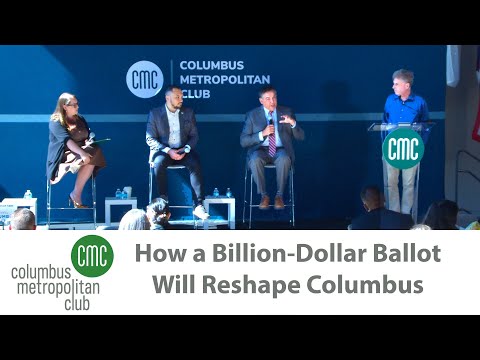
Mayor Andrew J. Ginther and housing leaders at a Columbus Metropolitan Club forum outlined details of a five-measure, $1.9 billion municipal bond package that will appear on the Nov. 4 ballot as Issues 5–9, saying the bonds would finance affordable housing, parks, public safety, utilities and other capital needs without raising property taxes.
Mayor Andrew J. Ginther and housing leaders at a Columbus Metropolitan Club forum outlined details of a five-measure, $1.9 billion municipal bond package that will appear on the Nov. 4 ballot as Issues 5–9, saying the bonds would finance affordable housing, parks, public safety, utilities and other capital needs without raising property taxes.
Ginther told the audience the package would commit $500 million for neighborhood development and affordable housing, $400 million for public service projects, $500 million for public utilities, $250 million for recreation and parks, and $250 million for safety, health and infrastructure. He said the city will repay the debt from a dedicated fund made up of 25% of income-tax receipts and a portion of utility-bill income set aside for capital repayment.
Why it matters: The package would be one of the largest capital asks in Columbus history and, if approved by voters, would allow the city to finance a mix of new construction and preservation projects intended to increase housing supply, repair infrastructure and update facilities across neighborhoods.
Key details and allocations
- Affordable housing: $500 million for neighborhood development and affordable housing, the panel said. Ginther said previous bond programs helped produce more than 4,000 rental units and more than 630 permanent supportive-housing units, and that the new package would “double down” on that work.
- Public service and road safety: Panelists described $400 million for public-service investments, including nearly $61 million for Vision Zero intersection improvements, roughly $101 million for roadway projects, about $110 million for road resurfacing and more than $47 million for pedestrian-safety improvements.
- Public utilities and water capacity: The package includes $500 million for utilities, with the panel noting funding for sanitary-sewer and water improvements, street lighting and stormwater upgrades; Ginther said the bond program would help fund a fourth water plant to meet growing demand.
- Public safety and facilities: The safety, health and infrastructure bucket includes funding for police- and fire-facility renovations, apparatus replacement and a proposed municipal court building; panelists cited figures such as roughly $100 million for a new municipal court building and multimillion-dollar allocations for fire apparatus and stations.
Affordable-housing focus and limits of bonds
Speakers emphasized that the bonds are intended for capital work and cannot be used for operating programs such as emergency rental assistance. Panelists said Ohio law restricts use of bond proceeds to bricks-and-mortar investments, so subsidies and human-services programs would need other funding sources.
Carly Boos, executive director of the Affordable Housing Alliance of Central Ohio, described the local demand pressures driving the housing emphasis. She said about 52,000 Franklin County households — roughly one in 12 — are “severely cost-burdened,” and noted that a two-bedroom apartment now requires wages far above many entry-level salaries. "By the time a family is giving half of their income, so 1 out of every 2 checks is going either to a landlord or a mortgage company. It's what we call the toxic trade-off range," Boos said.
Panelists argued that increasing housing supply at multiple price points is central to reducing cost pressures. They described a strategy that pairs bond-funded construction and preservation with zoning reform, incentives tied to affordability, and a new regional housing coalition to encourage suburban and regional participation in creating housing.
Policy, accountability and preservation
Speakers noted policy changes already under way or proposed to steer investments. Mayor Ginther said his administration has required affordability commitments in projects that receive incentives and highlighted a citywide Community Reinvestment Area policy intended to spread investment citywide rather than concentrate affordable housing in a few neighborhoods. Council-member Nick Bankston said his office is advancing a rental-registry proposal to improve data on rental units and to increase transparency and accountability for landlords.
Panelists also discussed preservation strategies to keep existing naturally occurring affordable housing viable. They said bond dollars could be paired with landlord-engagement and targeted capital investments to preserve affordability, while acknowledging deeper subsidies will be required to create housing affordable at very low incomes.
Workforce and industry implications
Panelists tied housing strategy to workforce and economic competitiveness. Ginther and others said more affordable housing will help attract and retain employees for local employers and that the bond-funded projects could be an opportunity to expand local apprenticeship and training programs for construction and building trades.
What the panel did not decide
The forum provided information and argument in support of the ballot package but did not produce a government vote or official action. The bond measures must be approved by Columbus voters on Nov. 4 before any proceeds can be sold.
Outlook and next steps
Panelists urged voters to learn about the measures and to register and vote. The mayor and others said the bond program would work alongside other policy tools — zoning reforms, incentive conditions, regional partnerships and federal or state subsidies — to address housing affordability and infrastructure needs over the coming decade.