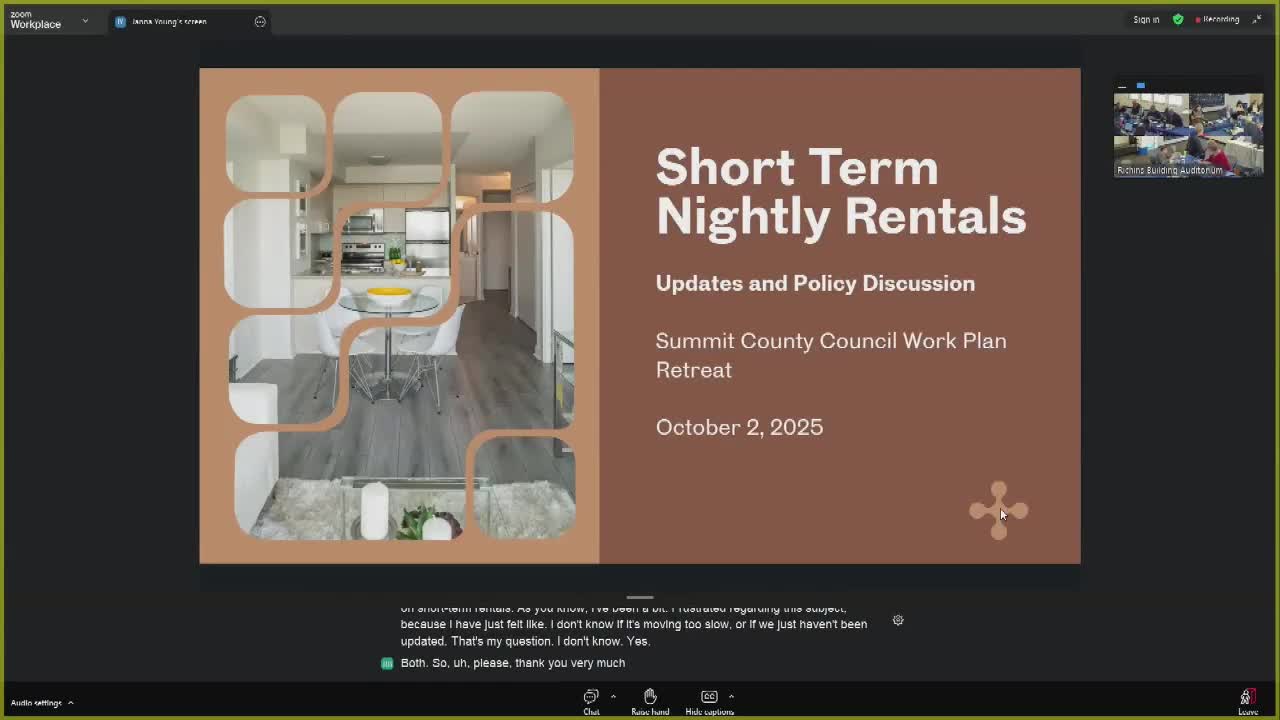
County staff launches data-driven outreach to noncompliant short-term rentals; software identifies 501 potential violations
Loading...
Summary
A county working group told council members they are using a commercial monitoring service to identify short-term rental listings; the vendor has flagged 501 confirmed listings that lack county licenses and staff plan phased outreach and enforcement letters to bring units into compliance.
County staff briefed the Summit County Council on a two-year working-group effort to identify and bring unlicensed short-term nightly rentals into compliance. The county has contracted Azure (software/service) to cross-check online listings against county parcel and business-license records. Scott Buchanan, a code-enforcement officer assigned to nightly-rental work, said the software has already "identified 501 properties" that appear to be operating without a county nightly-rental license and that staff will start a phased outreach and enforcement process.
Staff described the planned compliance steps: an initial courtesy letter explaining licensing requirements and how to comply; a second follow-up warning letter; and a third certified notice of violation if license applications are not submitted. Buchanan said Azura recommends an initial small batch rollout—25 letters—to test intake capacity at the clerk's office and partner inspection agencies; staff said the county must stage communications so that the clerk's licensing and Park City Fire District inspections can absorb the application volume.
County clerk staff and the county attorney's office are part of the working group. Prosecutors and code attorneys will receive cases that do not respond to outreach; Buchanan said, for most complaints received to date, staff have resolved matters by outreach and application, and only a small number required formal enforcement so far. The clerk's office currently lists about 1,289 active nightly-rental licenses; Azure's dataset shows roughly 1,967 confirmed unique listings once duplicate platform postings are distilled. Azure has also identified listings in an "investigating" state and others that appear inactive.
Why it matters: an accurate inventory of unlicensed rentals and a staged enforcement plan affect collection of license fees, transient-room tax compliance, public-safety inspections and neighborhood livability. Staff said the program aims to be data-driven and to bring units into compliance first, rather than immediately pursue punitive actions.
What's next: staff plan to mail the first 25 compliance letters, monitor intake and enforcement capacity, stand up an Azure-supported call center for complaints and support, and reconvene the working group after winter-season data are collected to recommend any statutory or code changes.