Get Full Government Meeting Transcripts, Videos, & Alerts Forever!
Get email alerts on the Cuas Oversight Sustainability topic
No spam. Unsubscribe anytime.
Experts and council members debate CUA model, provider liability and oversight at DHS hearing
Summary
Child welfare consultant Paul DiLorenzo and council members debated the sustainability and oversight of Philadelphia’s Community Umbrella Agency (CUA) model, with testimony citing provider lawsuits, lack of clarity between city employees and private providers, and the need for a neighborhood-focused, well-funded approach.
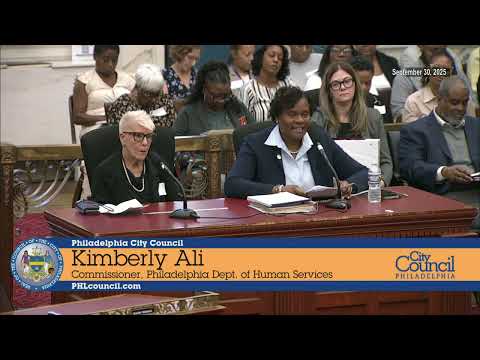
At the Sept. 30 hearing, longtime child-welfare consultant Paul DiLorenzo urged Council to treat neighborhood-based community umbrella agencies (CUAs) as primary points of engagement but said the model as designed lacks clarity, stable funding and liability protections for providers. DiLorenzo, who previously worked with Casey Family Programs and Philadelphia child-welfare reviews, told the committee the CUA model will not be sustainable unless roles, culture and payment match the policy goals.
"The lack of clarity between unionized employees of DHS and the myriads of private provider agencies with their own histories, missions, and values" undermines a consistent system, DiLorenzo said. He said successful comparable systems commit to a single organizational culture, pay providers reliably, and protect them from liability.
Council members including Cindy Bass pressed the broader question of whether the CUA model should be retained, reformed, or replaced by direct DHS provision. Bass said several providers that once carried large caseloads have been lost to lawsuits and financial stress, creating gaps in service and complicating continuity of care.
Why it matters: Witnesses and council members described litigation over practice failures as a continuing drag on the system, and warned that frequent agency turnover or providers leaving the system can leave children and families without continuity of care. DiLorenzo recommended redesign work that engages all sectors influencing family well-being — schools, health, housing and behavioral health — and emphasizes customer service, neighborhood access and measurable outcomes.
Ending: The committee did not vote on policy changes but heard requests from members for further analysis of whether CUAs should remain the primary neighborhood partner, and for proposals that would shore up provider capacity, liability protection and clear performance metrics.