Get Full Government Meeting Transcripts, Videos, & Alerts Forever!
Get email alerts on the Behavioral Health Integration topic
No spam. Unsubscribe anytime.
DBHIDS and Community Behavioral Health describe deep integration with DHS; officials say more frontline capacity is needed
Summary
CBH and DBHIDS officials told the City Council committee that decades of co-location with DHS have created on-the-ground clinical supports but that a single senior clinical consultant and limited clinical staffing curtails the city’s ability to embed expertise at every hotline screening and investigation.
Laura D'Arrigi, identified in testimony as a senior director for clinical consultation at Community Behavioral Health (CBH) and a DBHIDS-affiliated clinician, described decades of co-location and clinical integration with Philadelphia Department of Human Services.
"We started in 2000 and we collocated CBH care managers…within each of the CUAs," Laura D'Arrigi said, describing CBH staff who sit in family team conferences and in family court to provide immediate clinical consultation and referrals.
D'Arrigi told the committee CBH and DBHIDS run drug and alcohol assessments, operate forensic behavioral-health evaluations for family court, and maintain clinical specialists embedded in community umbrella agencies (CUAs). She said her hybrid role includes continuing to do home visits, courtroom testimony and co-facilitating aging-out reviews for older youth. She said those functions help identify clinical needs that should guide placement and service decisions.
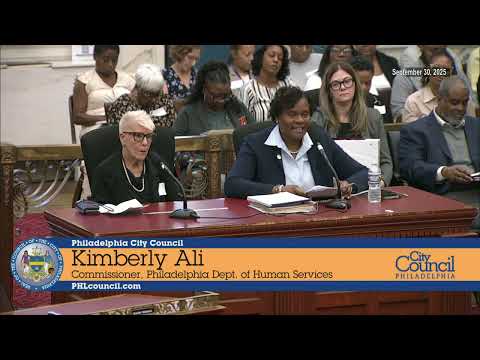
Commissioner Kimberly Ali and other members of the panel said DBHIDS clinical integration is useful at screening and intake, but members pressed whether behavioral-health clinicians can routinely participate in hotline guided decision making. D'Arrigi and Ali said clinicians join investigations and teamings when consent is available or when clinical consultation is requested, but both acknowledged one senior clinical consultant cannot be everywhere. Ali said the department has added screening units on the hotline and uses structured decision tools, while D'Arrigi said consent forms and data sharing agreements limit real-time information transfer without family consent.
Why it matters: Council members raised the question whether greater behavioral-health presence at the hotline and early assessment stage could increase safe diversions and reduce unnecessary investigations and removals. D'Arrigi said an expanded cadre of clinical consultants and earlier access to DBHIDS information could steer more families to prevention and services tailored to complex trauma, substance use, intellectual disability and medical complexity.
Ending: Committee members asked DHS and DBHIDS to provide follow-up materials describing (1) how CBH/DBHIDS participates in hotline screening or investigations, (2) the staffing model for embedded clinical specialists, and (3) potential costs to expand front-line clinical coverage at intake.