Get Full Government Meeting Transcripts, Videos, & Alerts Forever!
Get email alerts on the Harm Reduction And Staffing topic
No spam. Unsubscribe anytime.
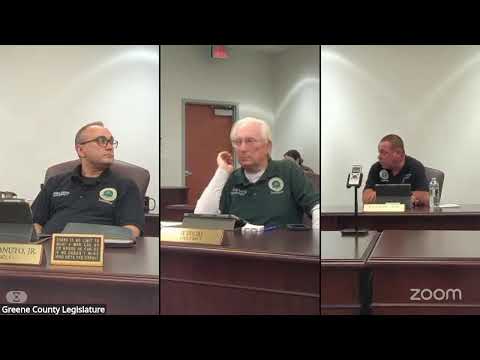
Health Services Committee debates harm-reduction vending machines and hybrid work at community services
Summary
Committee members discussed vending machines stocking Narcan and test strips funded through the Mental Health Association and debated hybrid telework arrangements for community-services staff while a new building is completed.
Members of the Greene County Health Services Committee discussed harm-reduction vending machines that dispense naloxone (Narcan) and test strips, and debated whether community-services clinicians should work on hybrid schedules while the county’s new community services building is completed.
A committee member raised a constituent screenshot showing a vending machine reportedly supplied by Community Action and stocked with naloxone and test strips. County public-health staff said the vending machine did not originate in Public Health; it was funded through the Mental Health Association (MHA) and state aid funds that pass through the county. Staff described the machines as “a way for people who need Narcan and test strips and any other direct harm reduction pieces of equipment to get them” at all hours.
Committee discussion reflected differing emphases. One member asked whether making naloxone readily available undercuts prevention efforts; a public-health staffer replied that prevention programs continue in the county (citing Twin County Recovery Services) and said harm reduction is evidence-based and considered a form of prevention. A committee member said she wanted more emphasis on success stories from treatment programs to balance public visibility of naloxone distribution.
On staffing, committee members asked whether community-services staff would return to in-office work after the new building opens. Public-health staff said many clinicians currently work hybrid schedules because of continued demand for some remote clinical sessions and earlier IT constraints; staff said remote sessions now are used “only when there’s a clinical need.” The committee debated whether clinicians should be in the office while completing remote sessions; staff said the new building has space for everyone and that the demand for virtual sessions has been “slowly decreasing.”
Why it matters: the vending machines and hybrid schedules affect how harm-reduction and clinical services are delivered and how the county funds partner organizations. Committee members asked staff to provide success metrics for treatment programs and to clarify the funding and oversight for vending machines.
No formal motions were recorded on these discussion items; committee members closed the item after questions and comments.