Get Full Government Meeting Transcripts, Videos, & Alerts Forever!
Get email alerts on the Gaza Humanitarian topic
No spam. Unsubscribe anytime.
UN allocates $9 million in CERF fuel funding as Gaza aid deliveries remain constrained
Summary
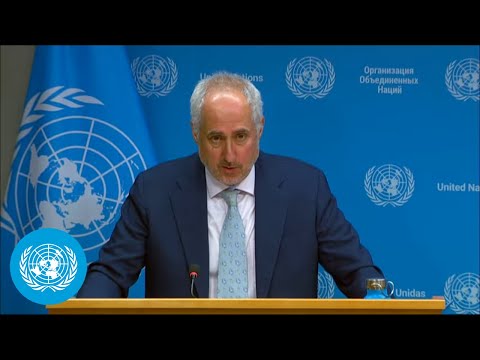
The United Nations emergency relief coordinator allocated $9,000,000 from the Central Emergency Response Fund (CERF) to secure fuel supplies for lifesaving services in the Gaza Strip, the UN spokesperson said at a briefing.
The United Nations emergency relief coordinator allocated $9,000,000 from the Central Emergency Response Fund (CERF) to secure fuel supplies for lifesaving services in the Gaza Strip, the UN spokesperson said at a briefing.
The move aims to keep hospitals, bakeries and other essential services running amid ongoing hostilities. “We, of course, stand ready to deliver at scale as soon as the situation allows it,” Steph, the UN spokesperson, said.
The nut of the briefing: despite a reported reduction in air strikes, shelling and gunfire continued, humanitarian access remains severely constrained, and needs across the Strip are acute. The Office for the Coordination of Humanitarian Affairs (OCHA) relayed that the Ministry of Health in Gaza reported 21 people killed and 96 injured on one recent day. Humanitarian movement across Gaza requires coordination with Israeli authorities; the spokesperson said eight missions were facilitated, six were denied and five were canceled over a recent period.
Operational detail: bakeries in parts of Gaza are working up to 22 hours a day to produce daily bread; humanitarian partners prepared and distributed roughly 885,000 meals through 167 kitchens in Gaza on a recent Saturday. Nutrition partners increased service points in the south from 96 to 118 in the last week, the briefing said. At Al Nasr Medical Complex in Khan Yunus, the Ministry of Health reported that three infants were sharing one incubator, heightening infection risk.
Displacement pressures are severe, the UN said. Shelters and displacement sites in the south are overcrowded, and some families have set up about 70 tents at a garbage-dumping site called Al Amal. The spokesperson said some displaced people have attempted to return north despite Gaza City being declared a dangerous combat zone with movement to the north restricted.
Logistics and pipelines: the UN said humanitarian pipelines of goods are staged in Cyprus, at the Port of Ashdod and in Jordan, and are ready to move when crossings open. “There are thousands of metric tons in the pipeline of goods ready to enter,” the spokesperson said, while noting she could not provide an exact count of trucks waiting at crossings on the Israeli side.
UNRWA and funding: the spokesperson reiterated that UNRWA operates under a mandate from the UN General Assembly and continues work in the occupied Palestinian territory, Lebanon, Jordan and Syria, but faces “a grave funding challenge.” The briefing encouraged member states to fund the agency; specific funding shortfalls and staff counts were described as not specified in the spokesperson’s remarks.
Allegations of mistreatment: journalists raised reports from activists detained in international waters after a recent flotilla, including allegations of mistreatment and incidents recorded on video. The spokesperson said the UN had seen such reports and that they are “rather disturbing,” and added that treatment and other allegations “need to be investigated.”
Why this matters: fuel, supplies and unhindered access are central to sustaining medical care, food production and humanitarian assistance for hundreds of thousands of civilians. The UN’s CERF allocation is intended as an immediate stopgap while broader access and funding arrangements are pursued.
What the briefing did not specify: exact counts of trucks waiting at specific crossings, a full funding breakdown for UNRWA, or a timeline for when denied or canceled missions might be authorized. The spokesperson repeatedly framed the UN response as contingent on security and the “green light” from relevant authorities.
Looking ahead: the UN said it remains ready to scale up deliveries as soon as crossings and security conditions permit and called for unimpeded and sustained access to all parts of Gaza so aid can reach people wherever they are.