Get email alerts on the Water topic
No spam. Unsubscribe anytime.
Harney Basin collaborative finishes integrated water plan and wins state recognition
Summary
The Harney Community Based Water Planning Collaborative presented an integrated groundwater and surface-water plan to the County Court, saying the nine-year process produced 50 strategies and state recognition from the Oregon Water Resources Department and interagency review team.
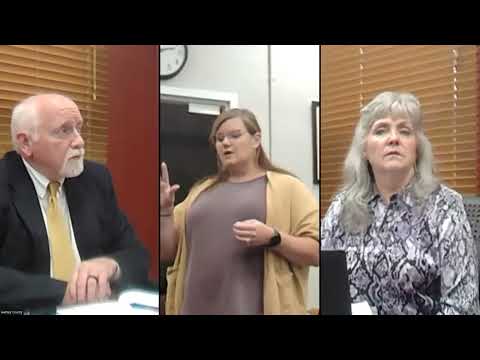
Holly (last name on file), facilitator for the Harney Community Based Water Planning Collaborative, told the County Court on Oct. 1 that the collaborative has completed an integrated plan addressing groundwater overdraft, surface-water allocation and ecological resilience and has received state recognition.
The plan follows a nine-year, phased process that addressed groundwater first and then surface water. Holly said the collaborative identified about 31 groundwater strategies and 18 surface-water strategies across categories that include voluntary pumping reductions, irrigation efficiency, domestic well assistance, riparian restoration, infrastructure modernization and expanded monitoring. “We are through with our planning phase,” she said.
Why it matters: The plan documents basin-scale strategies to address an estimated groundwater overdraft of about 110,000 acre-feet per year and seeks to balance agricultural, municipal, tribal and ecological needs. State recognition from the Oregon Water Resources Department and an interagency review team signals that the plan conforms to place-based planning guidance and positions the basin to compete for state and federal funding.
Holly said near-term actions (1–3 years) include the Harney Domestic Well Fund, CREP enrollments and pilot irrigation-efficiency projects, all already underway. Midterm work (4–10 years) emphasizes larger restoration and infrastructure updates such as riparian and upland vegetation projects, fish-passage improvements and modernization of diversions. Long-term ideas include exploring managed aquifer recharge and broader conservation scaling beyond a 10-year horizon.
The collaborative recommends that the Harney Watershed Council lead implementation, supported by the High Desert Partnership and a mix of state, federal and philanthropic funding sources (OWRD, NRCS, EPA, ARPA, philanthropic partners). Holly described an oversight structure based on balanced representation for agriculture, tribes, conservation groups, municipalities, agencies and residents.
Court members asked about the plan’s relationship to the Division 512 rules and whether groundwater work had been available to state regulators during rulemaking. Holly said the groundwater phase was completed and shared in time with the Division 512 rules advisory process and she presented the groundwater plan to state bodies and the Rules Advisory Committee during that period.
Ending: Holly and Karen Noon, Watershed Council coordinator, said implementation is beginning and requested continued county support. The court acknowledged the lengthy collaborative process and expressed interest in county coordination on near-term projects and funding opportunities.
AI generated
The text on this page is AI generated. Summaries, highlights, analysis, and video transcripts are all produced from the original source material.
AI can make mistakes, so if you spot one, and we will fix it for everyone.
Note: the source content is unaltered by us. Any content source we link to, be it a video, an audio recording, or a document, is presented exactly as its publisher released it. That publisher is usually a government body, sometimes an individual official or another organisation.