Get Full Government Meeting Transcripts, Videos, & Alerts Forever!
Get email alerts on the Accessibility Interpreters topic
No spam. Unsubscribe anytime.
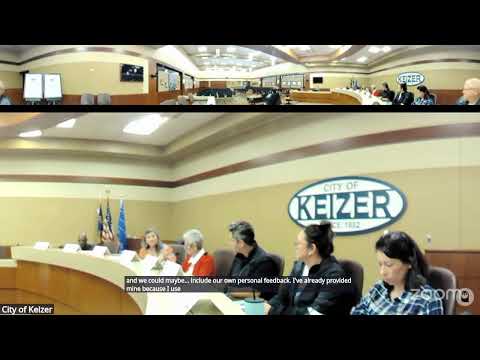
Resident urges Keizer committee to expand interpreter access, emergency communications for deaf residents
Summary
A longtime Keizer resident told the engagement committee the city should budget for interpreters at events, improve captioning and emergency alerts, and coordinate outreach to immigrant communities fearing immigration enforcement.
Janet Johansen, a longtime Keizer resident who identified herself as “a sixth generation deaf citizen of Keizer in Oregon,” told the Keizer Community University engagement committee that city events and public programs are not accessible to many deaf residents and called for a broader, citywide approach to interpretation and emergency communication.
Janet Johansen said she is repeatedly told to “bring your own” interpreter for neighborhood meetings and community events, and she described anxiety and safety concerns stemming from past trauma and from reports of immigration enforcement. “Do you provide interpreters or captions at the park?” she asked; the committee heard that, for many events, residents must currently arrange their own accommodations.
The exchange produced two near-term directions. Committee member Tammy and committee member Sarah agreed to return next month with more information about community contacts and potential outreach. City staff member Dawn said the city will follow up on interpreter sourcing and budgeting and said she would look into the request to budget for expanded interpretation at city events. “I would be happy to look into that,” Dawn told the committee.
Committee members and staff identified existing resources and gaps. Dawn said the city uses Tri County Interpreters and professional contracted interpreters for some City Council meetings and noted the city’s recorded interpretation budget is limited: “I think, about 5 or 6,000 a year,” primarily for Spanish-language services tied to the council’s broadcast channel. The committee discussed whether some of that or additional funds could be allocated for on-site interpretation or to build a paid or volunteer pool of interpreters for neighborhood events.
Committee members also raised emergency-communication needs for residents who do not receive loudspeaker announcements. City staff explained the city can use Marion County’s alert system to send text, voice and email messages to specific areas in emergencies and said staff will coordinate with the county and report back with details. The committee agreed to pursue both short-term fixes (more outreach to event organizers, clearer explanations of who is responsible for interpreter costs) and longer-term options (budgeting or volunteer pools).
Multiple committee members recommended inviting professional interpreters or community advocates to a future meeting so the committee can hear directly about availability, cost, and best practices for event accessibility. The committee also discussed approaching organizers of larger community events and noncity groups to encourage built-in accommodations.
Janet Johansen thanked the group for listening and offered to consult on access improvements. The committee agreed to follow up and report progress at the next meeting.